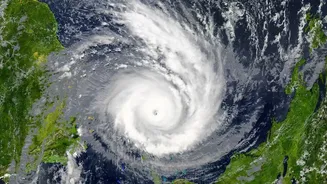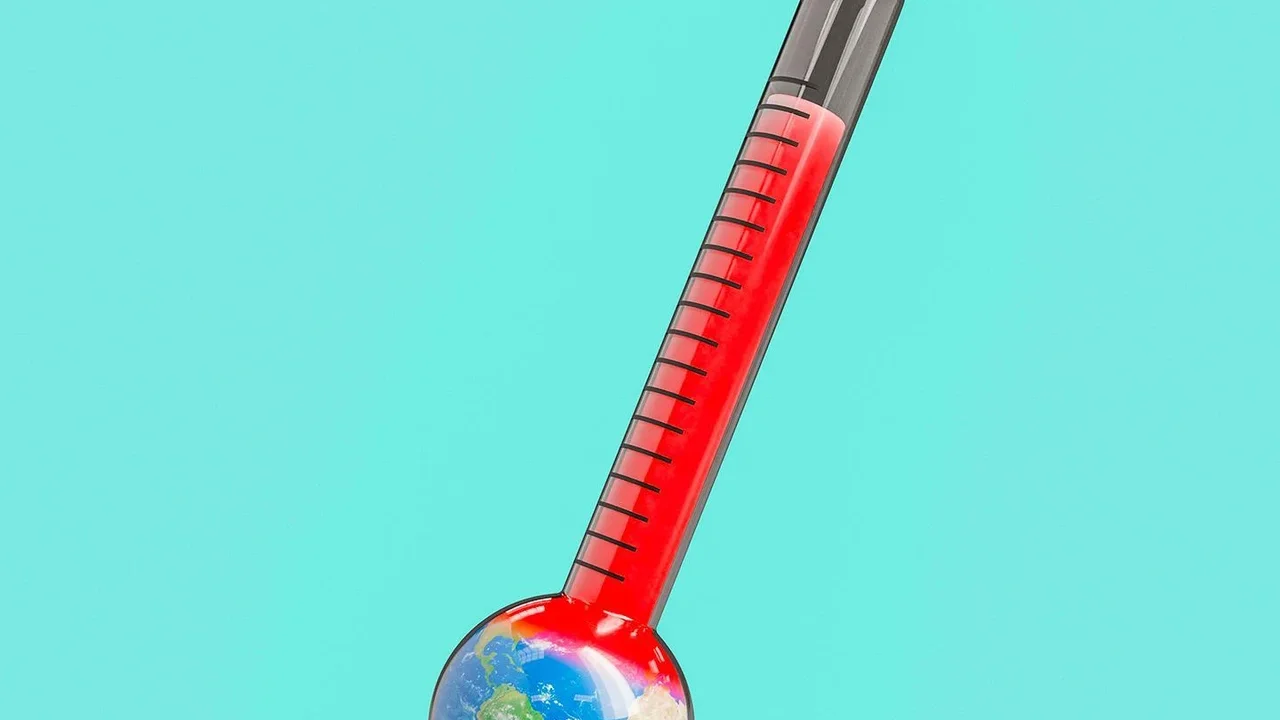




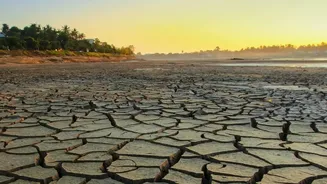
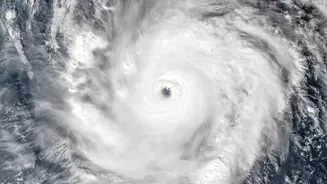
Meteorological agencies across the globe are sounding the alarm. The developing 2026 El Niño is showing signs that it could become one of the most intense such events ever recorded, with a high probability of lasting well into 2027. What does that mean
for India?
First, What Is El Niño?
El Niño, which means 'the little boy' in Spanish, is the warm phase of a natural climate pattern called the El Niño-Southern Oscillation (ENSO). It occurs every two to seven years when the trade winds that normally blow from east to west across the tropical Pacific Ocean weaken. This allows a huge mass of warm surface water to shift eastward, from near Asia towards the Americas. This change in ocean temperature might seem distant, but it's powerful enough to disrupt weather patterns worldwide. It can bring torrential rains and floods to some regions, like the Americas, while causing severe drought in others, including parts of Asia and Australia.
How Is an El Niño's Strength Measured?
Scientists gauge an El Niño's intensity by measuring how much warmer the sea surface temperature (SST) is compared to the long-term average in a key region of the equatorial Pacific known as the Niño 3.4 region. A rise of just 0.5 degrees Celsius above normal for several months marks the beginning of an El Niño event. A 'strong' event typically involves anomalies of 1.5 degrees or more. 'Very strong' or 'super' El Niño events, like the historic ones in 1997-98 and 2015-16, are declared when temperatures rise 2.0 degrees Celsius or more above average. Forecasts for the current 2026 event are tracking temperatures that could exceed a 2.5-degree anomaly, putting it in the same league as the most powerful events on record.
The Critical Link to India's Monsoon
For India, El Niño has a strong and often negative correlation with the vital southwest monsoon, which delivers about 80% of the country's annual rainfall. The warming of the central and eastern Pacific shifts the atmospheric zone of rising air and cloud formation away from the Indian Ocean. This weakens the pressure systems that drive moisture-laden winds towards the subcontinent, often resulting in below-average rainfall and a higher risk of drought. Historically, many of India's most severe droughts have coincided with strong El Niño years. However, the connection isn't absolute. Another climate pattern, the Indian Ocean Dipole (IOD), can sometimes counteract El Niño's drying effect. A 'positive' IOD, with warmer waters in the western Indian Ocean, can help the monsoon. This was famously the case in 1997, when a super El Niño failed to cause a drought in India due to a strong positive IOD.
What Forecasters Are Saying Now
As of late November 2026, global meteorological organisations like the World Meteorological Organization (WMO) and NOAA are issuing stark warnings. There is a near-100% chance that strong El Niño conditions will persist through the Northern Hemisphere's winter and into the spring of 2027. Models are consistently forecasting that this event will peak in late 2026 as a 'very strong' event, rivalling or even surpassing the intensity of the 1997-98 and 2015-16 events. While the full impact on the 2027 monsoon is still a forecast, the potential for a suppressed monsoon is a significant concern for agriculture, water security, and the wider economy. Some early modelling suggests a potential shift to the opposite La Niña phase later in 2027, which could boost the latter half of the monsoon, but the immediate focus remains on the impacts of the powerful El Niño.
Beyond the Monsoon: Heatwaves and More
The impact of a strong El Niño in India isn't limited to rainfall. There is a documented link between strong El Niño events and more intense heatwaves during the following pre-monsoon and summer seasons. This 'decaying phase' can see record-breaking temperatures, as witnessed in India after the events of 1997-98 and 2015-16. The 2016 heatwave saw Phalodi in Rajasthan record 51.0°C, the highest temperature ever reliably measured in India. A warmer winter and an unusually hot spring in 2027 are distinct possibilities, which could affect the rabi wheat crop and place immense stress on power grids and water supplies.