




A Junkyard Orbiting at 28,000 km/h
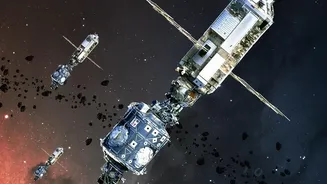
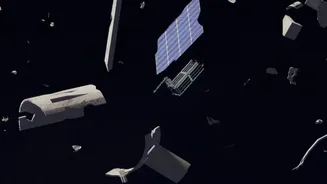
Imagine millions of pieces of debris, from defunct satellites and spent rocket stages to tiny flecks of paint, all whipping around the Earth at incredible speeds. This is the reality of space junk. As of early 2026, India itself has accounted for 129
trackable pieces of debris from its past missions. The primary danger isn't just the large, trackable objects; even a coin-sized fragment travelling at orbital velocities can strike an operational satellite with the force of a car crash, potentially destroying a multi-crore asset and creating thousands of new pieces of debris in the process. This cascading effect, known as the Kessler Syndrome, poses a catastrophic risk to everything from our GPS and weather forecasting to communication and national security infrastructure. The problem is getting worse as more satellites are launched, making the orbits, especially Low Earth Orbit (LEO), increasingly congested.
India's Proactive Defence: Project NETRA
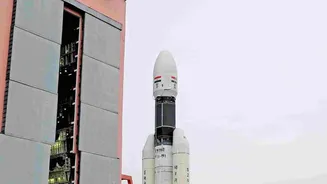
For years, the Indian Space Research Organisation (ISRO) relied on data from international bodies, like the US Space Command, to track potential threats. However, to safeguard its more than 50 operational satellites, India has been developing its own indigenous capability. The cornerstone of this effort is Project NETRA (Network for space object TRacking and Analysis). Inaugurated in 2020, NETRA is an early warning system designed to give India an independent eye in the sky. It uses a network of sophisticated radars and optical telescopes to detect, track, and catalogue objects as small as 10 centimetres. This allows ISRO to predict potential collisions and perform crucial Collision Avoidance Manoeuvres (CAMs). The urgency is clear: ISRO conducted 20 such manoeuvres in 2025 and nine in the first half of 2026 alone, a sharp increase from previous years.
The AI Revolution: From Detection to Autonomous Action
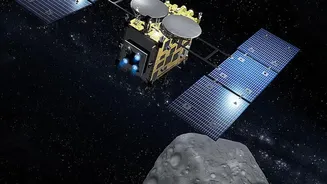
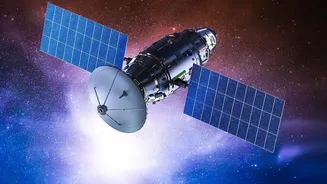
While tracking is one part of the solution, the other is reacting—quickly and efficiently. This is where Artificial Intelligence comes in. The traditional method involves ground control analysing NETRA's data, predicting a collision, and manually commanding the satellite to fire its thrusters to change course. This process takes time, which is a luxury space missions don't always have. The next leap is to make this entire process autonomous. AI algorithms onboard a satellite can process tracking data in real-time, predict a collision threat, calculate the most fuel-efficient escape path, and execute the manoeuvre by firing its thrusters—all without a single command from Earth. This capability is being actively developed and demonstrated by ISRO, notably in missions like the Space Docking Experiment (SpaDeX), which proved India's ability to perform fully autonomous operations between satellites.
The Rise of India's Space-Tech Startups
ISRO isn't working in a vacuum. A vibrant ecosystem of Indian space-tech startups is developing the key components for this autonomous future. Companies like Bengaluru-based Bellatrix Aerospace are indigenously developing advanced propulsion systems, including Hall-effect thrusters, which are highly efficient and ideal for the precise, small adjustments needed for collision avoidance. Another startup, Digantara, specialises in Space Situational Awareness (SSA), developing AI-based software to monitor orbital traffic and assess risks. Manastu Space is pioneering green propulsion systems designed for in-orbit manoeuvres, including collision avoidance. These private-sector innovations are crucial, providing the specialised hardware and software that will power India's next generation of self-protecting satellites.
Securing India's Future in a Crowded Space
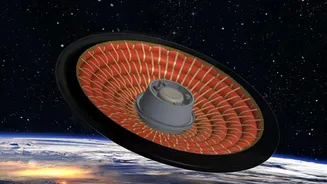
Developing autonomous collision avoidance isn't just a technological achievement; it's a strategic necessity. As India plans to expand its satellite constellations for communication, defence, and services like NavIC, protecting these assets becomes paramount. An autonomous shield ensures the resilience and longevity of this critical infrastructure. Furthermore, as part of its Debris Free Space Mission (DFSM), India has set a goal to achieve zero new debris creation from its missions by 2030. By automating collision avoidance, ISRO and Indian companies not only protect their own satellites but also contribute to the long-term sustainability of space for all nations. This capability reinforces India's position as a responsible and leading power in the global space community, ready to tackle the challenges of an increasingly complex orbital environment.