



Riding on Beams of Light
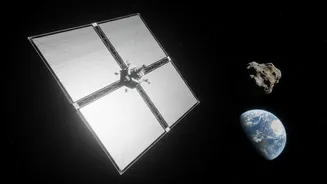
Imagine a sailboat crossing the ocean, its sails catching the wind to push it forward. A solar sail operates on a similar principle, but its 'wind' is sunlight itself. Light is made of particles called photons. While they have no mass, they have momentum.
When billions of these photons bounce off a large, reflective sail in the vacuum of space, they transfer their momentum, creating a gentle but continuous push. This constant, tiny acceleration builds up over time, allowing a spacecraft to gain tremendous speed without using a single drop of fuel. The concept has been around for over a century, but only now has technology caught up to make it a practical propulsion system.
Slashing the Costs of Exploration
The single biggest advantage of solar sails is the elimination of propellant. On a traditional spacecraft, fuel accounts for a significant portion of its mass and volume. Getting that heavy fuel into orbit is the most expensive part of any mission. By getting rid of it, solar sail spacecraft can be dramatically smaller and lighter. Missions like NASA's Near-Earth Asteroid (NEA) Scout were designed as tiny 'CubeSats'—spacecraft no bigger than a shoebox. This massive reduction in size and weight means they can be launched on smaller, more affordable rockets or even piggyback as secondary payloads on larger missions, as NEA Scout did on the Artemis I flight. This 'rideshare' model drastically cuts the price tag of getting to space, opening the door for more frequent and ambitious science missions on a tighter budget.
The Scenic Route Can Be Faster
While a solar sail's initial acceleration is incredibly slow, the claim that it's 'faster' is true in a more strategic sense. A chemical rocket gets a powerful, brief push and then coasts for most of its journey. To change direction or visit multiple targets, it often needs to perform slow, complex gravity-assist manoeuvres, swinging by planets to bend its trajectory—a process that can add years to a mission. A solar sail, however, has constant propulsion. It can 'tack' by tilting its sail relative to the Sun, allowing it to spiral inwards or outwards and precisely steer its course. This superior manoeuvrability allows for more direct routes to asteroids and even makes it possible to perform slow, controlled flybys for better scientific observation. This agility can ultimately shorten the total mission duration compared to the winding paths chemical rockets must follow.
From Theory to a New Reality
The journey to perfect this technology has seen both triumphs and setbacks. Japan's IKAROS probe successfully demonstrated solar sailing in deep space in 2010, followed by The Planetary Society's LightSail 2 in Earth orbit in 2019. NASA's ambitious NEA Scout mission, designed to be the first solar sail to study an asteroid, unfortunately failed after contact was lost following its 2022 launch. However, the lessons learned have been invaluable. The real breakthrough is happening now with missions like the Advanced Composite Solar Sail System (ACS3), which launched in early 2024. ACS3 is successfully testing new lightweight carbon fiber booms, which are stronger and less prone to warping than previous materials. This breakthrough allows for the deployment of much larger, more efficient sails, paving the way for a new generation of more powerful and capable solar sail spacecraft.
A New Toolkit for Asteroid Hunters
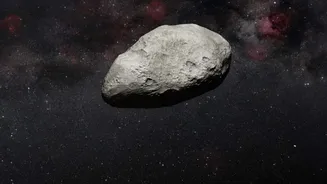
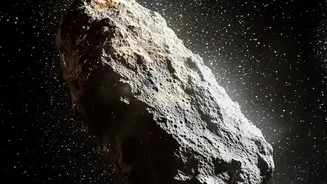
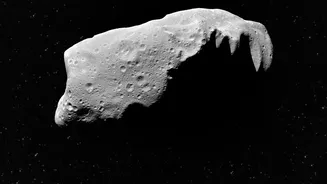
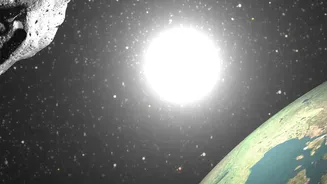
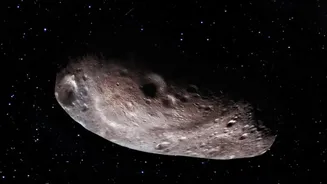
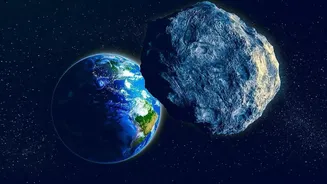
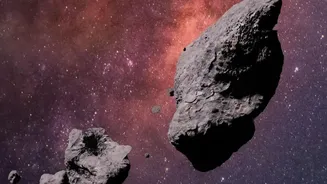
These advancements are not just incremental; they represent a fundamental shift in how we can explore our solar neighbourhood. The combination of low cost and high manoeuvrability makes it feasible to design missions that can hop from one asteroid to another, cataloguing and studying multiple objects in a single trip—a feat that is largely impractical with fuel-limited spacecraft. This capability would be a massive boon for planetary defense, allowing us to better understand the thousands of small, potentially hazardous asteroids we currently know little about. Cheaper, faster, and more agile spacecraft mean we can gather more data, more quickly, making our planet safer while simultaneously unlocking the scientific secrets held within these ancient remnants of our solar system.