


India's Next Interplanetary Frontier
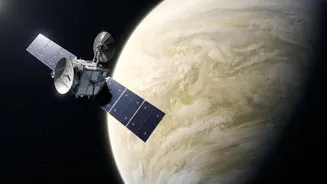
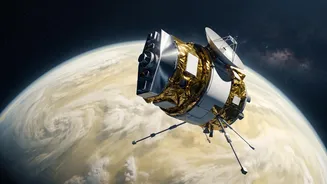
Following the monumental successes of Mangalyaan (Mars Orbiter Mission) and Chandrayaan, ISRO is setting its sights on Venus. The mission, officially named the Venus Orbiter Mission but popularly known as Shukrayaan, represents India’s first dedicated
mission to our closest planetary neighbour. Formally approved by the Union Cabinet in September 2024 with a budget of approximately ₹1,236 crore, the mission underscores India's growing prowess in interplanetary exploration. It is a significant step that builds upon the nation's celebrated history of achieving complex space feats with remarkable cost-effectiveness.
Why Study Earth's 'Evil Twin'?
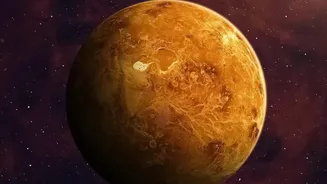
Venus is often called Earth's twin due to its similar size, mass, and density. However, the similarities end there. Venus is a hellish world with a surface temperature hot enough to melt lead (around 460°C) and a crushing atmospheric pressure over 90 times that of Earth's. Its skies are filled with thick clouds of sulfuric acid. Scientists are deeply intrigued as to why two planets that started so similarly evolved so differently. By studying Venus’s runaway greenhouse effect, ISRO hopes to gain invaluable insights into planetary climate evolution, which could offer a cautionary tale for Earth's own future.
Peeking Beneath the Clouds
One of the greatest challenges in studying Venus is its thick, opaque cloud cover, which completely hides the surface from conventional telescopes. To overcome this, the Shukrayaan orbiter will be equipped with a suite of advanced sensors designed to probe the planet from its upper atmosphere down to its subsurface. A key instrument will be a high-resolution Synthetic Aperture Radar (SAR), which can pierce through the clouds to map the planet's surface in detail. Another groundbreaking instrument is a ground-penetrating radar, a first for any Venus mission, intended to explore the planet's shallow subsurface geology. These tools will investigate volcanic activity, lava flows, and ancient geological features hidden for eons.
The Scientific Toolkit
Shukrayaan will carry a payload of around 100 kg, comprising approximately 19 scientific instruments. Sixteen of these are being developed in India, with international collaborations from Russia, Sweden, and Germany providing the others. The payloads include thermal cameras to map temperature variations, instruments to analyse the composition and dynamics of the super-rotating atmosphere, and sensors to study the interaction between the Venusian ionosphere and the solar wind. This comprehensive toolkit aims to create a holistic picture of Venus, from its surface geology to its complex atmospheric chemistry. Sweden's contribution, the Venusian Neutrals Analyzer (VNA), will specifically study how charged particles from the sun interact with the atmosphere.
Mission Timeline and Orbit
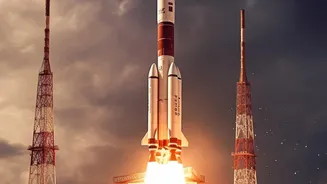
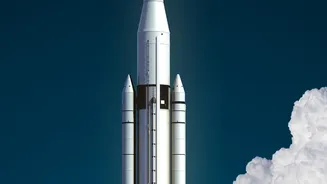
ISRO has scheduled the launch of Shukrayaan for March 29, 2028, aboard its powerful LVM-3 rocket, the same launch vehicle that successfully carried Chandrayaan-3. After a 112-day journey, the spacecraft is expected to enter a large elliptical orbit around Venus on July 19, 2028. This initial orbit will range from 500 km at its closest point to 60,000 km at its farthest. Over several months, ISRO will use a technique called aerobraking for the first time, using the friction of the planet's upper atmosphere to gradually lower and circularise the orbit to an ideal altitude of 200 x 600 km for scientific observation.
A New Global Race to Venus
India is not alone in its renewed interest in Venus. NASA has two missions planned for the late 2020s and early 2030s, VERITAS and DAVINCI+, while the European Space Agency (ESA) is developing its EnVision orbiter. This flurry of international activity marks a new era in the exploration of Venus, which had been relatively overlooked for decades in favour of Mars. Shukrayaan positions India as a key player in this global scientific endeavour, contributing its unique data and perspective to unraveling the mysteries of why Earth's twin took such a dramatically different path.