




The Science of the Big Chill
The secret to how a lake changes in winter lies in the unique physics of water. Most liquids become denser as they get colder. Water follows this rule, but only up to a point. It reaches its maximum density at 4°C. As the air chills a lake's surface,
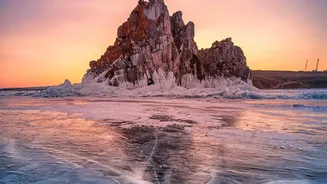
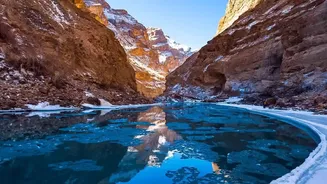
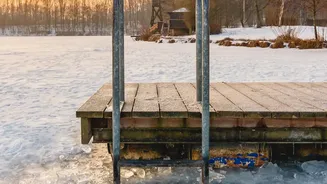
the colder, denser water sinks, pushing warmer water up. This process, called 'turnover', mixes the lake and distributes oxygen. Once the entire lake reaches about 4°C, a strange reversal happens. As the surface water cools further towards 0°C, it becomes less dense and floats on top. This is why lakes freeze from the top down. This layer of ice then insulates the water below, protecting aquatic life in the relatively warmer depths.
From Murky to Crystal Clear
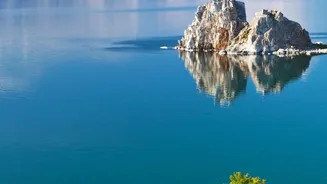
One of the most striking changes in a lake before it freezes is a dramatic increase in water clarity. During warmer months, lakes are bustling with microscopic life, particularly algae, which gives the water a greenish or murky tint. As temperatures drop, biological activity slows significantly. Algae growth is reduced, and many organisms die off or go dormant. With less life stirring things up, sediment and other suspended particles slowly settle to the bottom. This natural clarification process can make the water look exceptionally clear, sometimes appearing dark blue or almost black just before the ice sets in.
The High-Altitude Freeze in India
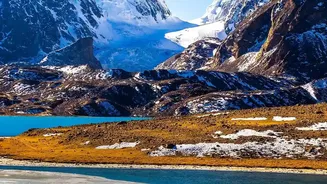
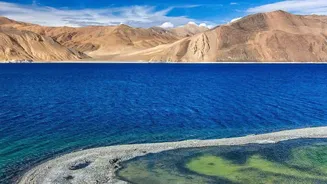
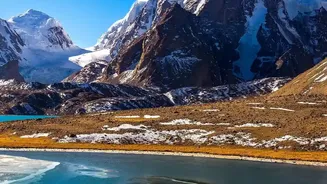
In the Indian Himalayas, high-altitude lakes offer a spectacular display of this winter transformation. Lakes like Gurudongmar in North Sikkim, one of the highest in the world at over 17,000 feet, freeze almost completely. The extreme cold and thin air at such elevations lead to a hard, pristine sheet of ice surrounded by snow-dusted peaks. Similarly, Tsomgo Lake, also in Sikkim, and Pangong Tso and Tso Moriri in Ladakh turn into vast expanses of ice. Often, parts of these sacred lakes, like a small section of Gurudongmar, are said to never freeze entirely due to local beliefs and possibly subtle geothermal activity or water currents.
Canada's Icy Spectacles
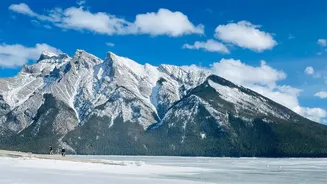
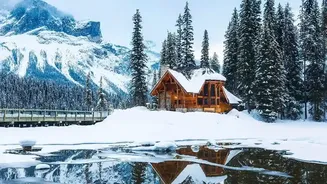
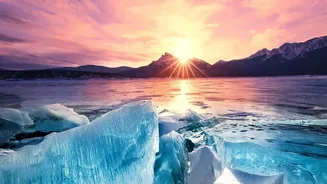
Across the globe in Canada, the phenomenon occurs on a grand and often different scale. The vast Canadian Rockies are home to iconic lakes that become winter playgrounds. Lake Louise in Banff National Park freezes into a perfect natural skating rink against the backdrop of the Victoria Glacier. A more unusual spectacle occurs at Abraham Lake in Alberta. While an artificial lake, it has become famous for its 'ice bubbles'. Methane gas, released by decaying organic matter on the lakebed, rises and gets trapped in frozen layers, creating stacks of white, circular discs suspended in the clear ice. This creates a surreal, otherworldly visual that draws photographers from around the globe.
More Than Just a Frozen Surface
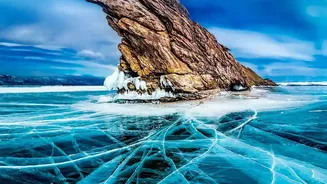
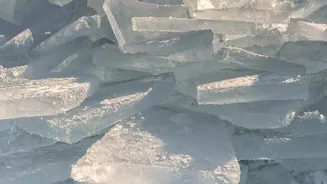
The winter transformation isn't just visual; it's also auditory and textural. On very cold, still nights, freezing lakes can produce strange sounds—booms, pings, and cracks—as the ice expands and contracts with temperature shifts. Sometimes called 'ice quakes', these noises are a testament to the immense pressures at play. In large, wind-swept bodies of water like the Great Lakes, other unique formations appear. Wave action can break up slushy ice into circular discs with raised edges, known as 'pancake ice'. In other conditions, 'ice balls' or 'ice volcanoes' can form along the shore, where waves and spray freeze into unusual shapes. These phenomena show that a frozen lake is not a static object, but a dynamic and ever-changing environment.