





When you picture ballet, you likely see grace and artistry. But beneath the elegant lines is a powerful athletic discipline that builds a unique kind of functional strength and resilience, starting from your body’s very foundation.
The Foundation of Strength
At the heart of ballet's
physical benefits is its focus on stabilising muscles. These are the deep, often-overlooked muscles in your core, hips, and back that provide a foundation for all movement. Think of them as your body's internal support system. Unlike exercises that target large, superficial muscles (like biceps curls), ballet demands constant engagement of these stabilisers. Every plié (a bend of the knees) and tendu (a stretching of the foot) requires you to hold your core tight, keep your hips aligned, and maintain a poised upper body. This continuous, low-level activation builds incredible endurance and control, leading to better posture, improved balance, and a reduced risk of injury in your daily life.
An Athlete's Unseen Power
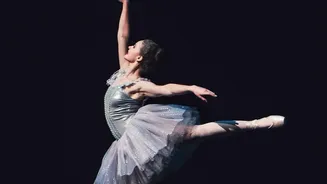
The strength built in ballet is subtle but profound. It’s not about lifting heavy weights, but about mastering your own body weight with precision. Holding positions like an arabesque, where one leg is extended behind you, requires immense strength from the standing leg's glutes and the deep muscles of the core to keep your torso upright and stable. This creates long, lean muscle tone rather than bulk. The constant repetition of exercises at the barre and in the centre builds muscular endurance, which is the ability of your muscles to perform contractions for an extended period. This translates directly to real-world functional fitness, making it easier to carry shopping, climb stairs, or even just stand for long periods without fatigue.
The Heart of the Dance
While the start of a ballet class at the barre may seem slow, it's a mistake to think it isn't a cardiovascular workout. Ballet is a form of interval training, mixing periods of lower intensity with bursts of high-energy activity. A standard class progresses from controlled barre work to more dynamic movements in the centre, such as turns and small jumps (petit allegro), culminating in large, travelling leaps (grand allegro). These faster-paced sections significantly elevate your heart rate. Studies on professional dancers show that while a full class provides a moderate aerobic stimulus overall, the jumping and travelling sequences can push the heart rate into a high-intensity zone, similar to a sprint. This intermittent demand is excellent for improving cardiovascular responsiveness and stamina.
A Benefit That Builds Over Time
The keyword for ballet’s benefits is 'consistency'. The cardiovascular improvements and deep muscle strength aren't gained overnight. Like any fitness regimen, the effects are cumulative. A regular ballet practice, even just once or twice a week, gradually trains your body. Over time, your resting heart rate may lower, your muscles will recover more quickly, and your overall stamina will increase. A typical ballet class doesn't keep you in a steady-state cardio zone like a 30nd minute run does, which has led some to underestimate its aerobic benefits. However, its unique combination of strength, flexibility, and intermittent cardio offers a holistic approach to fitness that supports longterm health, mobility, and joint stability.
More Than Just a Workout
Beyond the physical conditioning, ballet offers significant cognitive and mental benefits. The requirement to remember complex combinations, coordinate movements with music, and maintain focus acts as a workout for the brain. This strong mindbody connection can be a form of moving meditation, helping to reduce stress and improve mental clarity. The discipline also enhances proprioception—your body's awareness of its position in space—which is crucial for balance and coordination. It’s this blend of physical exertion and mental engagement that makes ballet a uniquely rewarding and comprehensive way to stay fit, strong, and graceful at any age.