

The Science of Stress
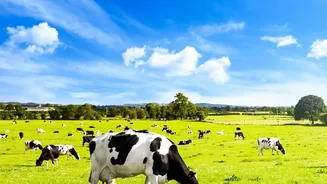
When humans feel hot, we sweat. For dairy cattle, especially high-yielding crossbreds and buffaloes, it’s not so simple. A combination of high temperature and humidity, measured by the Temperature-Humidity Index (THI), creates a condition known as heat
stress. Once the THI surpasses a certain threshold, a cow's ability to dissipate the immense metabolic heat it generates from digestion and milk production is compromised. Animals begin to pant, their feed intake drops, and they divert energy from producing milk to simply trying to stay cool. Buffaloes are particularly vulnerable; their darker skin absorbs more solar radiation, and they have far fewer sweat glands than cattle, making it harder to cool down naturally.
A Drain on Production and Profits
The most immediate consequence of heat stress is a drop in milk yield, which can fall by as much as 30% during periods of intense heat. One study found that a single unit increase in a key atmospheric moisture measure can slash a buffalo's daily milk yield by around 1.4 litres. This isn't just a temporary dip. Heat stress during a cow's dry period can negatively affect milk production in its next lactation cycle. Beyond quantity, the quality of milk can also suffer, with changes in fat and protein content. For India's 80 million dairy farmers, the majority of whom are smallholders with just a few animals, this drop in production is a direct hit to their primary source of income, forcing some to take on debt or even sell their livestock.
The Ripple Effect Across a Nation
India is the world's largest milk producer, accounting for nearly a quarter of global output. The dairy sector is a cornerstone of the rural economy, contributing significantly to the nation's GDP. The economic losses from heat stress are already staggering, with one estimate placing the annual deficit at around ₹2,661 crore due to a loss of 3.2 million tonnes of milk. Projections warn this could worsen significantly, with some studies suggesting a potential 25% decline in milk production by 2085 if climate trends continue unchecked. This threatens not only farmer livelihoods but also India's self-sufficiency in milk production, potentially leading to tighter supplies and higher prices for consumers nationwide.
Racing for Resilience
Farmers are not standing by idly. Many are adopting strategies to mitigate the worst effects of heat stress. Simple, low-cost solutions include providing adequate shade, ensuring unlimited access to cool, clean water, and adjusting feeding schedules to cooler parts of the day. More advanced methods involve installing fans and water sprinklers or misters in barns to create an evaporative cooling effect. These systems, which work best when wetting the cow's skin directly and then using fans to accelerate evaporation, can provide significant relief. On the nutritional front, providing high-energy feed and special supplements can help offset the reduced food intake and support the animal's energy balance. The government has also launched programs to research and promote climate-resilient agriculture, though scaling these solutions to millions of small farms remains a major challenge.