






What is the new rule?
The US Commerce Department's Bureau of Industry and Security (BIS) issued an interim final rule designed to close a significant loophole. Previously, rules focused on stopping the physical shipment of high-end AI chips to countries of concern, primarily
China. However, companies could bypass these restrictions by renting computing power from data centers located in third-party countries. The new regulation, effective November 19, 2026, requires companies to obtain a license if they export, re-export, or transfer advanced AI chips to any data center in the world that is known to provide remote access to companies headquartered in restricted nations.
From Hardware to the Cloud
This policy marks a fundamental shift, treating access to computing power as a controlled commodity, much like the physical hardware itself. The rule specifically targets the use of Infrastructure-as-a-Service (IaaS), where customers rent raw computing resources. It applies to data centers that provide a significant volume of computing power, defined as exceeding 12 million aggregate total processing performance (TPP), a metric used to measure compute capability. This essentially means that major cloud service providers like Amazon Web Services, Microsoft Azure, and Google Cloud must now vet their customers much more carefully to ensure they are not indirectly providing powerful AI capabilities to restricted entities.
The Target: Advanced AI Chips and Nations
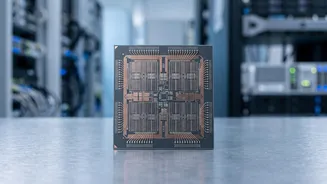
The technology at the heart of this rule is the advanced accelerators and GPUs, like Nvidia's H100-class hardware, that are essential for training and running sophisticated AI models. The restrictions are aimed at preventing companies headquartered in 'Country Group D:5' nations—a list that includes China, Russia, and Iran—from accessing this power remotely. The rule places the onus on exporters and data center operators to monitor their customers' ownership structures to ensure they aren't controlled by entities from these countries. This extends the existing controls, which already required licenses for direct chip sales to these nations.
Why Now? National Security
The stated goal of the US government is to protect national security. Officials aim to slow the military and technological advancement of adversarial nations by preventing American technology from being used to develop systems that could pose a threat. The Commerce Department stated the rule is a 'logical extension of existing controls' and is meant to align protections for remote access with those for physical shipments. Concerns have grown that foreign adversaries could exploit cloud computing to train advanced AI models for military applications, cyber warfare, or surveillance without ever needing to acquire the physical chips.
Who is Affected?
The immediate impact is on major US cloud providers, who now face significant compliance obligations, including implementing geofencing and enhanced customer due diligence within 90 days. The rule also creates new licensing requirements for chip exports to Brazil, Indonesia, Malaysia, Singapore, and Thailand, countries identified as having a 'higher-than-normal risk of diversion'. This could complicate supply chains and operations for international AI companies. Chinese tech firms, which had reportedly been rushing to secure overseas computing capacity, are the primary target and will face major infrastructure constraints.
Potential Ripple Effects
While the rule aims to create a chokehold on AI development in certain countries, it also presents challenges. Enforcing controls on intangible cloud access is complex and could be difficult to monitor effectively. Furthermore, such restrictions could accelerate efforts within China to achieve technological self-sufficiency in chip design and manufacturing, potentially weakening the long-term impact of the controls. For American and allied tech companies, the increased compliance burden and potential loss of market access represent significant economic considerations in an intensely competitive global industry.