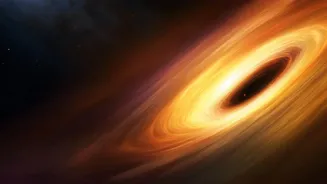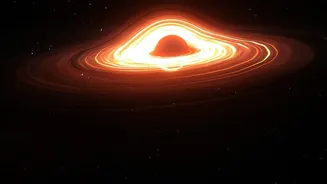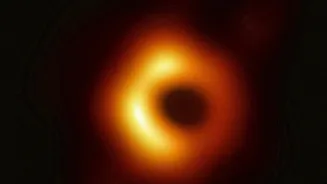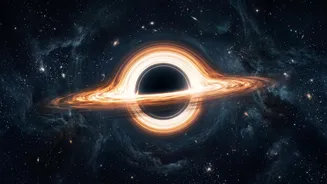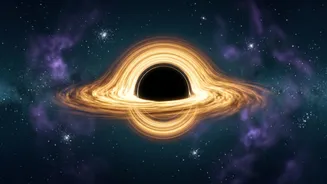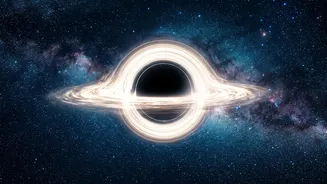


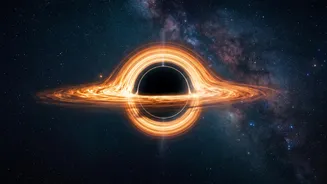
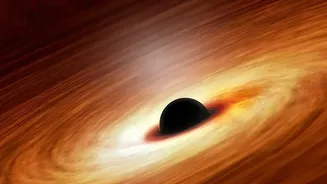
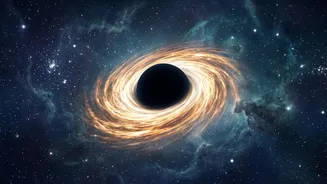
The Milky Way is thought to contain millions of black holes, but finding them is like searching for a needle in a cosmic haystack. Now, a groundbreaking project is proving that you don't need a PhD to join the hunt.
A Universe of Data
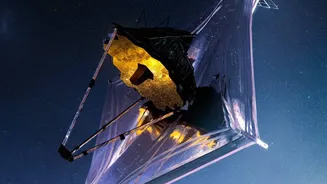
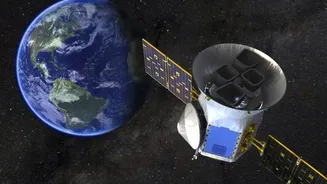
The search begins with NASA's Transiting
Exoplanet Survey Satellite, or TESS. Launched in 2018, its primary mission is to find planets outside our solar system by monitoring the brightness of millions of stars. When a planet passes in front of its star, it causes a tiny, temporary dip in the star's light. TESS is incredibly good at detecting these dips, generating a colossal amount of data known as 'light curves'—essentially graphs of star brightness over time. This relentless stream of information is far too vast for professional astronomers to sift through alone, creating both a challenge and a unique opportunity.
Hunting for a Cosmic Magnifying Glass
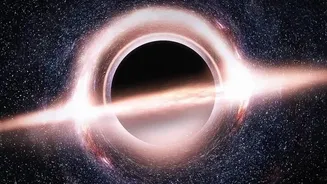
While TESS was designed to find planets, its data can be used to hunt for something far more elusive: black holes. Specifically, the project looks for 'quiet' black holes that are not actively feeding on nearby material, which would otherwise make them visible by emitting X-rays. The Black Hole Hunters project searches for these invisible objects by looking for an effect predicted by Einstein called gravitational microlensing. If a black hole in a binary system passes in front of its companion star from our point of view, its immense gravity bends and magnifies the star’s light, causing a distinct, brief spike in brightness. This temporary brightening acts as a powerful signpost for an otherwise invisible object.
Enter the Citizen Scientist
This is where people power comes in. The Black Hole Hunters project, hosted on the Zooniverse online platform, invites anyone with an internet connection to become a cosmic detective. While artificial intelligence does an initial pass to flag promising candidates from millions of light curves, human eyes are essential for the next step. Computer algorithms can be easily fooled by other cosmic phenomena, like stellar flares or natural pulsations from a star. Volunteers are shown examples of the specific pattern created by a microlensing event and are asked to classify graphs, flagging any that match the signature of a potential black hole. The task is simple pattern recognition, requiring no prior expertise in astronomy.
More Than Just a Hobby
The project isn't just an engaging pastime; it's a vital part of the scientific process. By identifying the most promising candidates, citizen scientists help professional astronomers narrow their focus and use precious time on powerful telescopes more effectively for followup observations. This collaborative model has proven successful in other areas of astronomy, from discovering new types of galaxies to finding supernovae. Since its launch, the Black Hole Hunters project has attracted tens of thousands of volunteers who have made millions of classifications, demonstrating a widespread public appetite for contributing to real research. According to the project leaders, every participant has a real chance to be the first person to spot a new type of black hole system that has, until now, only been theorized to exist.
The Future of Discovery is Collaborative
The success of projects like Black Hole Hunters highlights a major shift in how scientific research can be conducted. As astronomical surveys generate ever increasing volumes of data, the role of citizen science becomes more crucial. It democratizes the process of discovery, breaking down stereotypes that science is only for isolated geniuses and proving that anyone with curiosity can make a meaningful contribution. By turning a data overload problem into a collaborative opportunity, these initiatives not only accelerate the pace of research but also foster a deeper connection between the public and the cosmos. The hunt for black holes is a perfect example of this synergy, making the invisible visible through the combined power of professional expertise and public enthusiasm.