

The Only Gear You Need
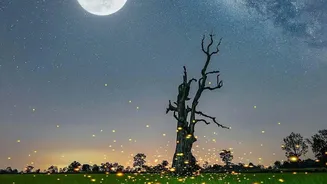
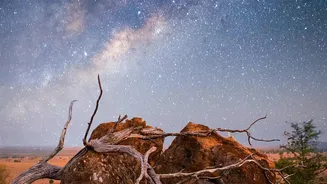
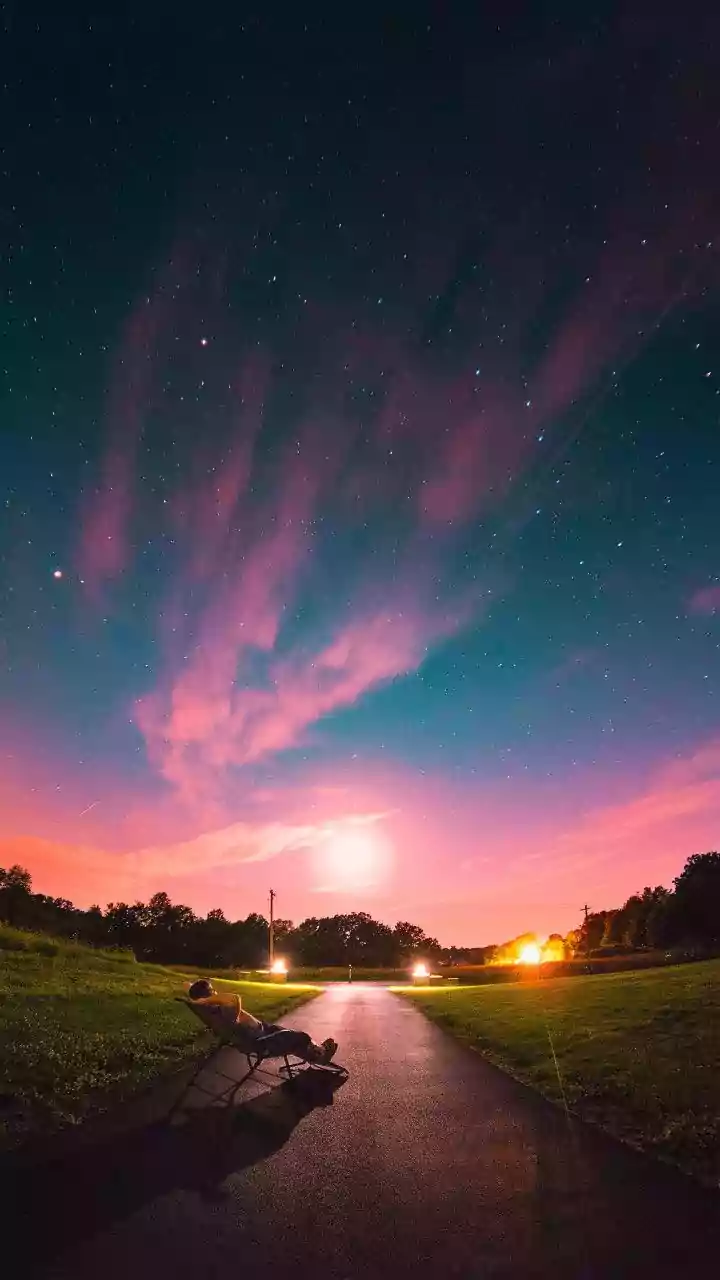
Serious stargazing can be an expensive hobby, but starting out costs nothing. Your most important tools are your own eyes. To make the most of them, you need to find a location with minimal light pollution. Getting away from bright city lights will dramatically
increase the number of stars you can see. Once you're in a dark spot, give your eyes 20 to 30 minutes to fully adapt to the darkness; this will allow you to see much fainter objects. While not essential, a stargazing app on your phone can act as a handy map to the sky, but remember to use it in red-light mode to preserve your night vision. Dressing in warm layers and bringing a comfortable chair or blanket will make your experience much more enjoyable.
Meteor Showers: October's Shooting Stars
October hosts two notable meteor showers. First up are the Draconids, active from October 6 to 10 and peaking on the evening of October 8-9. This shower is best viewed right after nightfall, unlike many others that require staying up late. In 2026, viewing conditions are excellent as the peak occurs near the new moon, meaning darker skies. While typically a modest shower with about 5-10 meteors per hour, the Draconids are known for being slow-moving and occasionally producing surprise outbursts. Later in the month, the Orionids grace the sky, active from early October to early November. The peak occurs on the night of October 21-22. These meteors are debris from the famous Halley's Comet and are known for being fast and bright, sometimes leaving persistent trails. Expect to see around 15 to 20 meteors per hour under ideal conditions. A bright waxing gibbous moon will interfere in the evening, but it sets a few hours before dawn, creating a dark window for prime viewing in the early morning hours.
A Parade of Planets
Several planets are on display this month, appearing as bright, steady points of light that don't twinkle like stars. Saturn will be a brilliant feature in the evening sky, reaching opposition on October 4. This means it will be at its closest and brightest for the year, visible all night long. To the naked eye, it will look like a bright, pale-yellow star. Look for it in the eastern sky after dark. Mars and Jupiter will be prominent in the pre-dawn sky. Mars rises around 1 a.m. and will be visible in the east-southeast before sunrise. Bright Jupiter rises a bit later, around 3 a.m. at the start of the month, easily outshining all the stars around it. On the morning of October 6, the waning crescent moon will pass very close to Jupiter, making for a beautiful sight.
Connecting the Dots: Easy-to-Find Constellations
Finding constellations can feel daunting, but a few key patterns open up the entire autumn sky. The most important one to find is the Great Square of Pegasus. Look for a large, easily recognizable box of four medium-bright stars in the eastern sky on autumn evenings. This square serves as a starting point to find other star patterns. From the Great Square, you can trace a line of stars to the neighboring constellation Andromeda. Cassiopeia, shaped like a distinct 'W' or 'M', is also high in the northern sky and easy to spot. As the night progresses, you will see the famed constellation Orion, the Hunter, rising in the east late in the evening. Its three-star belt is one of the most recognizable patterns in the entire night sky, making it a perfect target for beginners.
Simple Tips for a Great Night
Success in stargazing often comes down to preparation. Always check the weather forecast before you head out, as clear skies are essential. If you use a flashlight, make sure it has a red light setting, as red light doesn't ruin your night vision the way white light does. When observing, try a technique called averted vision for very faint objects. Instead of staring directly at a dim star or smudge, look slightly to the side of it. This uses the more sensitive part of your retina and can make faint objects pop into view. Above all, be patient. The universe has been there for billions of years; it will be there when you are ready.