





The Brain's Destructive Tangles
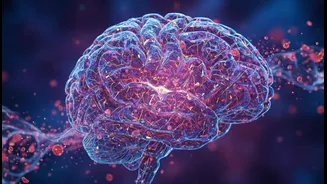
At the heart of Alzheimer's disease pathology are two rogue proteins: amyloid-beta, which forms plaques outside of neurons, and tau, which creates destructive tangles inside them. While both are culprits, the neurofibrillary tangles made of tau protein are strongly
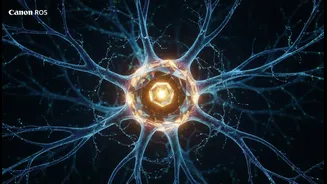
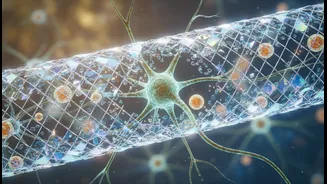
correlated with cognitive decline. In a healthy brain, tau proteins are essential. They act like railroad ties, stabilizing the microtubules that form the internal 'skeleton' or transport system of a neuron, ensuring nutrients and signals get where they need to go. But in Alzheimer's, tau proteins change. They become hyperphosphorylated, causing them to detach from the microtubules, misfold, and clump together into toxic filaments. This process collapses the neuron's internal structure, disrupting its function and ultimately leading to cell death.
A Breakthrough in Seeing the Unseen
For years, scientists struggled to understand precisely how these tau filaments were structured at an atomic level. Their tangled, fibrous nature made them difficult to study with traditional methods. This was a major roadblock for drug development; it's hard to design a key if you don't know the shape of the lock. That all changed with a revolutionary technique called cryo-electron microscopy (cryo-EM). By flash-freezing samples of tau filaments taken directly from the brains of deceased Alzheimer's patients, researchers could finally visualize their intricate 3D structure. They discovered that the core of these filaments, whether of the paired helical or straight variety, is made of two C-shaped protofilaments woven together. This was a watershed moment, providing the first high-resolution map of the enemy.
From Blueprint to Precision Engineering
With this atomic-level blueprint in hand, the game has changed from guesswork to structure-based drug design. Scientists can now see the exact nooks and crannies on the surface of the tau filaments. This allows them to computationally design and engineer small molecules that can fit perfectly into these pockets. The goal is to create molecules that can either block the tau proteins from clumping together in the first place or even destabilize and break apart existing tangles. Recent research has also focused on understanding the 'fuzzy coat' that surrounds the rigid core of the tau filament. Penetrating this coat is crucial for any drug to be effective, and modeling its structure provides another critical piece of the puzzle for molecular engineers. This approach is far more precise than previous methods, which often involved screening thousands of compounds to see what might work by chance.
Targeting the Cell's 'Gatekeeper'
The headline's 'skeleton structure' can also refer to the neuron's own internal framework, known as the cytoskeleton. This network, made of proteins like actin, does more than just provide shape; it also acts as a gatekeeper, controlling what the cell absorbs. Recent studies have shown that in aging and neurodegenerative diseases, this cytoskeleton can weaken. A compromised skeleton allows the neuron to more easily absorb the toxic forms of tau and amyloid proteins, creating a vicious cycle of damage. This has opened up another avenue for therapy: designing molecules that can stabilize or protect this cellular skeleton. By reinforcing the gatekeeper, it might be possible to slow the uptake of harmful proteins and halt the progression of the disease at a very early stage, before significant damage occurs.
The Road Ahead
These structural insights represent a fundamental shift in Alzheimer's research. While they have not yet yielded a cure, they are accelerating the development of a new generation of targeted therapies. Researchers are already using these structural maps to identify binding sites for diagnostic tools, like PET scan ligands, which can help visualize tau in living brains. Other approaches include developing 'supramolecular drugs' in the form of nanoparticles that help the brain's natural cleanup systems remove toxic proteins. By understanding the precise shapes of the molecules driving the disease, scientists are better equipped than ever to design intelligent therapies that can intervene in the process, offering a more hopeful path forward in the fight against Alzheimer's.