
A Jittery Start to the Season
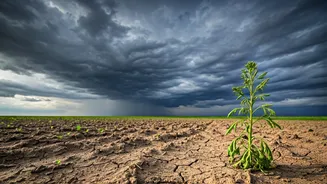
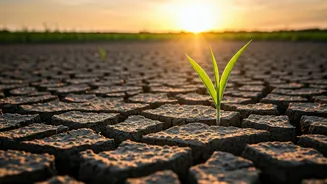
The 2026 southwest monsoon has had a sluggish and worrying start. After arriving in Kerala on June 4, it stalled for nearly two weeks, leading to one of the driest Junes on record. [9] As of late June, the country faced an overall rainfall deficit of more
than 43 percent. [10, 16] The India Meteorological Department (IMD) has forecast a “below-normal” monsoon season for 2026, with rainfall projected to be around 90% of the Long Period Average (LPA). [2] This is largely influenced by the expected development of El Niño conditions, a climate pattern typically associated with weaker monsoons in India. [2, 11] While rains have revived in some parts, the significant shortfall in June has raised alarms for the crucial kharif sowing season. [9, 3]
Why the Monsoon Dictates Your Grocery Bill
India's agricultural sector is the backbone of its economy, and the monsoon is its lifeline. The kharif season, which depends heavily on monsoon rains, accounts for a substantial portion of the country's annual food production. A good monsoon replenishes reservoirs, ensures adequate soil moisture, and supports the cultivation of key crops like rice, pulses, soybeans, and vegetables. [19] When rainfall is deficient or unevenly distributed, it directly impacts crop yields. [19] Lower production leads to supply shortages, which in turn drives up prices in the market. This is why economists and policymakers watch the monsoon's progress as closely as farmers do; it is a lead indicator for food inflation. [14]
The Pressure Points: Pulses and Vegetables
While government buffer stocks of staples like rice and wheat provide a cushion against immediate price shocks, other food categories are far more vulnerable. [16, 19] Pulses (like tur and urad) and vegetables (like onions and tomatoes) are particularly sensitive to monsoon performance. [21] India remains a net importer of pulses, so any domestic production shortfall quickly translates into higher prices for these protein staples. [19, 22] The latest data for May 2026 already showed food inflation climbing to 4.78%, with vegetable prices being a key driver. [13, 25, 26] For example, tomato prices surged by 48.4% in May. [17] A prolonged dry spell or erratic rains could further disrupt the supply of these daily essentials, putting significant pressure on household budgets. [21]
The RBI's Tightrope Walk
The Reserve Bank of India (RBI) is watching the monsoon with hawk eyes. Food prices are the largest component of India's Consumer Price Index (CPI), meaning a spike in food costs can quickly push up overall headline inflation. [19, 24] In its June 2026 bulletin, the RBI explicitly stated that a deficient monsoon could weigh heavily on the country's growth-inflation dynamics. [14, 18] Even before the full impact of the monsoon is known, the RBI has already raised its inflation forecast for the fiscal year to 5.1%. [20] If food inflation surges, it will limit the central bank's ability to cut interest rates to support economic growth, forcing it to prioritize price stability. [19]
What to Expect in the Coming Months
The outlook for food inflation hinges on the monsoon's performance in July and August, which are the most critical months for rainfall. While the IMD has noted favorable conditions for the monsoon's advance into northern states, the initial deficit is substantial. [4, 6] The government has flagged that over 300 districts are vulnerable to receiving below-normal rainfall this year. [16] For consumers, the impact may not be immediate, but sustained rainfall shortages will likely lead to higher prices for vegetables, pulses, and edible oils in the coming months. [16] The government's ability to manage its food reserves and make timely market interventions will be crucial in mitigating the worst effects. The real story will unfold not in the total rainfall numbers for the season, but in its timing and, most importantly, its distribution across the country's agricultural heartlands. [19]