


The Sun’s Turbulent Temperament
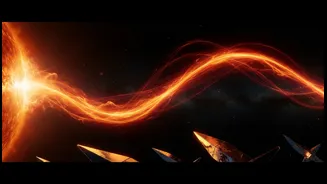
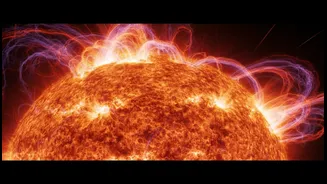
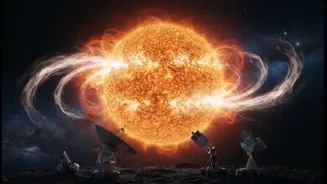
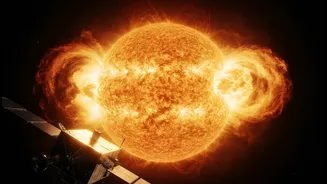
The Sun may seem like a constant, steady presence, but it’s a dynamic and sometimes violent star with a temper that waxes and wanes over a roughly 11-year cycle. We are currently in Solar Cycle 25, which began in 2019 and is anticipated to reach its peak
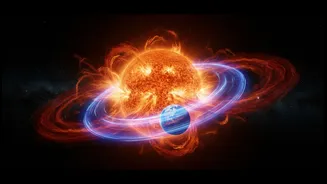
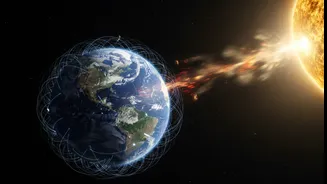
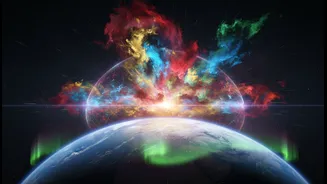
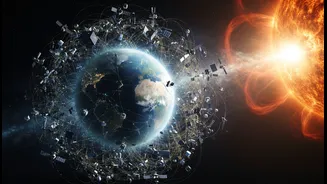
of activity. This peak, known as the solar maximum, is characterized by a dramatic increase in sunspots, solar flares, and colossal eruptions of plasma called coronal mass ejections (CMEs). While these events can produce beautiful auroras on Earth, they also unleash a torrent of radiation and charged particles into space—a phenomenon broadly known as space weather. For the thousands of satellites orbiting our planet, this period of heightened activity poses a significant and constant threat to their operation and survival.
Satellites in the Firing Line
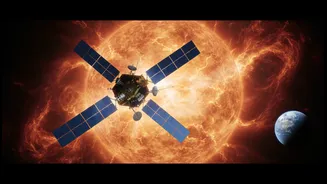
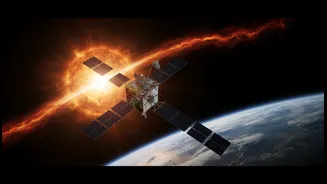
When a solar storm hits, satellites are in the direct line of fire. There are several key risks. First, the increased ultraviolet radiation from the sun heats Earth's upper atmosphere, causing it to expand. This expansion increases the atmospheric drag on satellites in Low Earth Orbit (LEO), causing them to lose altitude faster than expected and shortening their operational lifespan. This drag has been blamed for the premature de-orbiting of several satellites, including a batch of 40 Starlink satellites in 2022. Second, high-energy particles from solar flares and CMEs can bombard a satellite's sensitive electronics, causing malfunctions, data corruption, or even complete failure. This is akin to a microscopic hailstorm that can short-circuit the complex systems that control everything from communication relays to navigation. Finally, the geomagnetic storms created by these events can disrupt the very signals satellites are trying to transmit, affecting GPS accuracy and radio communications on the ground.
A Digital Crystal Ball for Space
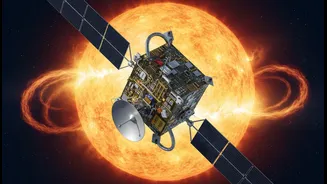
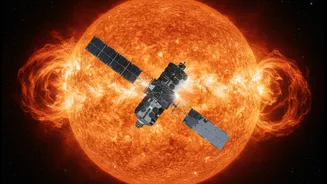
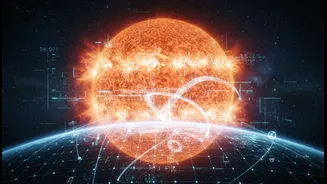
Satellite operators are not flying blind. To protect their multi-billion dollar assets, they rely on sophisticated space observatory modeling. This is where space-based observatories like NASA’s Solar Dynamics Observatory (SDO) and the joint ESA/NASA Solar and Heliospheric Observatory (SOHO) become indispensable. These spacecraft are our eyes on the Sun, providing a continuous stream of high-resolution images and data across multiple wavelengths. This data feeds into complex computer models run by agencies like the NOAA Space Weather Prediction Center (SWPC). These models analyze the Sun's magnetic field, track the formation of sunspots, and simulate the trajectory of CMEs, effectively acting as a digital crystal ball to forecast space weather. By understanding what the Sun is doing now, they can predict what it will do next.
From Data to Defensive Action
A forecast is only useful if you can act on it. When the SWPC issues a watch or warning for a significant solar event, satellite operators spring into action. With advance notice, they can take crucial defensive measures. For example, they might command a satellite to enter a 'safe mode,' shutting down non-essential systems and orienting the spacecraft to shield its most critical components from incoming radiation. They can postpone delicate maneuvers like orbital adjustments, which would be riskier during a geomagnetic storm. For satellites in LEO, operators might plan for more frequent thruster firings to counteract the increased atmospheric drag and maintain their correct altitude. In essence, the modeling allows operators to move from a reactive to a proactive stance, managing risk and preserving the health of their fleet through turbulent solar conditions.
Why It Matters on Earth
The silent, high-stakes drama playing out in Earth's orbit has profound implications for our daily lives. The satellite industry is the backbone of a vast global infrastructure. The GPS in your car, the credit card transaction at the store, the live sports broadcast, and the accurate weather forecast you check on your phone all depend on the reliable functioning of satellites. As our world becomes ever more connected and dependent on these space-based systems, the economic and societal cost of a widespread satellite failure becomes immense. The reliance on space observatory modeling is therefore not just a technical concern for engineers; it's a critical component of our modern global economy and security. It's the invisible shield that protects the technology we often take for granted.