





A New Blueprint for the Red Planet
For decades, a mission to Mars meant NASA designed, built, and operated nearly everything: the rocket, the spacecraft, and the scientific instruments. This all-in-one approach delivered incredible successes but was also incredibly expensive and time-consuming.
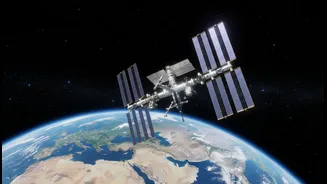
The new public-private model fundamentally changes this dynamic. In this setup, NASA acts more like a customer with a very specific package to send. The agency focuses its world-class expertise on creating sophisticated scientific instruments, while commercial partners are responsible for building the spacecraft, launching it, and flying it to Mars. This is an extension of a strategy that has already proven successful for missions to the International Space Station and, more recently, for delivering payloads to the Moon. The goal is to make trips to Mars more frequent and affordable by leveraging the innovation and investment of the burgeoning private space industry.
Meet the Commercial Pioneers
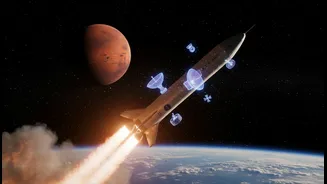
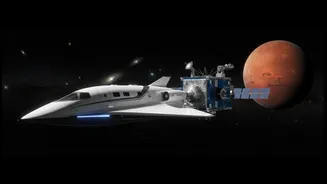
The first major test of this model for a deep-space science mission involves a partnership with Relativity Space, an aerospace company based in California. Under a recently announced agreement, Relativity will provide the spacecraft, the launch on its Terran R rocket, and the interplanetary cruise operations for a mission slated for 2028. This isn't just about buying a launch; it's about treating a mission to Mars like a commercial delivery service, a major strategic shift for NASA. While Relativity is the partner for this initial mission, NASA has been cultivating a wider commercial ecosystem for Mars for years. The agency has awarded contracts and funded studies with numerous companies—including Blue Origin, Lockheed Martin, and Astrobotic—to mature concepts for everything from payload delivery to surface mobility and communications relays. The idea is to build a competitive market of providers who can support a sustained campaign of robotic and, eventually, human exploration.
The Aeolus Mission: Science as a Service
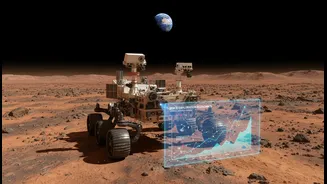
The first payload to fly under this new model is the Aeolus instrument suite. Developed by NASA's Ames Research Center, Aeolus is a package of four instruments designed to give science its first-ever integrated, daily, global view of the Martian atmosphere. It will measure winds, temperatures, dust, and clouds with unprecedented detail. This data is not just for academic curiosity; it is critical for reducing the risks of future landings. Understanding the Martian weather is essential for designing entry, descent, and landing systems that can safely deliver both robotic explorers and, one day, astronauts to the surface. The suite includes a Doppler wind and temperature sounder and a camera that will capture daily images of atmospheric activity. NASA will manage the science operations for at least one Martian year (about 687 Earth days) while Relativity maintains the spacecraft in orbit.
More Science, Less Overhead
The benefits of this model are compelling. By offloading the development of rockets and spacecraft, NASA can dedicate more of its budget to what it does best: pioneering science and technology. As NASA Administrator Jared Isaacman stated, these partnerships act as a "force multiplier for science." They allow the agency to "deliver more science, more often, and reduce the time it takes to get essential data into the hands of researchers." This approach is designed to increase the cadence of missions, providing a more continuous flow of information about the Red Planet. For the commercial partners, the benefit is equally significant. A high-profile mission to Mars provides invaluable flight experience, proves their deep-space capabilities, and positions them to compete for future government and commercial contracts, effectively building an economic frontier in deep space.