






What 'Moon Base' Really Means
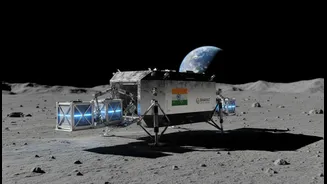
First, let's clarify the terminology. When NASA talks about a permanent lunar presence, they're referring to the Artemis Base Camp. This isn't a domed city from a movie. It's a more practical, phased approach to sustainable exploration. The initial vision
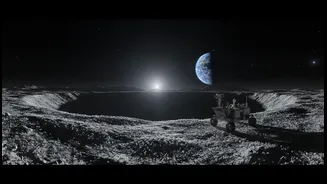
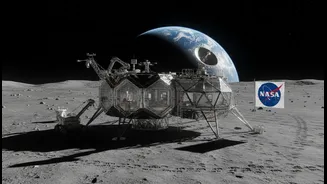
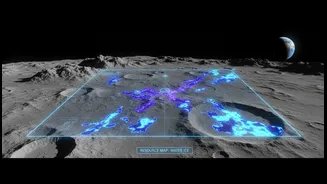
includes a foundational surface habitat for short stays, an unpressurized rover (the Lunar Terrain Vehicle) for transport, and a pressurized mobile home for longer science expeditions away from the main camp. The primary location is the Moon's South Pole, a region chosen for its unique resources and environmental conditions. This area contains permanently shadowed craters believed to hold water ice, a critical resource for producing breathable air, drinking water, and even rocket propellant. It’s about building a foothold, not a metropolis.
The Core Scientific Mission
The main driver behind the Artemis program is science. The Moon is a 4.5-billion-year-old time capsule that holds clues to the evolution of our solar system. A key objective is to study the lunar water ice at the South Pole—understanding its distribution, accessibility, and composition. This practice of using local materials, what NASA calls In-Situ Resource Utilization (ISRU), is crucial for making long-term space exploration sustainable. Beyond ice, astronauts will conduct advanced field geology, collecting samples far more strategically than during the Apollo missions to piece together the Moon's history. The base will also serve as a unique platform for studying how the human body, plants, and other organisms adapt to a partial-gravity, high-radiation environment—essential data for an eventual trip to Mars.
Context 1: The New Space Race
It’s impossible to separate the science from the geopolitics. We are in a new space race, but this one is multipolar. The United States is not just racing against the clock, but also competing with a deepening space alliance between China and Russia, who are planning their own parallel lunar base. This rivalry is focused on the resource-rich lunar South Pole, which is quickly becoming some of the most strategic real estate in the solar system. In response, the U.S. is using the Artemis Accords—a set of principles for peaceful lunar exploration—to build a global coalition of partner nations. More than just a scientific endeavor, the Artemis program is a tool of 21st-century diplomacy and a statement of American leadership in space.
Context 2: The Commercial Revolution
Unlike the Apollo program, where NASA built and owned everything, Artemis is powered by commercial partnerships. This is perhaps the most significant, and often overlooked, part of the story. NASA is buying services, not just hardware. Companies like SpaceX and Blue Origin are developing the human landing systems that will ferry astronauts from lunar orbit to the surface. Other private firms like Astrobotic and Intuitive Machines are contracted under the Commercial Lunar Payload Services (CLPS) initiative to deliver science instruments and supplies. This model is intended to drive innovation, lower costs, and build a robust commercial space economy that extends all the way to the Moon. NASA is now a customer as much as it is an operator.
Context 3: The Hurdles Are High
While the vision is inspiring, the path to Artemis Base Camp is fraught with challenges. Timelines have repeatedly slipped. The first crewed landing, originally planned for much earlier, is now targeted for 2028 on the Artemis IV mission after a program restructure. The complexity is immense, involving the coordination of the powerful but expensive Space Launch System (SLS) rocket, the Orion crew capsule, and the yet-to-be-proven commercial landers. Technical issues, from the performance of Orion's heat shield to damage on the launch platform, have caused delays. Above all, sustained and predictable funding from the U.S. Congress remains a persistent challenge. Government watchdogs note that without transparent, long-term cost estimates, ensuring the program's sustainability is difficult.