


Seeing the Invisible Gas
For decades, tracking methane emissions from the sprawling global network of oil and gas facilities has been a monumental challenge. Methane is colorless and odorless, meaning small but persistent leaks can go undetected for years, contributing significantly
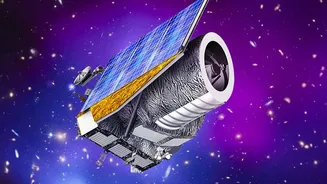
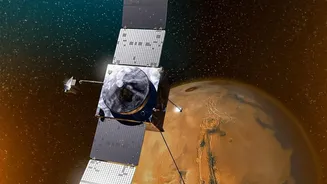
to climate change. Traditional on-the-ground monitoring is expensive and can only cover small areas. But now, a new generation of 'eyes in the sky' is changing the game. Using hyperspectral imaging, these satellites can pinpoint methane plumes from 500 kilometers above the Earth. This technology works by analyzing sunlight that reflects off the planet's surface. Just as a prism splits white light into a rainbow, these advanced sensors break down reflected light into hundreds of spectral bands, far beyond what the human eye can see. Methane gas absorbs sunlight at a very specific wavelength in the shortwave infrared spectrum, creating a unique chemical 'fingerprint' that the satellite’s spectrometer can identify.
The Methane Hunters in Orbit
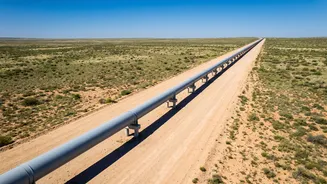
A growing constellation of satellites operated by both public and private entities is now dedicated to this mission. Companies like GHGSat operate a fleet capable of detecting emissions from individual industrial facilities, such as well pads, pipelines, and compressor stations. They can spot leaks as small as 100 kilograms per hour, providing actionable data to facility operators. Other major players include MethaneSAT, an initiative by the non-profit Environmental Defense Fund, and Carbon Mapper. These satellites are designed to scan vast regions, mapping out entire oil and gas basins to identify hotspots and quantify the total volume of emissions. This layered approach, combining wide-area surveys with high-resolution targeting, creates an unprecedented level of transparency and allows for continuous monitoring of industrial sites worldwide.
A Super-Pollutant in the Crosshairs
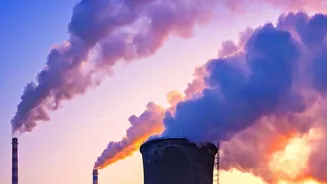
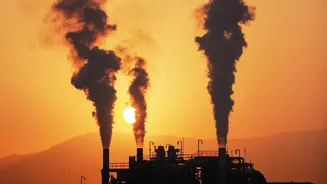
The focus on methane is no accident. While carbon dioxide is more abundant, methane is a super-pollutant. Over a 20-year period, it is more than 80 times more effective at trapping heat in the atmosphere. Methane from human activities is responsible for approximately 30% of the global temperature rise since the Industrial Revolution. Crucially, methane has a much shorter atmospheric lifespan than CO2, lasting for about 12 years compared to centuries. This means that cutting methane emissions now can have a rapid and significant impact on slowing the rate of near-term global warming. The oil and gas sector is a major source of these emissions, and plugging leaks is considered one of the most cost-effective climate mitigation strategies available.
From Data to Accountability
This satellite data is more than just a scientific curiosity; it's a powerful tool for accountability. For energy companies, pinpointing leaks is not only an environmental responsibility but also a financial one—every cubic foot of leaked methane is lost product that could have been sold. The data empowers operators to dispatch repair crews to the exact source of a leak, saving time and money. For governments and regulators, this independent, verified data provides a way to ensure companies are complying with emissions standards. Organizations like MethaneSAT are making their data public, allowing researchers, investors, and the public to see which companies and regions are the biggest emitters. Recent analyses of this data have already revealed that official inventories often underestimate methane emissions, sometimes dramatically.
The Future of Climate Transparency
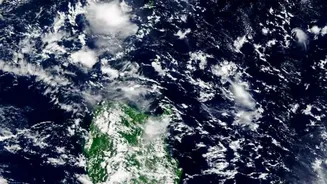
The technology is not without its challenges. Cloud cover can obscure the view, and the sheer volume of data requires sophisticated artificial intelligence to process and analyze effectively. Furthermore, detecting smaller leaks from sources like low-producing wells, which collectively account for a huge amount of pollution, remains a difficult but critical frontier. However, the technology is rapidly advancing. Satellites are becoming more sensitive, revisit times are getting shorter, and new constellations are being launched to provide near-daily global coverage. This move towards comprehensive and transparent monitoring marks a turning point, transforming methane from an abstract problem into a manageable one. What we can measure, we can manage, and these eyes in the sky are giving us the vision to do just that.