


A Fluffy, Three-Layer Cake
The latest findings from ISRO have transformed our understanding of the lunar surface at the Shiv Shakti Point landing site. Far from being a uniform blanket of dust, the top 10 centimetres of the lunar regolith—the correct term for the Moon's crushed
rock and dust—is a surprisingly complex, three-layered structure. The topmost layer, extending down about 3 cm, is described as being incredibly porous, with an estimated porosity of 80%. This means it's mostly empty space, like a very loosely packed powder. Below this lies a second layer, from 3 to 6 cm deep, which is more compact and a better conductor of heat. The third layer, between 6 and 10 cm, is denser still, with its bulk density more than double that of the surface. Scientists were surprised by this fine-scale layering, as it had not been observed or expected before.
How ChaSTE Uncovered the Secret
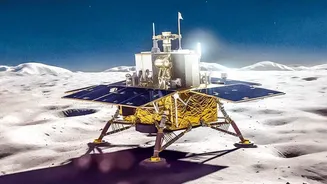
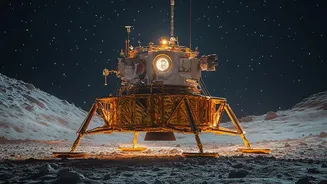
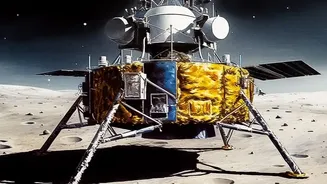
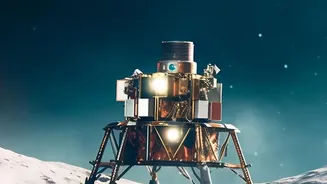
This detailed profile of the lunar soil was captured by an ingenious instrument aboard the Vikram lander called the Chandra’s Surface Thermophysical Experiment, or ChaSTE. Developed by ISRO-affiliated labs, ChaSTE is a rod-shaped probe equipped with 10 precision temperature sensors. After landing, the probe was pushed 10 cm into the lunar regolith, becoming the first instrument to successfully perform such an in-situ measurement near the lunar south pole. As it penetrated, it measured both the resistance from the soil and the temperature at different depths. The significant difference in temperature—around 73 Kelvin between the surface and 10 cm deep at local noon—revealed how poorly the top layer conducted heat, confirming its high porosity. This data gave scientists a direct look at the soil's thermal and physical properties.
A Thermal Blanket on the Moon
The discovery of this highly porous top layer has a major implication: it acts as a phenomenal thermal insulator. With no atmosphere to trap or circulate heat, the Moon's surface experiences extreme temperature swings, from scorching hot in direct sunlight to incredibly cold at night. The ChaSTE data showed a massive temperature drop of over 50-80°C within just a few centimetres of depth. This porous, fluffy material prevents the Sun's heat from penetrating deep into the ground, effectively acting like a thermal blanket. This helps explain how areas of permanent shadow near the poles can remain cold enough to potentially harbour water ice just below the surface, even when nearby sunlit areas are boiling hot.
Why This Matters for Future Missions
Understanding the ground beneath our feet is critical for any construction project on Earth, and it's even more crucial on the Moon. This new data on soil porosity and layering is vital for planning future missions, including India's own ambitions and the global Artemis program. The 'fluffy' and non-uniform nature of the ground will affect how we design everything from landing gear and rover wheels to foundations for long-term habitats. A loose surface could pose challenges for stability, while its abrasive, glassy nature can wear down equipment, a problem noted since the Apollo missions. Furthermore, knowing the exact thermal properties at different depths helps engineers plan for habitats, as placing structures even a few centimetres underground could dramatically reduce the need for complex and heavy heating and cooling systems.
Building on a Legacy of Discovery
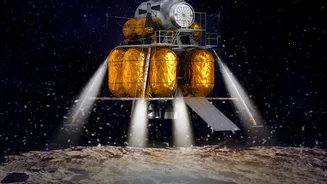
These findings are a testament to the scientific success of Chandrayaan-3, which continues to yield valuable data long after its primary mission. The mission's famous 'hop' manoeuvre, where Vikram fired its engines to jump to a new spot, also provided crucial insights. The engine blast blew away the top 2-3 cm of loose dust, exposing the more compact layer underneath and confirming the layered structure. Each discovery, from the unexpected presence of sulphur to this detailed soil analysis, cements ISRO's position at the forefront of lunar science. The mission has not only demonstrated India's technological prowess by achieving a historic landing but is now providing the foundational science that will guide the next generation of lunar explorers.