




Nature's Climate Superheroes
Mangrove forests are one of the planet's most powerful tools against climate change. These unique coastal ecosystems are incredibly efficient at carbon sequestration—the process of capturing and storing atmospheric carbon dioxide. While they cover only
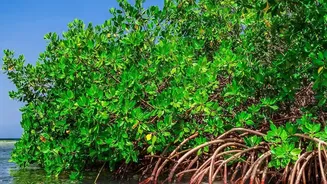
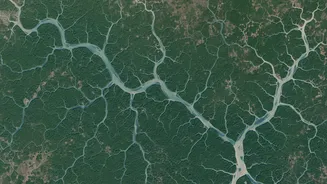
a tiny fraction of the world's coastal areas, mangroves are responsible for a disproportionately large amount of carbon storage. They can store two to four times more carbon than mature tropical forests, making them invaluable 'blue carbon' zones. The secret lies in their dense, complex root systems and the waterlogged soil they grow in. Most of the carbon is stored below ground in the roots and soil, where it can remain locked away for centuries. The Indian Sundarbans, the world's largest single stretch of mangrove forest, is a critical carbon sink, sequestering an estimated 2.79 million tonnes of carbon annually.
The View From Space
Until recently, measuring the precise carbon-capturing ability of vast and often inaccessible forests like the Sundarbans was a difficult task, relying on time-consuming fieldwork. Today, advanced satellite technology allows scientists to monitor these ecosystems with remarkable accuracy. Satellites equipped with technologies like LiDAR (Light Detection and Ranging) and multi-spectral imaging can build detailed 3D maps of forest structure, measure canopy height and density, and assess plant health. By analysing how light is reflected and absorbed by the vegetation, scientists can estimate Gross Primary Productivity (GPP), which is a measure of photosynthetic activity and, by extension, carbon uptake. This 'eye in the sky' approach provides a comprehensive, large-scale view of how the forest is changing and performing over time, confirming the positive impact of restoration efforts on the ground.
A Green Shield Rebuilt
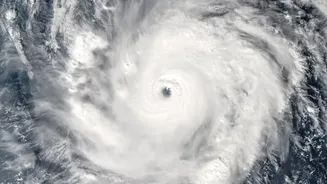
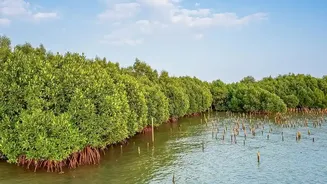
The Sundarbans has faced threats from cyclones, rising sea levels, and human activity, leading to the degradation of parts of this vital ecosystem. In response, the West Bengal government, along with various NGOs, has undertaken massive mangrove plantation drives. Following Cyclone Amphan in 2020, a campaign was launched to plant five crore mangroves. Initiatives by organisations like the Nature Environment and Wildlife Society (NEWS) and Change Initiatives have seen millions of saplings planted, often with the direct involvement of local communities, particularly women's self-help groups. These projects do more than just plant trees; they restore a natural shield that protects coastal communities from storm surges, prevents soil erosion, and revives local biodiversity, bringing back fish, crabs, and birds.
Confirmation and Challenges
Recent high-resolution satellite studies have validated the success of these efforts. By integrating data from satellites like Sentinel-2, researchers can model annual carbon uptake. While these studies show a clear positive impact from the planting initiatives, they also highlight the system's sensitivity. For instance, data from 2019 to 2023 showed that while carbon sequestration was high, it could dip in years with greater environmental stress, such as extreme weather events. This underscores the need for continuous monitoring and adaptive management. The success is not just about the number of trees planted but ensuring their long-term survival and the restoration of a healthy, diverse ecosystem. Still, the overall trend confirms that a healthy, expanding mangrove forest is a powerful asset for carbon removal.
Implications for India's Climate Goals
The confirmed success in the Sundarbans has significant implications for India's national climate strategy. It provides strong evidence that nature-based solutions are not just theoretical but are practical, scalable, and effective. The Indian government's MISHTI (Mangrove Initiative for Shoreline Habitats & Tangible Incomes) scheme, which aims to restore 540 square kilometres of mangroves over five years, is set to dramatically increase the pace of restoration. The lessons learned and validated by satellite data in the Sundarbans provide a powerful blueprint for this nationwide effort. By proving the carbon sequestration capacity of restored mangroves, these projects can also pave the way for carbon credit financing, creating a sustainable economic model for conservation and offering tangible incomes to the communities that protect these vital ecosystems.