






Association is Not Causation
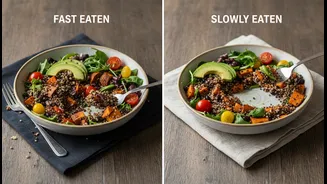
First, let's get a core scientific concept out of the way. When researchers say two things have an "association," they simply mean they are often observed together. For example, numerous studies show a strong link between people who eat fast and a higher
Body Mass Index (BMI). But that doesn't automatically mean that eating fast is the direct cause of the higher BMI. This is a classic case of "association is not causation." To infer a cause-effect relationship, other factors must be ruled out, a task that requires more than just a single observational study.
A Snapshot in Time
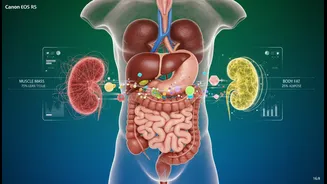
The headline mentions "cross-sectional data," which is a common way scientists study these associations. A cross-sectional study is like taking a snapshot of a group of people at one specific moment. For instance, a recent study in Gujarat, India, looked at 465 adults and found that fast eaters had significantly higher BMI and visceral fat. The problem is, this snapshot can't tell us what came first. Did the fast eating lead to the higher weight, or do people with higher weight tend to eat faster? Or is a third, unmeasured factor—like stress or lifestyle—causing both? This type of study shows a connection but can't prove direction.
The Brain-Gut Connection
So, if it’s not a simple case of cause and effect, why does the link between eating speed and body composition appear so consistently in research? The answer lies in our biology. It takes approximately 20 minutes for your stomach to send signals to your brain that it is full. This communication happens through a complex system of hormones, like peptide YY (PYY) and glucagon-like peptide-1 (GLP-1), which are released in the gut and tell your brain you're satisfied. When you eat too quickly, you can easily consume a large number of calories before these satiety signals have a chance to kick in. Essentially, you out-eat your own fullness alarm.
More Than Just Weight Gain
The implications of eating too fast extend beyond potential weight gain. Studies have linked rapid eating to a higher risk of developing metabolic syndrome—a cluster of conditions including high blood pressure, high blood sugar, and abnormal cholesterol levels. It's also associated with an increased risk of type 2 diabetes and insulin resistance. On a more immediate level, gobbling down your food can lead to poor digestion, as you aren't chewing thoroughly, and discomfort from swallowing excess air, which can cause bloating and indigestion.
Putting the Brakes on Your Eating
Understanding the science is one thing; applying it is another. The goal isn't to become obsessively slow but to be more mindful. Simple strategies can make a big difference. Try putting your utensils down between bites to force a natural pause. Minimize distractions like your phone or the TV, which can lead to mindless, rapid eating. Sipping water throughout your meal can also help slow your pace and aid in digestion. Chewing your food more thoroughly not only slows you down but is the first crucial step in the digestive process. The aim is to give your brain and body time to communicate, allowing you to recognize when you are comfortably full.