




A Crisis in Cosmology
Imagine two expert surveyors measuring the same mountain and getting two different heights, not just once, but every single time, even with their most precise tools. That's the situation astronomers find themselves in today. They have two primary ways
of measuring the universe's expansion rate, known as the Hubble constant. One method looks at the 'early' universe, using the faint afterglow of the Big Bang, called the Cosmic Microwave Background. This gives a value of about 67 kilometers per second per megaparsec. The other method observes the 'late' universe, closer to us in space and time, by measuring the distances to objects like pulsating stars (Cepheids) and exploding stars (Type Ia supernovae). This method consistently returns a faster rate, around 73. The persistent disagreement, known as the 'Hubble tension,' suggests there’s either a fundamental error in our measurements or, more excitingly, something new and undiscovered about the physics of our universe.
Enter the Roman Telescope
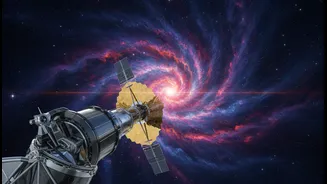
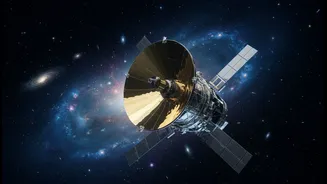
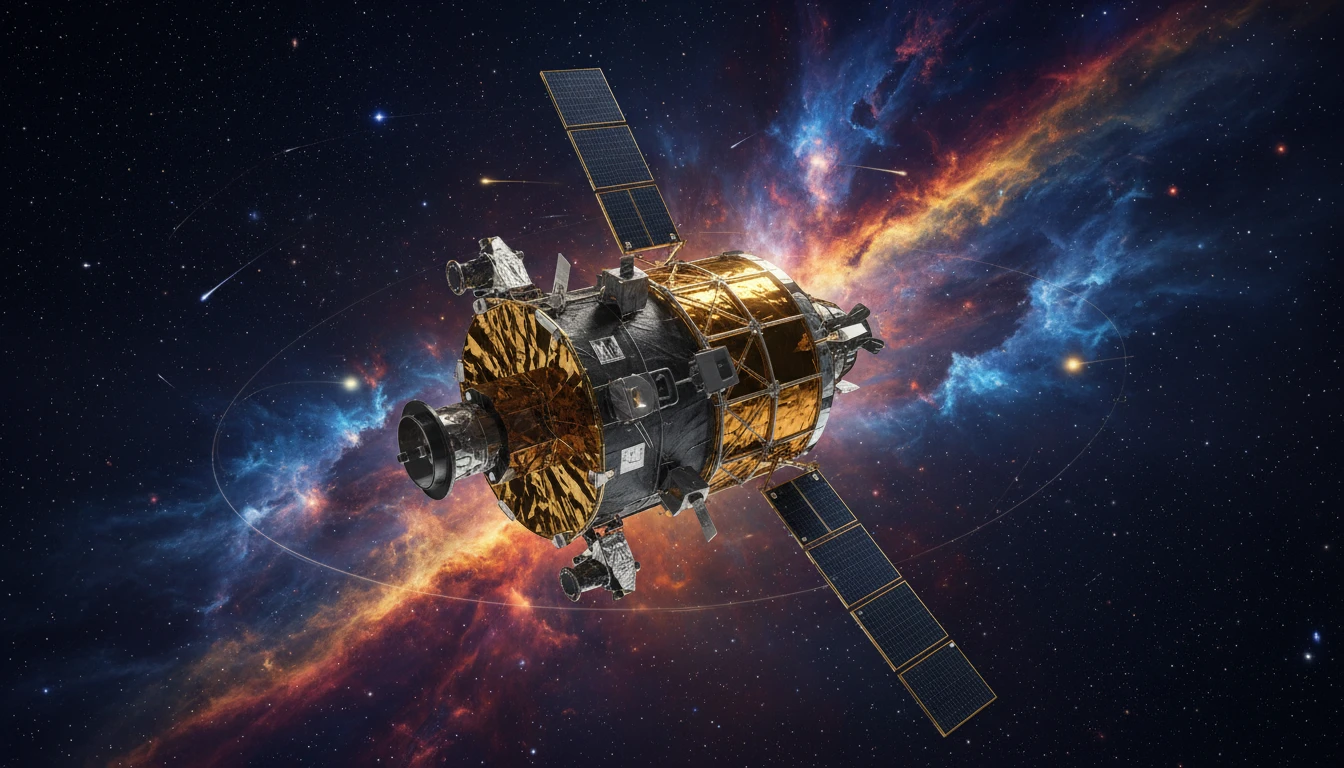
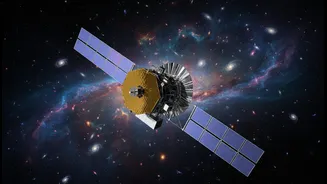
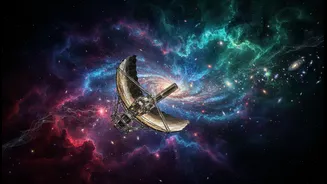
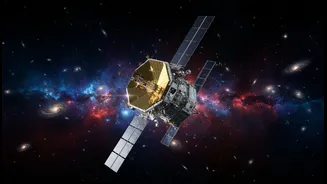
Scheduled to launch by late 2026, NASA’s Nancy Grace Roman Space Telescope is a new observatory designed to tackle this mystery head-on. While it has the same size primary mirror as the Hubble Space Telescope, Roman's power lies in its extraordinary field of view. Its Wide Field Instrument can capture an area of the sky 100 to 200 times larger than Hubble can in a single snapshot, all with the same stunning resolution. This panoramic capability makes it a revolutionary survey telescope. Instead of taking deep, narrow portraits of the cosmos like the James Webb Space Telescope (JWST), Roman will create vast, sweeping maps. It's the difference between studying a single tree in exquisite detail and creating a high-resolution map of the entire forest. This wide-angle vision is exactly what's needed to gather the enormous amount of data required to settle the Hubble tension.
Hunting for Cosmic Candles
One of Roman’s primary strategies is to hunt for thousands of Type Ia supernovae. These exploding stars are incredibly useful to astronomers because they are considered 'standard candles'—they all reach the same peak brightness, allowing scientists to calculate their distance by comparing how bright they appear to how bright they actually are. By finding these supernovae across vast distances, Roman will create the most precise map yet of how the universe's expansion has changed over cosmic history. While Hubble and other telescopes have found hundreds of these objects, Roman's massive field of view will allow it to discover thousands, dramatically improving the statistical accuracy of the 'late' universe measurement. This sheer volume of data will either reinforce the current measurement, making the tension with early universe data even stronger, or refine it, perhaps revealing subtle errors that could resolve the discrepancy.
A Multi-Pronged Investigation
Roman isn't just a one-trick pony. Beyond supernovae, it will use two other powerful techniques to probe cosmic expansion and the mysterious 'dark energy' thought to be driving it. The first is by measuring Baryon Acoustic Oscillations (BAOs), which are giant, ripple-like patterns in how galaxies are distributed across the universe, left over from the very early cosmos. These patterns act as a standard ruler to measure the cosmic expansion history. Secondly, Roman will study weak gravitational lensing, where the light from distant galaxies is subtly bent by the gravity of matter in front of it. Analyzing this distortion helps map the distribution of both visible and dark matter, providing another way to test our cosmological model. By using three independent methods, Roman will provide powerful cross-checks on its own results, making its findings incredibly robust.
A New Chapter in Astronomy
With its ability to rapidly survey huge sections of the sky, Roman will do in months what would take Hubble decades to accomplish. Its main surveys will create a treasure trove of publicly available data that astronomers will mine for years, leading to discoveries far beyond its primary mission, from finding thousands of new exoplanets to spotting distant black holes. But its most anticipated contribution is a definitive measurement of the universe's expansion. Roman’s observations could finally resolve the Hubble tension, confirming our standard model of cosmology. Or, it could prove that both measurements are correct, forcing a rewrite of fundamental physics and opening a new window into the nature of dark matter, dark energy, and the ultimate fate of our universe. Either way, Roman is poised to transform our understanding of the cosmos.