



Start With Your Story
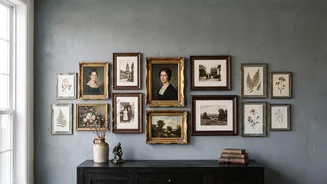
Before you hang a single frame, think about the narrative you want to tell. A gallery wall is a visual autobiography. Is it a tribute to your family history, filled with sepia-toned portraits and scanned heirlooms? Perhaps it's a collection of landscape
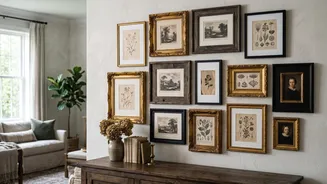
paintings that evoke your favourite travels, or a mix of botanical prints and abstract art that speaks to your aesthetic. Deciding on a theme or a mood is the crucial first step that turns a random assortment of pictures into a cohesive statement. This unifying thread will guide every choice you make, from the art you select to the frames you choose.
The Thrill of the Hunt
Sourcing your pieces is part of the adventure. True vintage finds add a layer of history and character that new items can't replicate. Flea markets, antique shops, and charity stores are goldmines for unique art and ornate frames with charming imperfections. Don't overlook online marketplaces, where you can search for specific styles like 'European oil painting' or 'old framed art'. For a more budget-friendly approach, explore public domain archives from museums, which offer high-resolution downloads of classic art for free. You can also mix in personal photographs, converting them to black and white or applying a warm filter to give them a timeless quality.
Curate a Cohesive Collection
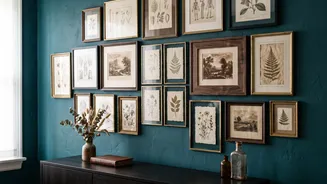
Once you've started gathering pieces, the art of curation begins. The most captivating gallery walls often mix different media and textures. Don't be afraid to combine oil paintings, line drawings, photographs, and even dimensional objects like small mirrors, decorative plates, or framed textiles. To create harmony within this variety, look for a common thread. This could be a recurring colour, a shared subject matter, or a consistent tone. For a vintage feel, a mix of frame styles often works better than perfect matching. Combine ornate gold frames with simpler wood or black ones, but stick to a limited palette of two or three finishes to keep the look intentional rather than chaotic.
Design the Layout
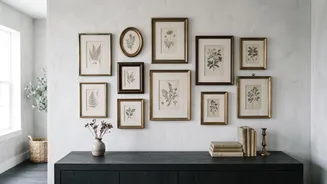
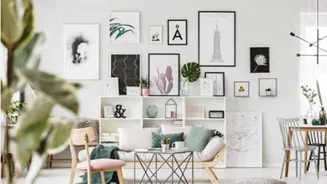
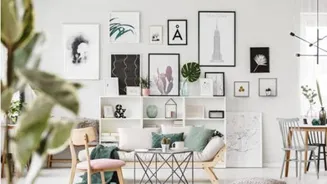
Before putting any nails in the wall, plan your arrangement. The most common mistake is not planning the layout first. Lay all your pieces on the floor and move them around until you find a composition that feels balanced. Start with your largest piece, placing it slightly off-centre to act as an anchor, and then build the smaller works around it. Mix vertical and horizontal orientations to create visual rhythm. A helpful trick is to trace each frame onto kraft paper, cut out the shapes, and tape them to the wall. This allows you to see the scale and spacing in your room and make adjustments without commitment. As a general rule, aim for consistent spacing of about two to three inches between each frame.
Create a True Focal Point
To ensure your gallery wall commands attention, it must feel integrated with the room. Choose a wall that is a natural focal point, such as the space above a sofa, a bed, or a console table. The arrangement should relate to the furniture below it, creating a complete vignette. The centre of the entire gallery should be at about eye level, which is typically around 57 to 60 inches from the floor. Consider how lighting will affect the wall; a dedicated picture light can elevate the entire display, turning your collection into a true showpiece. Finally, balance larger, heavier pieces towards the bottom of the arrangement to give it a grounded, stable feel.