




A Mountain of Waste, A World of Opportunity
Every day, cities across India generate tonnes of spent coffee grounds, most of which end up in landfills. However, this organic waste is far from useless. For urban farmers and gardening enthusiasts, these grounds represent a free, plentiful, and nutrient-packed
resource. When a cup of coffee is brewed, less than one percent of the coffee bean's biomass is transferred to the drink. The remaining 99% is a damp, dense material that happens to be an ideal food source for certain types of fungi, creating a perfect loop in a circular economy. Instead of contributing to waste, coffee grounds can be upcycled to produce fresh, local food, a practice that is gaining traction in cities worldwide.
Why Coffee Grounds Are a Fungi Superfood
Mushrooms thrive on coffee grounds for several key reasons. First, the grounds are rich in nitrogen, a crucial nutrient for mycelium—the vegetative root structure of fungi—to grow and expand. Second, the brewing process itself is a major advantage. The hot water used to make coffee effectively pasteurises the grounds, killing off many competing bacteria and mould spores that might otherwise contaminate the crop. This natural sterilisation gives the desired mushroom spawn a significant head start. Finally, the fine particle size of espresso grounds provides a large surface area for the mycelium to colonise quickly. This combination of nutrients and cleanliness makes spent coffee a near-perfect substrate.
The Best Mushroom for the Job: The Oyster
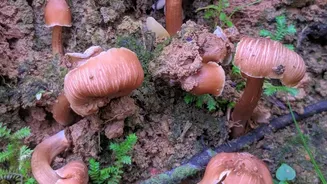
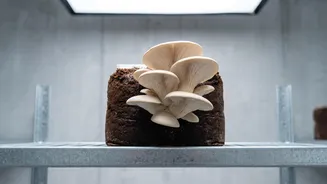
While several mushroom varieties can be cultivated on coffee-based substrates, the undisputed champion is the oyster mushroom (Pleurotus ostreatus). Oyster mushrooms are known for being aggressive and rapid colonisers, meaning their mycelium can quickly outcompete any lingering contaminants. They are also highly tolerant of the nutrient-rich, nitrogen-heavy environment that coffee grounds provide. Varieties like blue-grey, pink, and yellow oyster mushrooms all adapt well to this method. Other types, such as Lion's Mane and Shiitake, can also be grown using coffee, but they often require the grounds to be mixed with other materials like sawdust or straw to improve aeration and structure, making them a slightly more advanced project.
From Cafe Waste to Kitchen Harvest
The process of growing mushrooms from coffee is surprisingly straightforward. The first step is sourcing fresh grounds, ideally collected from a local cafe within 24 hours of brewing to minimise the risk of contamination. This substrate is then mixed with mushroom spawn, which is the mycelium-infused material that kickstarts growth. For better results, especially in larger batches, the coffee is often blended with a small amount of sterilised straw or sawdust to prevent compaction and improve airflow. This mixture is packed into special grow bags or buckets with small holes for air exchange and placed in a dark, warm space for two to three weeks to incubate. During this time, the white mycelium will completely colonise the coffee grounds. Once fully colonised, the bag is moved to a humid, cooler location with indirect light, and mushrooms will begin to fruit, often doubling in size each day before they are ready to harvest.
Scaling Up: A Model for Urban Sustainability
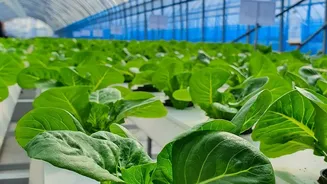
This technique is more than just a fun home project; it is a scalable model for sustainable urban agriculture. Social enterprises and small businesses around the world are now using this method to create local jobs and provide fresh produce to restaurants and communities. By partnering with local cafes, these urban farms divert a significant waste stream and transform it into a valuable commodity. The leftover substrate, after the final mushroom harvest, is not discarded. It becomes a nutrient-rich compost, perfect for enriching garden soil. This closed-loop system, where waste from one process becomes the resource for another, is a powerful example of the circular economy in action, offering a path to more resilient and food-secure cities.