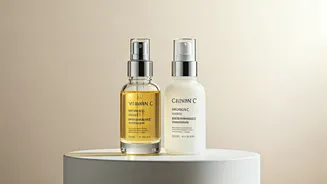









The Skincare Myth That Won’t Quit
If you've spent any time reading about skincare online, you've probably seen the warning: do not mix Vitamin C and niacinamide. The advice often claims they cancel each other out or, worse, create a compound called nicotinic acid that causes skin redness
and irritation. This myth is one of the most stubborn in the beauty world, but it’s based on outdated research from the 1960s. Those early studies involved mixing pure, unstable forms of the ingredients at very high temperatures—conditions that have nothing to do with how modern, stabilised skincare products are formulated or used at home.
The Modern Reality: A Power Couple
Today, the overwhelming consensus among dermatologists and cosmetic chemists is that you can and should use both ingredients. Modern Vitamin C derivatives are far more stable, and niacinamide is well-tolerated, making the risk of forming irritating nicotinic acid on your skin practically zero. Far from being rivals, these two ingredients are complementary. They work via different pathways to achieve similar goals, like brightening and anti-ageing, so using them together can provide more comprehensive results than using either one alone.
The Benefits of Each Ingredient
Understanding what each ingredient does highlights why they work so well as a team. Vitamin C (especially L-ascorbic acid) is a powerful antioxidant that protects skin from environmental damage, brightens skin tone by fading dark spots, and boosts collagen production for firmer skin. Niacinamide, a form of Vitamin B3, is a multitasking hero. It strengthens the skin's barrier, improves hydration, regulates oil production, reduces the appearance of pores, and calms redness. When combined, you get a routine that brightens, protects, firms, and soothes all at once.
Method 1: The Simple Separation
The easiest and most foolproof way to incorporate both ingredients is to use them at different times of the day. This completely eliminates any concerns about potential interaction. A popular and effective routine is to apply a Vitamin C serum in the morning and a niacinamide serum in the evening. Using Vitamin C in the AM provides crucial antioxidant protection against UV rays and pollution you encounter throughout the day. Using niacinamide at night allows it to focus on repairing and strengthening your skin barrier while you sleep. For those with very sensitive skin, this is often the best approach to start with.
Method 2: The Art of Smart Layering
If you prefer to use both in the same routine, you absolutely can—you just need to layer them correctly. The general rule of skincare is to apply products from the thinnest to thickest consistency. Most Vitamin C serums are thinner and have a lower pH, which is necessary for the ingredient to be effective. Therefore, you should apply your Vitamin C serum first to clean, dry skin. Wait for a minute or two to let it fully absorb before applying your niacinamide product. This brief waiting period allows the pH of the Vitamin C to do its job without being immediately altered by the more neutral niacinamide product, ensuring maximum effectiveness for both.
Choose Your Products Wisely
Another option is to find a single product formulated with both Vitamin C and niacinamide. Brands have developed advanced formulas that keep both ingredients stable and effective within the same bottle, taking the guesswork out of it for you. If you are using separate products and have sensitive skin, consider starting with a lower concentration of Vitamin C (such as 5-10%) to see how your skin tolerates the combination. Any sensitivity blamed on mixing the two is often just a reaction to a Vitamin C concentration that is too high for your skin type. Always remember to patch-test new products or combinations before applying them to your entire face.