







Maximise the Artemis Accords
India’s decision to sign the Artemis Accords was a crucial first step. This non-binding framework sets the principles for peaceful and transparent space exploration. For India, it’s a ticket to the main table, preventing technological isolation and ensuring
its systems are compatible with global partners. The Accords facilitate collaboration with NASA, including joint missions and data sharing, which directly supports ISRO's own ambitions, like the Gaganyaan human spaceflight program and future Chandrayaan missions. The next step is to actively use this diplomatic framework to embed Indian science and industry into specific Artemis projects.
Empower Private Sector Payloads
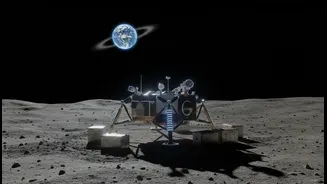
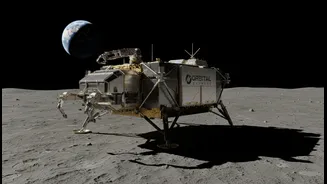
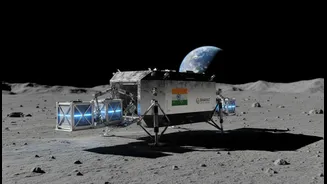
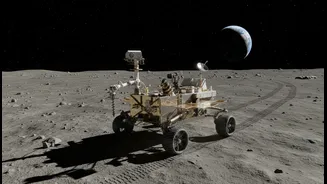
The new lunar economy won't be built by governments alone. NASA's Commercial Lunar Payload Services (CLPS) initiative is designed to contract private companies for deliveries to the Moon. This is where India's burgeoning private space sector comes in. With over 400 space startups, the ecosystem is vibrant. Companies like Skyroot Aerospace, Agnikul Cosmos, and Dhruva Space are developing launch vehicles and satellite technologies. The government can create a practical checklist by streamlining regulations, providing financial incentives, and helping these firms bid for CLPS sub-contracts. India doesn't need to build the entire lander; contributing specialised, high-value payloads like sensors, rovers, or software is a powerful entry point into the lunar supply chain.
Focus on In-Situ Resource Utilisation (ISRU)
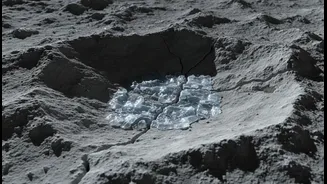
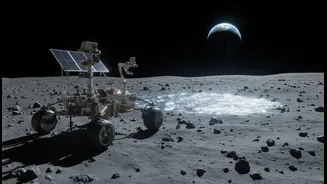
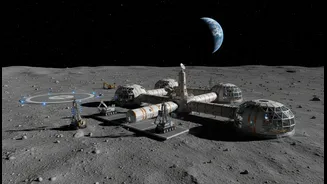
A sustainable Moon base depends on living off the land, a concept known as In-Situ Resource Utilisation (ISRU). This means extracting resources like water ice and oxygen from the lunar soil, or regolith, to produce breathable air, drinkable water, and even rocket fuel. NASA has identified ISRU as a critical technology. For India, this is a prime area for research and development. Investing in technologies to mine and process lunar resources could make India an indispensable partner in long-term lunar habitation. ISRO's collaboration with Japan's JAXA on the LUPEX mission to explore water ice at the south pole is a great start.
Leverage India's Software and AI Prowess
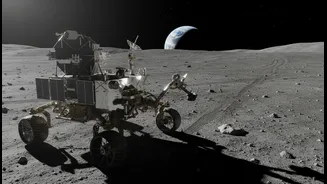
A lunar base will be a data-driven enterprise. From robotic operations and geological surveys to life support systems, it will generate immense amounts of information that need to be managed and analysed. This plays directly to India's strengths as a global IT and software powerhouse. Indian firms and researchers can contribute by developing mission control software, AI algorithms for autonomous rovers, data analytics platforms for scientific discoveries, and robust cybersecurity for lunar communications. Supporting joint ventures in artificial intelligence and quantum information is a key benefit of the Indo-US partnership.
Develop Niche Hardware and Electronics
The lunar environment is harsh, with extreme temperatures and high radiation. This requires specialised, radiation-hardened electronics that can survive and operate for long durations. India, with its growing semiconductor design and manufacturing ambitions, is well-placed to contribute. Developing space-grade microprocessors and other electronic components is a tangible goal. These are not off-the-shelf items; they require dedicated R&D, and by focusing on this niche, Indian industry can create critical components for landers, rovers, and habitats used by all Artemis partners.
Align Academic Research with Lunar Goals
The scientific objectives of the Artemis program are clear: to understand the origin and evolution of the Moon, to study the solar system, and to learn how to live and work on another world. Indian universities and national labs should align their research priorities with these goals. This means encouraging projects in lunar geology, heliophysics, and astrobiology. By funding research that directly answers questions posed by the Artemis science teams, India ensures its academic community is contributing valuable knowledge and training the next generation of lunar scientists and engineers who will be vital for missions like the planned Bharatiya Antariksha Station.