



The IEA's Sobering Forecast
According to the IEA's latest World Energy Outlook, global electricity consumption from data centres, AI, and cryptocurrency could soar to around 1,000 terawatt-hours (TWh) by 2030. This is roughly equivalent to the entire current electricity consumption of
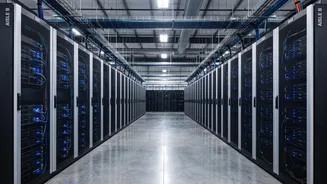
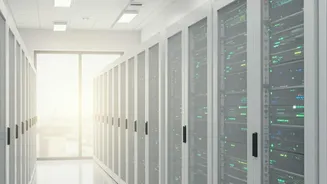
Japan. The primary driver of this explosive growth is artificial intelligence, which is projected to account for about three-quarters of the increase. An AI-powered server rack can consume as much power as ten traditional server racks, highlighting the sheer intensity of the new demand. The IEA estimates that just the increase in electricity demand from AI data centres by 2030 will be more than what Great Britain consumes in a year. This unprecedented demand is placing a strain on power grids worldwide, prompting urgent calls for infrastructure investment.
India's Data Centre Explosion
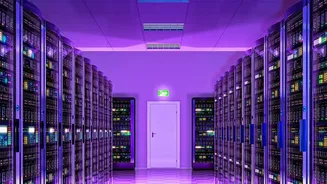
This global trend has profound implications for India, which is in the midst of its own data centre boom. Driven by the 'Digital India' initiative, massive data generation, and enterprise cloud adoption, India's data centre market is one of the fastest-growing in the world. The nation's data centre capacity has already tripled from around 520 MW in 2020 to 1.6 GW in mid-2026 and is projected to hit 6 GW by 2029. Cities like Mumbai, Chennai, Hyderabad, and Pune have become major hubs, attracting billions of dollars in investment from global hyperscalers. Spending on data centre systems in India is forecast to surge by nearly 30% in 2027 alone, largely to expand compute capacity for rising AI demand. While India generates nearly a fifth of the world's data, it currently holds only a small fraction of global data centre capacity, signalling a massive runway for growth and, consequently, for power demand.
Can India's Grid Keep Up?
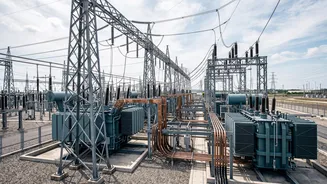
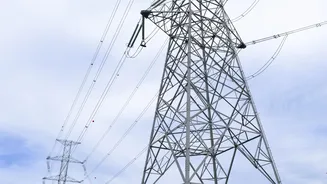
The critical question is whether India's electricity grid can handle this demand shock. While India has made huge strides, achieving over 50% of its installed power capacity from non-fossil fuel sources ahead of its 2030 target, the challenge is shifting from generation to transmission and distribution. Experts point out that grid constraints are becoming the primary bottleneck. The pace of grid expansion has not kept up with the rapid growth of renewable energy projects and new demand centres like data hubs. This leads to grid congestion and 'curtailment', where available renewable energy cannot be fully utilised because the network lacks the capacity to transport it. The increasingly non-linear demand, with sharp peaks driven by industrial use, cooling needs, and now data centres, adds another layer of complexity for grid managers.
The Path Forward: Smart Grids and Green Power
Meeting this challenge requires a two-pronged approach: upgrading the grid and powering the new demand with clean energy. The 'grid upgrades' called for involve more than just laying new power lines. It means investing in 'smart grids' that use digital technology and AI for better real-time monitoring and management of electricity flows. Expanding transmission capacity, especially in high-demand corridors, is crucial. Furthermore, large-scale battery storage solutions are needed to ensure grid stability and absorb fluctuations from solar and wind power, providing reliable, round-the-clock power. For their part, data centre operators are under pressure to become more efficient. This includes investing in advanced cooling technologies and sourcing power directly from renewable projects. India's national goal of reaching 500 GW of renewable energy capacity by 2030 is now intrinsically linked to its ambition of becoming a global digital and AI powerhouse.