



Your First Step: The AI Detector
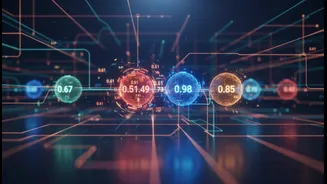
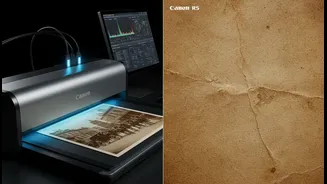
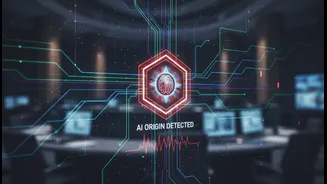
When a suspicious image appears, an AI image detector is a great place to start. These tools, many of which are available for free online, are designed to spot the subtle, mathematical fingerprints that AI generation models leave behind. They analyze
an image for things like unnatural pixel patterns, compression artifacts, and other digital signatures that the human eye would miss. Uploading an image to one of these services can give you a probability score in seconds, telling you how likely it is that the image was made by a machine. This initial step is fast and efficient, leveraging powerful algorithms to do the heavy lifting of a preliminary analysis. However, their results are not absolute proof.
Why AI Isn't Always Enough
The biggest challenge with AI detectors is that they are in a constant race against the very technology they're trying to track. New and improved AI image generators are released constantly, and detectors trained on older models can be easily fooled. This can lead to both false positives, where a real photo is flagged as fake, and false negatives, where a synthetic image slips through undetected. Simple actions like taking a screenshot, compressing an image, or making manual edits can also remove the digital traces the detectors are looking for. Studies have shown that even the best detectors can be unreliable, meaning you can't take their verdict as the final word. That's where your own critical thinking comes in.
The Human Checklist: Five Giveaways to Look For
After you get the AI's opinion, it's time for your human review. AI image generators still struggle with specific details that our brains are great at noticing. Here's a five-point checklist to guide your eyes: 1. Hands and Anatomy: This is a classic flaw. Look for people with too many or too few fingers, unnatural-looking joints, or limbs that seem to bend in impossible ways. AI models don't have an innate understanding of biology, so anatomy is often where they make mistakes. 2. Text and Background Details: AI often struggles to render coherent text. Look for signs with garbled letters, logos that are almost right but not quite, or books with nonsensical writing. Similarly, check the background for repeating patterns that look too uniform or for objects that seem to melt into each other. 3. Light, Shadows, and Reflections: The real world follows the laws of physics, but AI-generated worlds don't have to. Check if the shadows in an image align correctly with the light sources. Are reflections in windows or glasses distorted or showing something impossible? These physical inconsistencies are a major red flag. 4. Skin and Hair Texture: Real human skin has pores, blemishes, and subtle imperfections. AI-generated skin often looks unnaturally smooth, waxy, or plastic-like. Hair can also be a giveaway, sometimes appearing as a solid mass rather than individual strands or having an overly uniform, repeating texture. 5. Context and Common Sense: This is perhaps the most important check. Does the image make sense? A simple but powerful tool is a reverse image search. This can help you find the original source of the photo, see if it has been altered, or check if credible news outlets have already fact-checked it. If a well-known public figure is depicted doing something outrageous, compare it with existing, trusted photos.
A Powerful Partnership
The goal isn't to choose between technology and your own eyes, but to use them together. Think of the AI detector as your tech-savvy assistant. It provides a quick, data-driven analysis that can flag potential issues you might have missed. Your human-review checklist is the expert final say. By systematically checking for common AI errors in anatomy, physics, and context, you can confirm or question the AI's initial findings. This two-step process, combining the speed of machines with the nuanced understanding of the human mind, is your most effective strategy for navigating an increasingly complex visual world. By adopting this method, you move from being a passive consumer of images to an active and informed investigator.