


A Sweet Signal From Deep Space
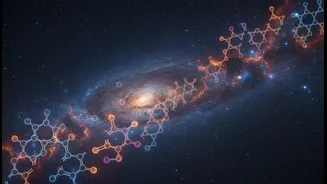
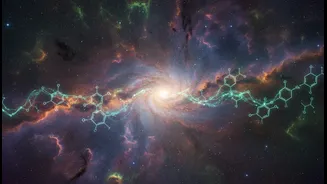
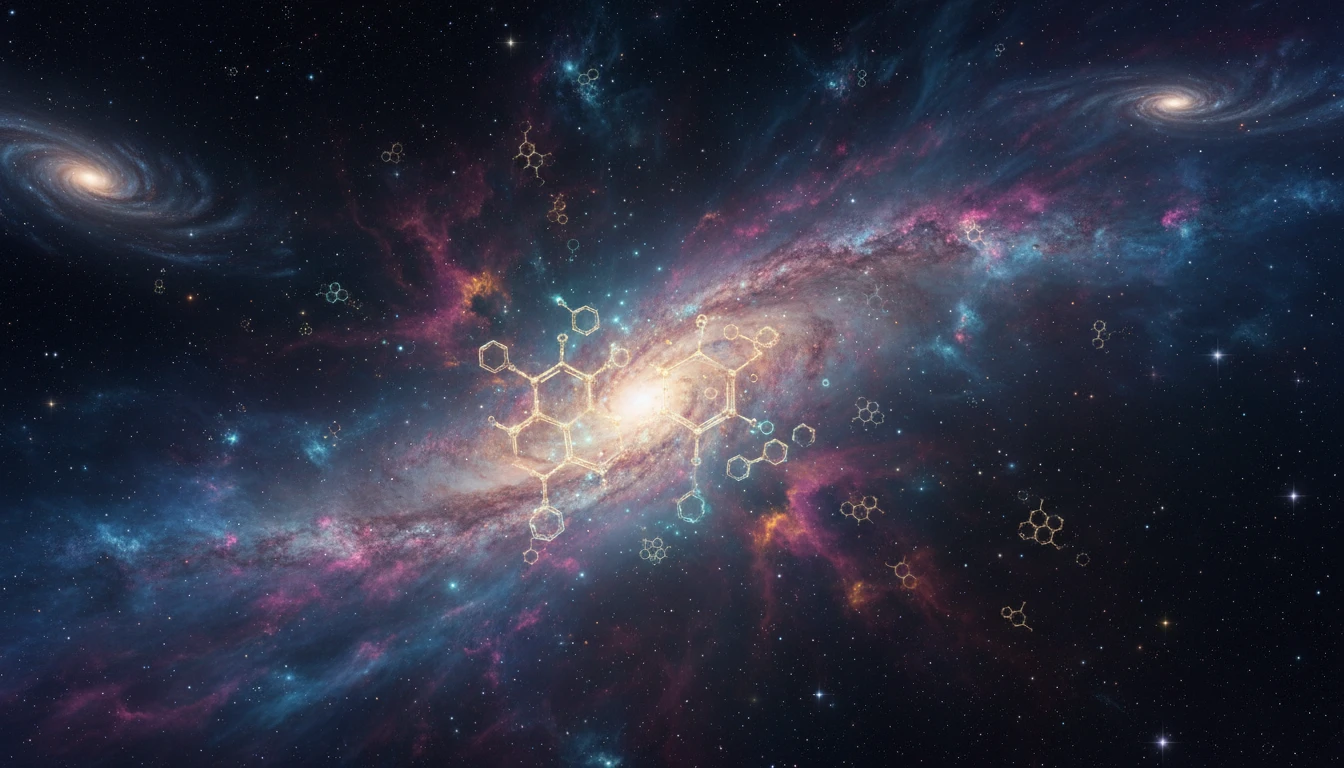
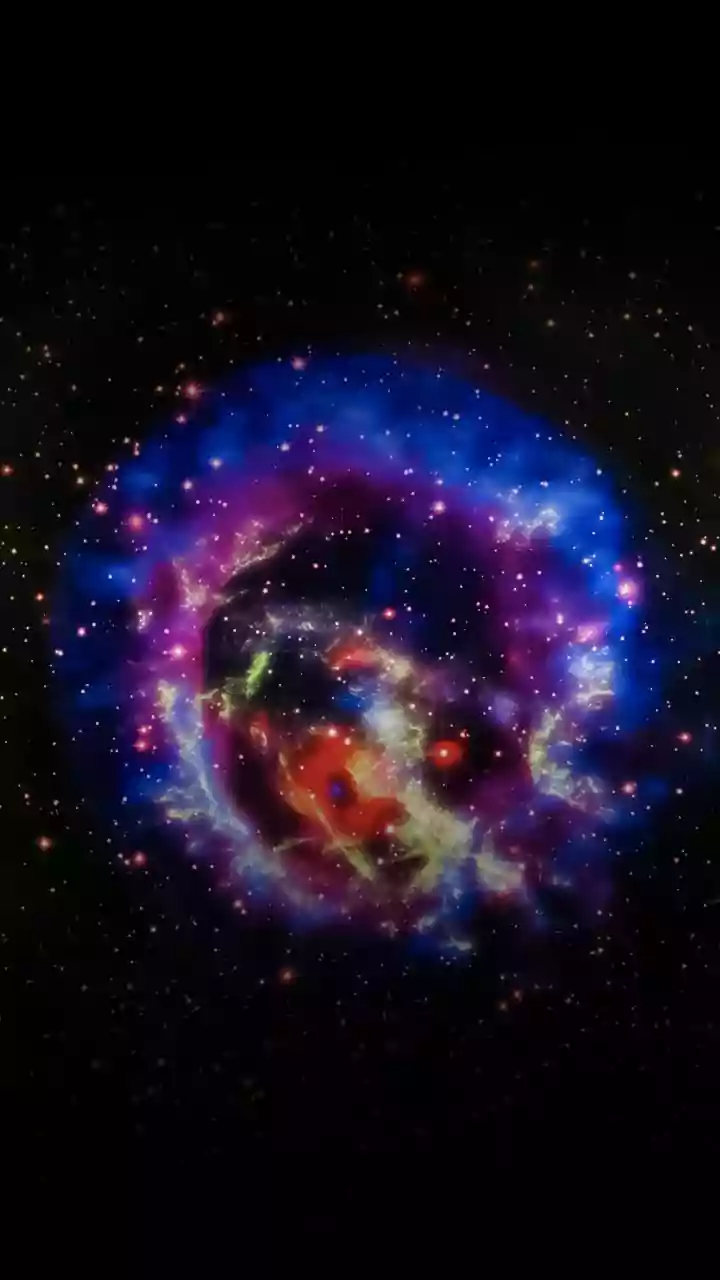
In the cosmic dust and gas clouds that swirl near the galaxy's centre, a place where new stars and planets are born, astronomers have found something remarkable: erythrulose. An international team of researchers, using powerful radio telescopes in Spain,
identified the distinct chemical fingerprint of this four-carbon sugar molecule in a molecular cloud named G+0.693-0.027, located approximately 27,000 light-years from Earth. While simpler organic molecules have been spotted in space before, this marks the first confirmed detection of a true sugar in the interstellar medium—the raw material from which solar systems are built.
More Than Just a Sugar
So, why is finding sugar in space a big deal? Sugars are fundamental to life as we know it. They are not just for energy; they form the structural backbone of RNA and DNA, the molecules that carry the blueprint for all living organisms. Erythrulose itself isn't a direct component of our genetic material, but it is a close chemical cousin to ribose, the sugar in RNA. Its discovery shows that complex prebiotic molecules—the chemical precursors to life—can form in the cold, harsh environment of space, long before planets even exist. This suggests the universe is a far more efficient kitchen for cooking up life's ingredients than previously thought.
Shaking Up Formation Theories
The discovery is particularly disruptive because of what it implies about how complex molecules are made. For years, the prevailing theory in astrochemistry was that molecules in space grew gradually, adding one carbon atom at a time. If that were the case, scientists would expect to find an abundance of simpler, three-carbon sugars before spotting a more complex four-carbon one like erythrulose. But they didn't. The team found plenty of erythrulose but no trace of the simpler sugars they searched for. This surprising result suggests an entirely different recipe may be at play. Researchers now believe erythrulose may form when two smaller, two-carbon molecules combine on the surface of icy dust grains, bypassing the step-by-step process. This alternate pathway fundamentally changes the models scientists use to predict chemical complexity in stellar nurseries.
Cosmic Seeds of Life
This finding provides powerful evidence for a long-debated theory about the origin of life on Earth. Rather than all the necessary building blocks forming in a 'primordial soup' on our young planet, it’s possible they were delivered from space. The idea, known as panspermia or exogenous delivery, suggests that asteroids and comets, which are formed from the same interstellar clouds, acted as cosmic delivery trucks. They would have collected molecules like erythrulose and later crashed into young planets, seeding them with the raw materials needed for life to emerge. The presence of sugar in meteorites and asteroid samples has hinted at this for years, but finding it in the pre-planetary cloud is the strongest evidence yet that planets are born with these ingredients already mixed in.
The Search Continues
The discovery of erythrulose is not the end of the story; it's a new beginning. It confirms that the chemical pathways to life's building blocks are viable in interstellar environments. This boosts the confidence of scientists that other, even more biologically relevant molecules are out there waiting to be found. Researchers are now hopeful they can use similar techniques to search for larger sugars like ribose, the direct component of RNA. By understanding the chemistry of the cosmos, we move one step closer to answering one of humanity's oldest and most profound questions: are we alone in the universe?