



The Ultimate Ejection Seat
In human spaceflight, crew safety is the absolute highest priority, taking precedence even over mission success. At the heart of Gaganyaan's safety protocol is the Crew Escape System (CES). Think of it as the most sophisticated ejection seat ever built.
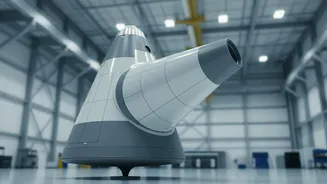
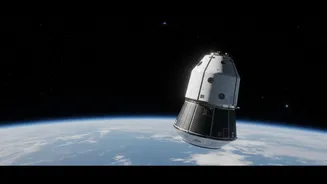
Its sole purpose is to pull the Crew Module—the capsule carrying the astronauts—away from the main rocket in the blink of an eye if a major malfunction occurs during launch or ascent. This system is a dedicated, quick-acting assembly positioned at the very top of the rocket, equipped with its own powerful solid-fuel motors designed to fire with immense force, pulling the crew to a safe distance from a potential disaster.
Why High-Altitude Tests are Crucial
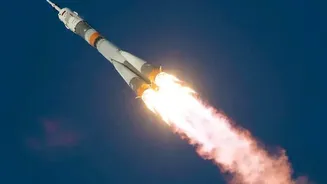
ISRO has already conducted successful Pad Abort Tests, which simulate an emergency on the launch pad before liftoff. However, a crisis can also occur minutes into the flight, when the rocket is miles above the Earth and travelling faster than the speed of sound. This is where high-altitude abort tests come in. These tests are designed to prove the CES can function under the most challenging conditions imaginable: high velocity, immense aerodynamic pressure, and the complex physics of separating from a rocket at supersonic speeds. The Test Vehicle Abort Mission-1 (TV-D1), for example, triggered the abort sequence at an altitude of about 12 km and a speed of Mach 1.2 to demonstrate this very capability.
Anatomy of a High-Altitude Abort
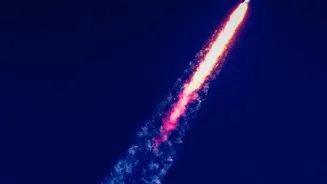
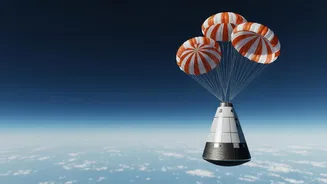
During a high-altitude test, a specially designed Test Vehicle lifts off, carrying a fully instrumented but unpressurised Crew Module. At a predetermined point in the ascent, an abort is deliberately triggered. Instantly, powerful motors on the CES ignite, generating massive thrust to yank the Crew Module away from the rocket. The module is pulled upwards and away to a higher altitude. Once at a safe distance, the CES detaches from the Crew Module. The module then begins its descent, stabilized first by smaller drogue parachutes that deploy at high altitude to prevent tumbling. Finally, the main parachutes open to slow the capsule for a gentle splashdown in the sea, where recovery teams are waiting.
Building Confidence, One Test at a Time
The Gaganyaan program follows a phased approach, with each test building on the success of the last. The series of tests began years ago with the Pad Abort Test in 2018. This was followed by the successful TV-D1 mission in October 2023, which provided crucial flight data on the performance of the Test Vehicle, Crew Escape System, and the module's deceleration systems. ISRO plans further tests, such as TV-D2, to simulate aborts under even more complex and strenuous conditions, steadily validating every component and procedure. These demonstrator missions are non-negotiable prerequisites before an actual human spaceflight can be attempted.
What It Means for India's Astronauts
For the selected 'Gaganauts', these rigorous tests provide the ultimate assurance. The entire system is automated by an Integrated Vehicle Health Management system, which uses a network of sensors to detect anomalies and trigger an abort without human intervention. The success of these separation tests demonstrates that in the critical first few minutes of flight—statistically the most dangerous phase—a robust and reliable escape route exists. By proving the system works flawlessly in the harshest simulated environments, ISRO is not just testing hardware; it is building a foundation of trust and safety that is essential for the astronauts who will soon travel into orbit, carrying the dreams of a nation with them.