



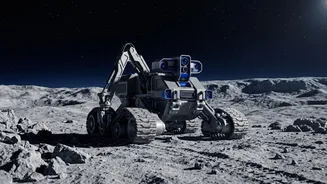

The Ultimate Deep Freeze
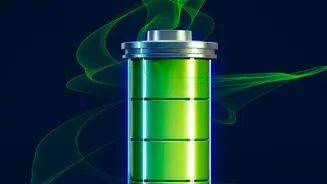
On Earth, we might complain about our phone battery dying faster in the winter. In space, this problem is magnified to an extreme. Standard lithium-ion batteries, the workhorses powering everything from our laptops to electric cars, simply cannot function
in the intense cold found on other worlds. At temperatures like those in the shadows of lunar craters or on the Martian surface, the liquid electrolyte inside these batteries thickens and eventually freezes. This brings the flow of lithium ions to a grinding halt, effectively killing the battery and any mission that relies on it. To get around this, engineers have historically relied on bulky and power-hungry 'survival heaters' to keep battery packs in a safe temperature range. This is a highly inefficient solution, consuming precious energy that could otherwise be used for scientific instruments or communication.
A Breakthrough in Battery Chemistry
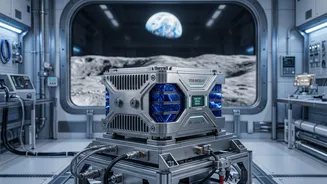
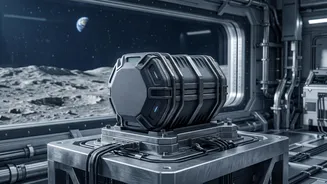
Engineers at NASA's Glenn Research Center in Cleveland have tackled this problem head-on. They have successfully developed and tested a new type of battery cell that not only survives but thrives in conditions as cold as minus 80 degrees Celsius, or minus 112 degrees Fahrenheit. The secret lies in a different chemical recipe. While the exact formula is proprietary, the new cells use special electrode materials and a unique electrolyte that resists freezing and remains functional at these cryogenic temperatures. In recent tests, which simulated the harsh environments of the Moon and Mars inside a thermal vacuum chamber, the batteries demonstrated remarkable performance. Crucially, they were not only able to discharge power but could also be successfully recharged in the extreme cold, a vital capability for any mission that depends on solar panels to replenish its energy stores.
Unlocking the Solar System
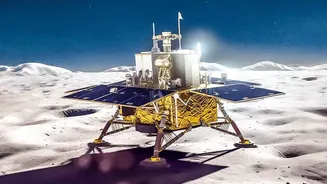
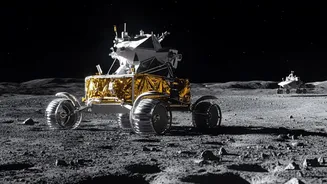
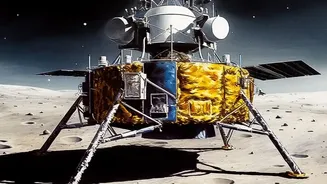
This technological leap is more than just a lab experiment; it is a critical enabler for the future of space exploration. By creating a battery that works natively in the cold, NASA can eliminate the need for those inefficient survival heaters. This saves a significant amount of mass and frees up a considerable portion of a spacecraft's power budget. This 'extra' power can then be dedicated to what missions are actually for: science. It means future rovers could carry more advanced instruments, operate for longer periods, and explore previously inaccessible regions. The most immediate beneficiaries will be upcoming robotic and human missions under the Artemis program, which are targeting the Moon's south pole — a region rich in scientific interest but also one of the coldest places in the solar system. Beyond the Moon, this technology could empower more ambitious Mars rovers and even pave the way for missions to the icy moons of the outer planets, such as Jupiter's moon Europa.
From Other Worlds to Our Own
As is often the case with innovations developed for space, this extreme-cold battery technology could have significant benefits right here on Earth. While it might not appear in your smartphone overnight, its potential applications are vast. Industries that operate in the planet's polar regions, such as scientific research stations in Antarctica, could use them for reliable power. High-altitude drones and scientific balloons, which fly in the freezing upper atmosphere for long durations, are another perfect use case. Even the electric vehicle industry could one day benefit. Anyone living in a cold climate knows the frustrating impact that winter has on an EV's range. A battery chemistry that is less susceptible to the cold could make electric transportation more reliable and practical for millions of people. While the initial cost of aerospace technology is high, history shows that these breakthroughs often find their way into our daily lives, making them better, safer, and more efficient.