








The Invisible Cloud's Very Real Footprint
Every time you stream a movie, join a video call, or save a file to the cloud, you are using a data centre. These facilities are the physical backbone of the digital world, housing thousands of servers that store, process, and move information 24/7. But
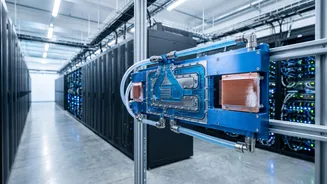
this constant activity requires an immense amount of energy, not just for running the servers but also for the massive cooling systems needed to prevent them from overheating. A recent, detailed study from Harvard University researchers, published in the journal Nature Sustainability, has put a staggering number on the environmental cost of this convenience. It found that just 403 of the largest 'hyperscale' data centres in the United States emitted a combined 25.7 million metric tons of carbon dioxide in the 12 months leading up to April 2025. This analysis paints the most detailed picture yet of the industry's growing climate problem, driven largely by the boom in artificial intelligence.
Putting 25.7 Million Tonnes in Perspective
A number like 25.7 million tonnes of CO2 can be hard to grasp. For context, it is roughly equivalent to the total annual carbon emissions of a country like Denmark. It's also comparable to the emissions from the entire state of Michigan. This figure is two to three times higher than estimates from 2018, the last time a similar peer-reviewed measurement was conducted, highlighting a dramatic increase in a very short period. The study revealed that these facilities consumed about 1.8% of all electricity in the United States. More alarmingly, the research found that over half of the electricity powering these massive server farms came from burning fossil fuels, primarily natural gas and coal. This heavy reliance on polluting energy sources means the digital boom is actively working against global climate goals.
The AI Boom and the Energy Dilemma
The primary driver behind this explosive growth in energy consumption is the race to develop and deploy artificial intelligence. Training large AI models is an incredibly energy-intensive process that requires enormous computational power. As tech giants expand their AI capabilities, they are building more and bigger data centres, particularly in states like Virginia, Ohio, Oregon, and Iowa. This has created a dilemma. Many of these same companies have made ambitious pledges to become carbon neutral, but the soaring electricity demand from their data centres is making those goals harder to reach. Some reports show that the electricity consumption of major tech companies has skyrocketed in recent years. The rush for 'speed to power' is even pushing some developers to propose building their own on-site natural gas power plants to avoid delays in grid connections, which would further lock in fossil fuel dependency.
A Cautionary Tale for India's Digital Future
The situation in the U.S. serves as a critical lesson for India, which is in the midst of its own digital revolution. With a rapidly growing internet user base and a government push for digitalisation, India's data centre market is booming. Projections show the country's data centre capacity is set to triple by 2030, attracting billions of dollars in investment. This growth is essential for powering India's economy, but it also presents a massive energy challenge. The country’s data centres are expected to require 5 to 6 gigawatts of power by 2030. The key question is whether this new demand will be met by clean energy or, like in the U.S., will lead to increased reliance on fossil fuels. Fortunately, there is a strong push towards 'green' data centres in India, with the market for sustainable facilities projected to grow at a remarkable rate, significantly outpacing the global average. Leveraging India's abundant solar and renewable energy potential will be crucial to ensuring that its digital future is a sustainable one.