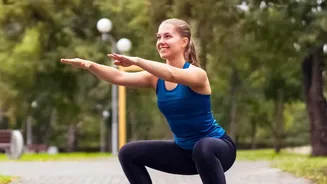




The Foundation: Bodyweight Squats
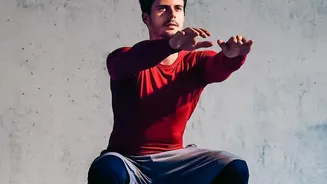
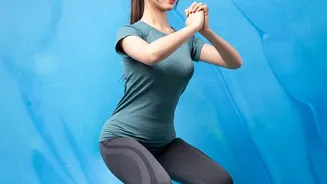
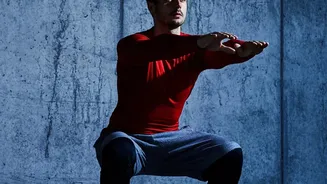
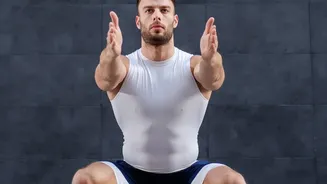
The squat is a foundational movement that targets the largest muscles in your body—your glutes, quads, and hamstrings. Because it's a stationary exercise, it's perfect for small areas. To perform a squat, stand with your feet shoulder-width apart. Lower
your hips back and down as if sitting in a chair, keeping your chest up and back straight. Aim to get your thighs parallel to the floor, then press through your heels to return to the starting position. For an added challenge, slow down the movement or add a pause at the bottom of the squat to increase time under tension.
Upper Body Power: Push-Up Variations
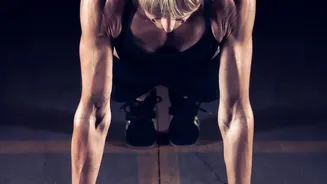
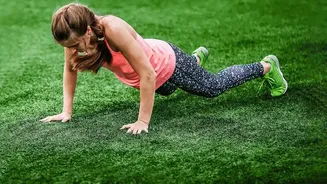
The push-up is a classic exercise for building upper body and core strength, targeting the chest, shoulders, and triceps. The best part is its versatility. If a standard push-up is too difficult, start with your hands on a wall or a sturdy piece of furniture for an incline push-up. As you get stronger, you can progress to performing them on your knees, and eventually, to a full push-up on your toes. Maintaining a straight line from your head to your heels is crucial for engaging your core and preventing injury.
Core Stability: The Plank
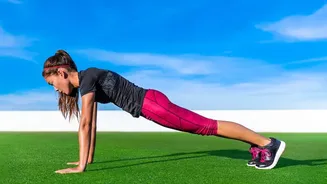
No workout is complete without targeting the core, and the plank is one of the most effective exercises for building deep core stability. It strengthens the muscles in your abdomen, back, and shoulders. To perform a plank, hold your body in a straight line, either on your forearms or in a high-plank position on your hands. The key is to keep your core engaged and prevent your hips from sagging or rising too high. Start by holding for 30 seconds and gradually increase the time as you build strength. For variety, try a side plank to target your obliques.
Low-Impact Cardio: Mountain Climbers
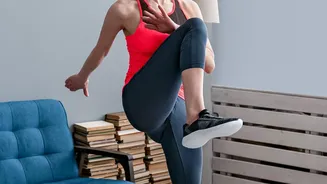
Getting your heart rate up in a small space without disturbing your neighbors can be a challenge. Mountain climbers are a fantastic solution. They provide a great cardiovascular workout while also engaging your core and shoulders. From a high plank position, bring one knee towards your chest, then quickly switch and bring the other knee in. The movement should be like running in place while in a plank. You can control the intensity by changing your speed. Go slower for a more controlled, strength-focused movement, or speed up for a powerful cardio burst.
Posterior Chain: Glute Bridges
Much of our day is spent sitting, which can lead to weak glutes and a tight lower back. The glute bridge directly counteracts this by strengthening your glutes and hamstrings. Lie on your back with your knees bent and feet flat on the floor, hip-width apart. Press through your heels to lift your hips off the floor until your body forms a straight line from your shoulders to your knees. Squeeze your glutes at the top, then slowly lower back down. This exercise requires minimal space and is incredibly effective for activating the posterior chain.
The Quiet Burpee: Inchworms
The burpee is a famous full-body exercise, but the jumping can be noisy and disruptive in an apartment. The inchworm, or walk-out burpee, offers a quieter alternative that still delivers a full-body challenge. Stand tall, then hinge at your hips to place your hands on the floor. Walk your hands forward until you are in a high plank position. You can add a push-up here for extra difficulty. Then, walk your hands back towards your feet and stand up. This movement builds core strength, shoulder stability, and provides a great hamstring stretch.