



Every winter, the air in many Indian cities feels heavier and looks hazier. This isn't just your imagination. Specific atmospheric conditions unique to the season create a perfect storm for trapping pollution and making the air we breathe worse.
The Normal Flow of Air
On a typical
day, the sun warms the ground, which in turn warms the layer of air closest to it. This warm air, being less dense, naturally rises. As it ascends into the troposphere, it cools, becomes denser, and eventually sinks back down. This continuous cycle, known as convection, acts like a giant atmospheric fan. It constantly stirs the air, carrying pollutants from near the surface upwards and dispersing them into the wider atmosphere. This vertical mixing is crucial for clearing out the emissions we generate at ground level, from vehicle exhaust to industrial smoke.
The Winter Flip: Temperature Inversion
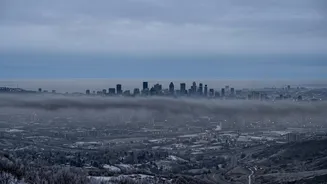
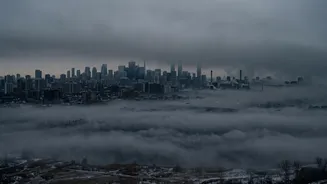
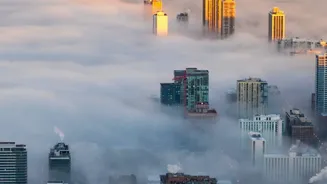
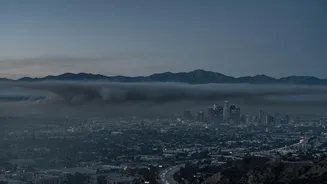
Winter changes this fundamental process, especially during calm, clear nights. The ground rapidly loses heat, cooling the air directly above it. Meanwhile, a layer of air higher up remains relatively warm. This creates a situation called a temperature inversion, where the normal temperature profile is flipped upside down: a layer of cool, dense air is trapped at the surface by a layer of warmer, less dense air above it. This warm layer acts like a lid or a cap on the atmosphere, preventing the cooler surface air from rising. Natural convection effectively shuts down.
Putting a Lid on Pollution
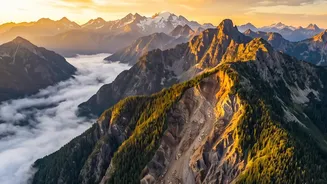
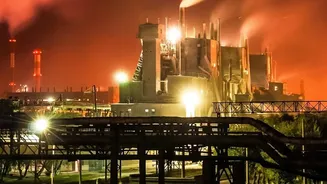
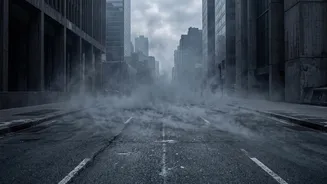
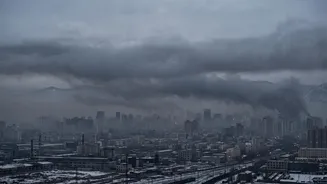
This atmospheric 'lid' is the primary reason winter air quality suffers so dramatically. All the pollutants emitted at ground level—particulate matter (PM2.5 and PM10) from traffic, industry, construction dust, and the burning of biomass—are trapped in this cold, stagnant layer of air near the surface. With no vertical movement to disperse them, these harmful emissions have nowhere to go. Their concentration builds up, leading to the thick smog and haze that now characterise winter in many parts of North India. Cities situated in valleys or near mountain ranges, which can act as natural basins, often experience the most severe effects.
A Lower Ceiling: The Boundary Layer
Compounding the problem is another phenomenon: the shrinking of the atmospheric boundary layer. This is the layer of air closest to the Earth's surface that is directly influenced by it. In summer, this 'ceiling' can be several kilometres high, offering a large volume of air to dilute pollutants. In winter, however, the cold, dense air causes this boundary layer to become much shallower, sometimes dropping to just a few hundred metres. This means the same amount of pollution is being pumped into a much smaller volume of air, causing concentrations to spike even further. Calm winds during this season also prevent pollutants from being blown away horizontally, locking them in place.
The Human Factor
While meteorological conditions create the trap, human activity provides the pollutants. In North India, this includes a combination of yearround sources like vehicle and industrial emissions, and seasonal ones like postharvest stubble burning in agricultural states. The smoke from these fires releases enormous quantities of particulate matter that drift across the IndoGangetic Plain and get caught under the inversion layer. Furthermore, the increased use of burning wood and biomass for heating during the colder months adds to the toxic cocktail.
The Unavoidable Health Impact
The result of these concentrated pollutants is a serious public health issue. Breathing in high levels of PM2.5 and other toxins can cause or worsen a range of respiratory problems, from coughing and wheezing to more severe conditions like asthma, bronchitis, and chronic obstructive pulmonary disease (COPD). The fine particles are small enough to enter the bloodstream, increasing the risk of cardiovascular problems. Children, the elderly, and those with preexisting lung or heart conditions are especially vulnerable to the effects of poor winter air quality.