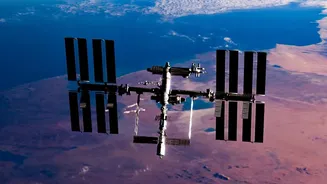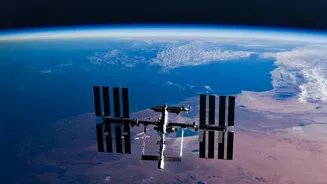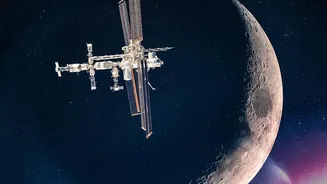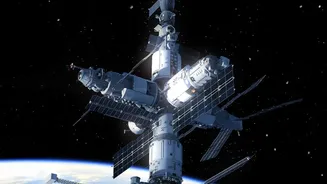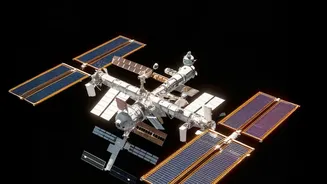





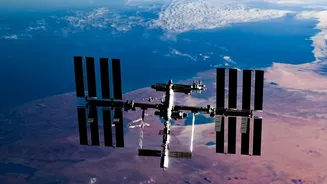

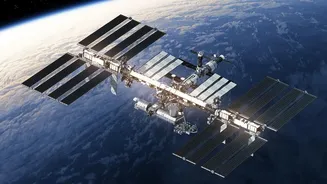
The International Space Station (ISS), a symbol of global cooperation in orbit for over two decades, is preparing for its final act. As NASA plans its retirement around 2030, a new chapter in space is unfolding, one driven by private enterprise.
An Icon's Sunset
The ISS
has been a magnificent scientific outpost and a testament to international partnership, but it is an aging piece of infrastructure. Originally designed for a 15-year lifespan, it has been operational since 1998, with continuous human presence since 2000. The station's older modules are showing signs of wear, leading to rising maintenance costs for NASA, which spends nearly $3 billion annually on its operation. To free up resources for its ambitious deep-space exploration goals under the Artemis program, which includes a return to the Moon and missions to Mars, NASA plans to deorbit the station around 2030, guiding it to a controlled reentry over a remote part of the Pacific Ocean.
NASA's Commercial Pivot
Instead of building a new government-owned station, NASA is catalyzing a new space economy. Through its Commercial Low-Earth Orbit Destinations (CLD) program, the agency is funding several private companies to develop their own stations. The strategy is to shift from being an owner-operator to becoming a customer. NASA will buy services, such as research time and crew accommodation, from these commercial outposts, ensuring a continued US presence in low-Earth orbit without bearing the full cost of ownership. This model mirrors the success of its commercial cargo and crew programs, which have fostered a vibrant launch market with providers like SpaceX. The goal is to prevent a gap in American access to space while stimulating a self-sustaining market for research, manufacturing, and even tourism.
Meet the Contenders
Several key players are racing to build the next generation of orbital habitats. Axiom Space has a unique strategy, planning to first launch modules that attach to the ISS starting in 2027. These modules will later detach to form a free-flying commercial station, the Axiom Station, before the ISS is retired. Another major project is Starlab, a joint venture between Voyager Space and aerospace giant Airbus. Their plan involves launching a large, single habitat in 2029 designed to be a state-of-the-art research and science park from day one. Then there is Orbital Reef, a concept from Blue Origin and Sierra Space, envisioned as a "mixed-use business park" in space, complete with research labs, industrial space, and tourist accommodations. Finally, the startup Vast is taking a nimble approach, planning to launch its smaller Haven-1 station as early as 2027 to be first to market.
The Challenge of the Gap
The primary challenge is a race against time. The critical question is whether any of these private stations will be fully operational and certified to host NASA astronauts before the ISS is deorbited. A delay could create a "gap," leaving the U.S. without a human presence in low-Earth orbit for the first time in over 30 years and ceding the field to China's Tiangong space station. These ventures are also immensely expensive and technically complex. While NASA's CLD program provides seed funding, the companies rely heavily on private investment and must build a viable business case beyond NASA to succeed. There have been some policy fluctuations, including a brief period in early 2026 where NASA considered a different approach before industry pushback reaffirmed the original commercial free-flyer plan, highlighting the delicate balance between government support and commercial independence.