



From Guilt to Honour
We treat sentimental items differently from anything else in our homes. We don't let clothes pile up indefinitely (at least, we try not to), nor do we keep expired food in the pantry. Yet, when it comes to keepsakes, all rules go out the window. They
accumulate in dusty boxes, forgotten drawers, and the tops of cupboards, creating a sense of clutter and obligation. The first mental shift is to stop seeing organisation as an act of discarding memories. Instead, it is an act of honouring them. By curating your keepsakes, you give the most important ones the space and attention they deserve, ensuring they are celebrated rather than just stored. The goal is to keep things that bring you joy, not items that weigh you down with a sense of duty.
Rule 1: Define Your Boundaries
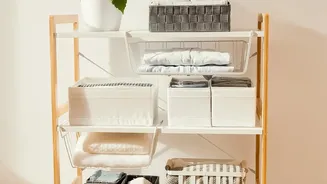
The first practical step is to create a physical limit. Professional organisers agree that one of the most effective strategies is to decide how much space you can dedicate to memorabilia and stick to it. This could be one beautiful chest, a specific shelf on a bookcase, or a set of matching decorative boxes. This is often called the 'container concept'. The rule is simple: you can only keep what fits comfortably inside your designated 'memory zone'. When the container is full, it's time to re-evaluate what's inside before adding anything new. This transforms an overwhelming, undefined pile of 'stuff' into a finite, manageable collection and forces you to prioritise what is truly most meaningful.
Rule 2: Give Your Memories a Job
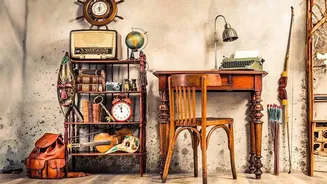
Not all memories need to be hidden away. Many sentimental items can be incorporated into your daily life and home decor, giving them a purpose beyond sitting in a box. That beautiful old saree can be framed as a piece of art. Your grandfather's watch can be displayed on a stand on your desk. A collection of small travel souvenirs can be arranged in a shadow box. By putting these items on display, you get to interact with the happy memory regularly, and they become part of your living space rather than just clutter. It also helps you decide what's worth keeping; if you wouldn't want to see it every day, is it truly a cherished item?
Rule 3: Curate the Best, Release the Rest
For any given memory, you likely don't need dozens of objects to represent it. Instead of keeping all 50 drawings your child made in kindergarten, choose the three that best capture their spirit and creativity. Instead of keeping every ticket stub and postcard from a trip, select one or two representative items to include in an album. This principle of 'keeping the best' allows you to preserve the memory in its most potent form without the physical burden of keeping everything. For items that are harder to part with, consider taking a high-quality photograph. You can create a digital album of these objects, which preserves the visual trigger of the memory without taking up any physical space. This works wonderfully for bulky items like children's projects or old, worn-out clothing.
Rule 4: Handle Items with Intention
The process of sorting through sentimental items is an emotional one that should be done with intention, not in a rush. Set aside a specific time when you won't be interrupted. Pick up each object and ask yourself a few key questions: Does this bring back a happy memory? Why am I keeping it? Do I have other items that represent this same memory better? This mindful approach allows you to connect with the memory and make a conscious decision. It's also crucial to get the items you've decided to discard out of the house quickly, to avoid second-guessing your choices. Remember, you are not throwing away the memory itself; you are simply letting go of a physical object that has served its purpose.