






A Sweet with Divine Origins
The story of the Mathura Peda is inseparable from the city's identity as the birthplace of Lord Krishna. For centuries, milk and dairy products have been central to the food culture of the Braj region, a tradition linked to Krishna's own childhood love
for milk and butter. Peda is one of the most common offerings, or 'prasad', presented at temples during daily worship and especially during festivals like Janmashtami. According to local lore, the peda was born when Krishna's mother, Yashoda, accidentally left milk on the fire for too long. Finding it had thickened into a solid mass (khoya), she added sugar and gave it to Krishna, who loved it so much that it became a customary offering. This divine connection elevates the peda from a simple sweet to a sacred one, a taste of grace for devotees.
The Art of the Authentic Peda
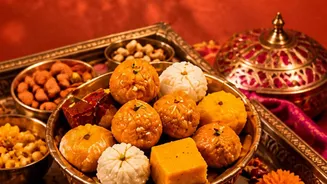
What makes a Mathura Peda distinct is its unique texture and flavour, a result of a patient, traditional process. Unlike other pedas, the authentic Mathura version starts with khoya (also known as mawa), which is milk that has been slowly simmered for hours until all the liquid evaporates. This khoya is then patiently roasted, often with a little ghee, until it develops a beautiful golden-brown colour and a rich, caramelized aroma. This slow-roasting process is the secret to its signature grainy texture and deep flavour. Instead of regular powdered sugar, traditional recipes call for 'tagar' or 'bura', a form of grainy, unrefined sugar that adds to its unique mouthfeel. The mixture is then flavoured with cardamom before being shaped and often rolled in more bura sugar for its final look.
The Sweet Shops That Built a Legacy
While the peda's origins are rooted in home kitchens and temple offerings, it was the city's sweet makers, or 'halwais', who cemented its reputation. Generations of sweet shops in Mathura standardized the recipe and transformed the peda from a local prasad into a celebrated delicacy. Shops like Brijwasi Mithai Wala, which has several branches and is often considered a benchmark for taste, became institutions in themselves. Other historic establishments, such as Gusai Pede Waala and Shankar Mithai Wala, have been serving the community for decades, each contributing to the sweet's fame through their commitment to traditional methods. These shops, often clustered around major temples like the Shri Krishna Janmabhoomi and Dwarkadhish Temple, became essential stops for pilgrims.
From Pilgrim's Souvenir to National Icon
The reputation of Mathura Peda spread far and wide primarily through the thousands of devotees and tourists visiting the holy city. They would purchase boxes of these sweets to take home as souvenirs and as blessed prasad for family and friends. This practice helped carry the taste and fame of Mathura Peda across the country, making it a household name. The phrase 'Mathura ka Peda' became a brand in itself, appearing in folk songs and proverbs as a symbol of unmatched quality. The development of railways and better transport links further accelerated its journey from a regional specialty to a national icon, available in Indian sweet shops far beyond Uttar Pradesh.
Preserving a Culinary Heritage
Today, Mathura Peda remains a cornerstone of the city's identity and economy. To protect its authenticity from widespread adulteration and imitation, an application for a Geographical Indication (GI) tag has been filed. This tag would provide legal protection, ensuring that only pedas made in the traditional manner in the Mathura region can carry the prestigious name. While the certification is still in process, the effort highlights the sweet's cultural and economic importance. For millions, Mathura Peda is not just a dessert but a delicious piece of history—a blend of faith, craftsmanship, and the entrepreneurial spirit of the sweet shops that helped build its enduring legacy.