

The Sweet Ritual of Sibling Love
Bhai Dooj, celebrated on the second day of the bright fortnight in the Hindu month of Kartika, is a festival dedicated to the unique bond between brothers and sisters. It concludes the five-day-long Diwali festivities. The central ritual involves a sister applying
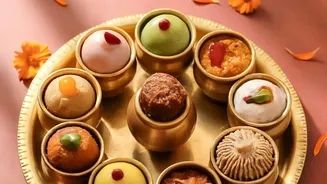
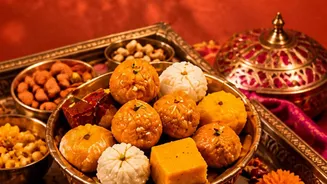
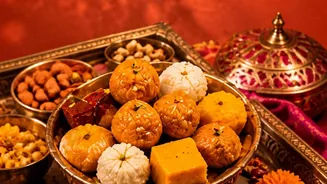
a 'tilak' or 'phonta' on her brother's forehead, performing an 'aarti', and praying for his long life, health, and prosperity. In return, the brother pledges his protection and offers a gift. This ceremony, steeped in mythology—most famously linked to Lord Yama, the god of death, visiting his sister, Yamuna—is incomplete without the sharing of sweets, a gesture that symbolises affection, joy, and good fortune.
Coconut: A Sacred Offering
Among the pantheon of Indian sweets, those made with coconut hold a special place in religious ceremonies. Called 'Sriphala' or 'the fruit of God', the coconut is considered a pure and sacred offering in Hindu rituals. Its use is symbolic; the hard outer shell is likened to the human ego, which must be broken to reveal the pure, white kernel within, representing inner peace and purity. Offering coconut in a puja is believed to remove negativity, attract prosperity, and invite divine energy. This makes any sweet derived from it, like Coconut Barfi, not just a treat but an auspicious part of the festive thali.
Spotlight on Coconut Barfi
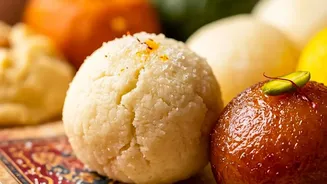
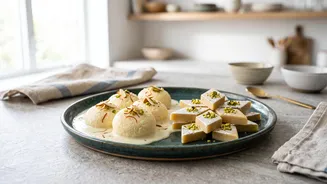
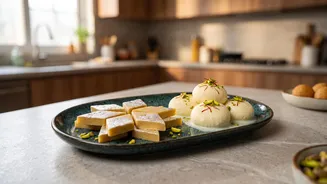
Coconut Barfi, known as 'Nariyal ki Barfi' in the north or 'Thengai Burfi' in the south, is a quintessential festive fudge. Its popularity during festivals like Bhai Dooj stems from both its sacred associations and its simplicity. Made primarily from just a few ingredients—grated coconut, sugar or condensed milk, ghee, and flavourings like cardamom—it's a sweet that is both delicious and relatively easy to prepare at home. This makes it a perfect fit for the 'home-cooked' spirit of Bhai Dooj, where a sister's personal touch in preparing the meal is part of the tradition. The soft, chewy texture and aromatic flavour make it a crowd-pleaser for all ages.
From the Market to Your Kitchen
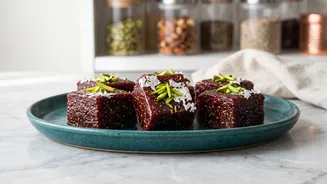
While readily available in sweet shops, making Coconut Barfi at home is a rewarding process that perfectly fits into festive cooking schedules. The traditional method involves cooking freshly grated coconut with sugar and milk until it thickens. A quicker, more modern approach uses condensed milk, which eliminates the tricky step of getting the sugar syrup to the right consistency. This version comes together in minutes on the stovetop. The mixture is stirred continuously until it starts to leave the sides of the pan, then spread onto a greased plate or tray to set. Once cooled, it can be cut into diamond or square shapes and is often garnished with pistachios or almonds.
Modern Twists on a Timeless Classic
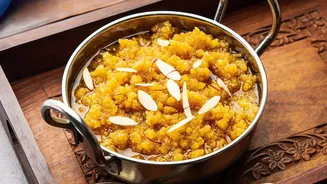
The classic Coconut Barfi is a masterpiece of simplicity, but it also serves as an excellent canvas for culinary creativity. For a healthier touch, some substitute sugar with jaggery, which lends a deeper, earthier flavour. Other variations include adding a pinch of saffron for a royal aroma and golden hue, or incorporating other ingredients like milk powder for a richer, 'khoya'-like texture. For those feeling more adventurous, a hint of rose water can be added for fragrance, or the barfi can even be combined with cocoa powder to create a chocolate-coconut fusion. These small adjustments allow every family to have their own signature version of this beloved sweet.