




Start Before You Start: The Ingredient Prep
The secret to a lump-free, velvety cheesecake begins hours before you even turn on your mixer. Every single one of your cold ingredients—cream cheese, eggs, and sour cream or heavy cream—must be at room temperature. This isn't a suggestion; it's a rule.
Cold cream cheese is notoriously difficult to beat smooth, resulting in lumps that will never disappear. Pull everything out of the fridge at least two hours before you begin. Also, choose your cream cheese wisely. You need the full-fat, brick-style variety. Spreads or low-fat versions contain more water and stabilisers, which will compromise the final texture and can lead to a soupy mess.
The Foundation: A Perfect Crust
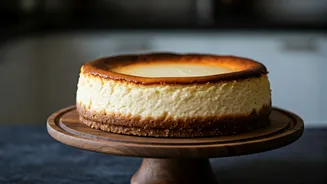
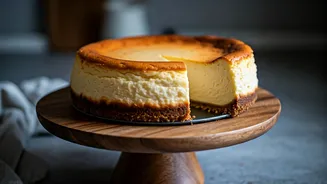
A great cheesecake needs a solid foundation. The classic choice is a simple graham cracker or digestive biscuit crust. The trick is to ensure every crumb is coated in melted butter. Use a food processor for the finest, most uniform crumbs. Once you press the mixture firmly into your springform pan, using the flat bottom of a glass to get it even, you should pre-bake it for about 10 minutes. This short bake does two crucial things: it toasts the crumbs, deepening their flavour, and it creates a sturdier, less-soggy barrier against the wet filling. Let it cool completely before you pour in the batter.
The Gentle Mix: Your Weapon Against Cracks
Here is the number one mistake home bakers make: they over-mix the batter. When you beat cheesecake batter on high speed, you incorporate a lot of air. As the cheesecake bakes, these air bubbles rise to the surface and burst, causing craters and cracks. Your mixer should never go above low or medium-low speed. Start by beating the room-temperature cream cheese alone until it’s perfectly smooth. Scrape down the bowl and paddle often. Then, add the sugar, followed by the eggs, one at a time, mixing only until the yellow yolk disappears. The final batter should be thick, smooth, and uniform, not light and airy.
The Magic of a Water Bath
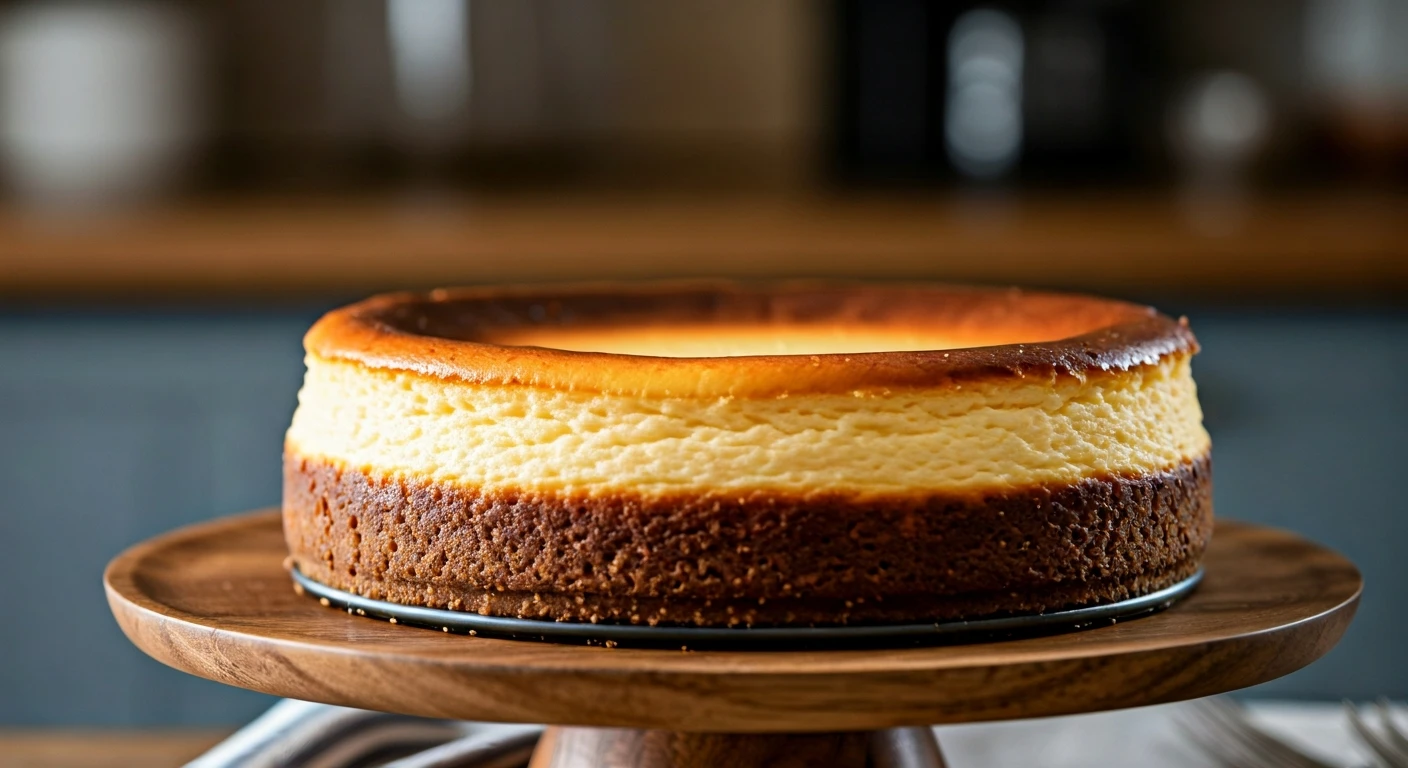
That dreaded crack down the centre of your cheesecake is almost always caused by two things: too much air (which we just solved) and an oven that's too dry or hot. The solution is a bain-marie, or water bath. This technique creates a steamy, humid environment in your oven, promoting gentle, even cooking. It also insulates the cake from the harsh, direct heat of the oven elements. To set one up, wrap the outside of your springform pan in a double layer of heavy-duty aluminum foil, making sure it goes all the way to the top. Place the wrapped pan in a larger roasting pan, pour in the batter, and then fill the roasting pan with about an inch of hot water. The water acts as a buffer, ensuring your cheesecake bakes into a creamy, even custard from edge to centre.
Patience is the Final Ingredient
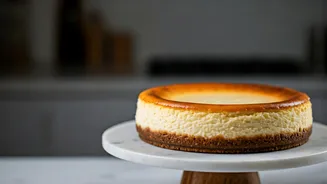
You’ve done everything right, and your cheesecake is baking beautifully. The final hurdle is the cool-down. A sudden change in temperature is the last major cause of cracking. When the baking time is up—the edges should be set but the centre should still have a slight wobble—turn off the oven, prop the door open with a wooden spoon, and let the cheesecake cool inside for one full hour. This gradual decrease in temperature prevents thermal shock. After an hour, remove the cheesecake from the oven and the water bath, run a thin knife around the edge to separate it from the pan, and let it cool completely on a wire rack. Only then should it go into the refrigerator to chill for at least six hours, or preferably overnight.