





From Technopark to the Asteroid Belt
In the bustling tech hub of Technopark, Thiruvananthapuram, a young startup is building hardware destined for deep space. HEX20, founded by a team of Malayali entrepreneurs, has been selected by the United Arab Emirates (UAE) Space Agency to develop critical
systems for an ambitious asteroid probe. This makes HEX20 the first private Indian company to be chosen for a deep-space mission by the Gulf nation, a significant milestone that places it on the global space exploration map. With its engineering facility in Kerala and operations in the UAE's Masdar City, the company represents a new breed of Indian startups moving from domestic satellite services to complex interplanetary projects.
The Five-Billion-Kilometre Journey
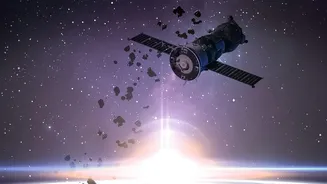
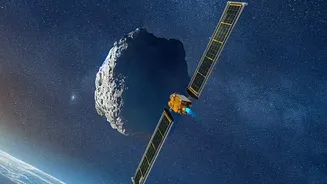
The mission, known as the Emirates Mission to the Asteroid Belt (EMA), is nothing short of audacious. The main spacecraft, the MBR Explorer, is scheduled to launch in March 2028. It will embark on an epic, five-billion-kilometre voyage that will take approximately eight years. Using gravity-assist manoeuvres around Venus, Earth, and Mars, the explorer will navigate the main asteroid belt, flying past six different asteroids. Its final destination is a scientifically compelling, unusually reddish asteroid named 269 Justitia, which it is expected to reach around 2036. It is here that HEX20's contribution will face its ultimate test.
HEX20's Critical Contribution
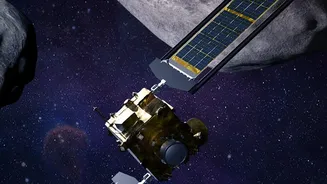
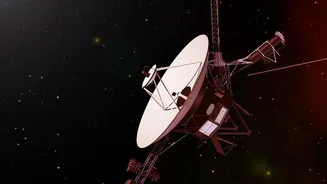
While the UAE Space Agency and its partners are leading the overall mission, HEX20 was tasked with a vital piece of the puzzle: the probe itself. The Indian startup developed the spacecraft bus, which is the foundational structure that houses and supports the probe's systems. This includes the onboard computer and power systems, all hardened to withstand the extreme conditions of deep space. Furthermore, HEX20 developed the specialised software that will allow the probe to operate autonomously. After the MBR Explorer enters orbit around Justitia, the probe built by HEX20 will separate and descend to the asteroid's surface, capturing and transmitting invaluable data about its composition. This entire system was developed and delivered in just 15 months, a testament to the startup's engineering agility.
A Leap for India's Private Space Sector
HEX20's success is not an isolated event but a powerful symbol of a larger trend. India's private space economy, valued at around $9 billion, is rapidly expanding, with startups like Skyroot Aerospace, Agnikul Cosmos, and Pixxel making global headlines for everything from 3D-printed rocket engines to successful orbital launches. The Indian government's 2023 space policy and the establishment of IN-SPACe have been crucial in enabling private companies to participate in the full spectrum of space activities, from building rockets to operating satellites. While many companies have focused on satellite launches and Earth observation, HEX20's involvement in a deep-space interplanetary mission signals a new level of maturity and capability. It shows that Indian firms are not just low-cost suppliers but are becoming partners of choice for complex, high-stakes international missions.