
Defining the Cosmic Fingerprint
First, what are scientists even looking for? They're searching for 'biosignatures'. A biosignature is any substance, object, or pattern whose origin specifically requires a biological agent. Think of it like finding a feather on the ground; you know a bird
was there without seeing the bird itself. In astrobiology, these signatures could be specific gases in a planet's atmosphere, complex organic molecules in a soil sample, or even fossils of microbes in ancient rocks. For a signal to be considered a potential biosignature, it needs to be something that life produces, and that can survive long enough in its environment to be detected.
The Great Impostors
The main challenge is that nature is full of impostors. Many non-biological (abiotic) processes can mimic signs of life, creating 'false positives'. Take oxygen, for example. On Earth, the vast majority of oxygen in our atmosphere is produced by photosynthesis. This makes it a tempting biosignature. However, scientists have found that oxygen can also build up in an atmosphere through purely geological or chemical means, like intense ultraviolet radiation breaking down water molecules. Similarly, methane can be produced by microbes, but also by volcanic activity. Therefore, finding a single chemical isn't enough; scientists must first prove that it couldn't have been made by any known non-biological process.
Context is Everything
To rule out these false positives, context is crucial. Scientists don't just look at the signal; they study its entire environment. Is the planet at the right temperature for liquid water? What kind of star does it orbit? What other chemicals are present in the atmosphere? For instance, detecting both oxygen and methane together in a planetary atmosphere is a much stronger sign of life than detecting either one alone. These two gases quickly destroy each other, so their simultaneous presence suggests something is actively and continuously replenishing them — a role often filled by life on Earth. The entire planetary setting must be analyzed to determine if a signal is a genuine anomaly or just an expected feature of that world's geology and chemistry.
Building the Case for Life
A single potential biosignature is never enough to claim a discovery. The scientific community requires multiple, independent lines of evidence. To help manage expectations and ensure rigor, NASA scientists have even proposed a seven-level scale called the 'Confidence of Life Detection' (CoLD) framework. This scale helps put discoveries in context, ranging from Level 1 (detection of a signal with a known link to life) to Level 7 (confirmed life through follow-up observations). Climbing this 'ladder of life detection' involves using different instruments, observing the signal repeatedly, and having other teams independently verify the findings. This painstaking process ensures that by the time a discovery is announced, all other possibilities have been exhausted. The goal is to build a case so strong that life becomes the most plausible explanation.
Agnostic Approaches and Future Missions
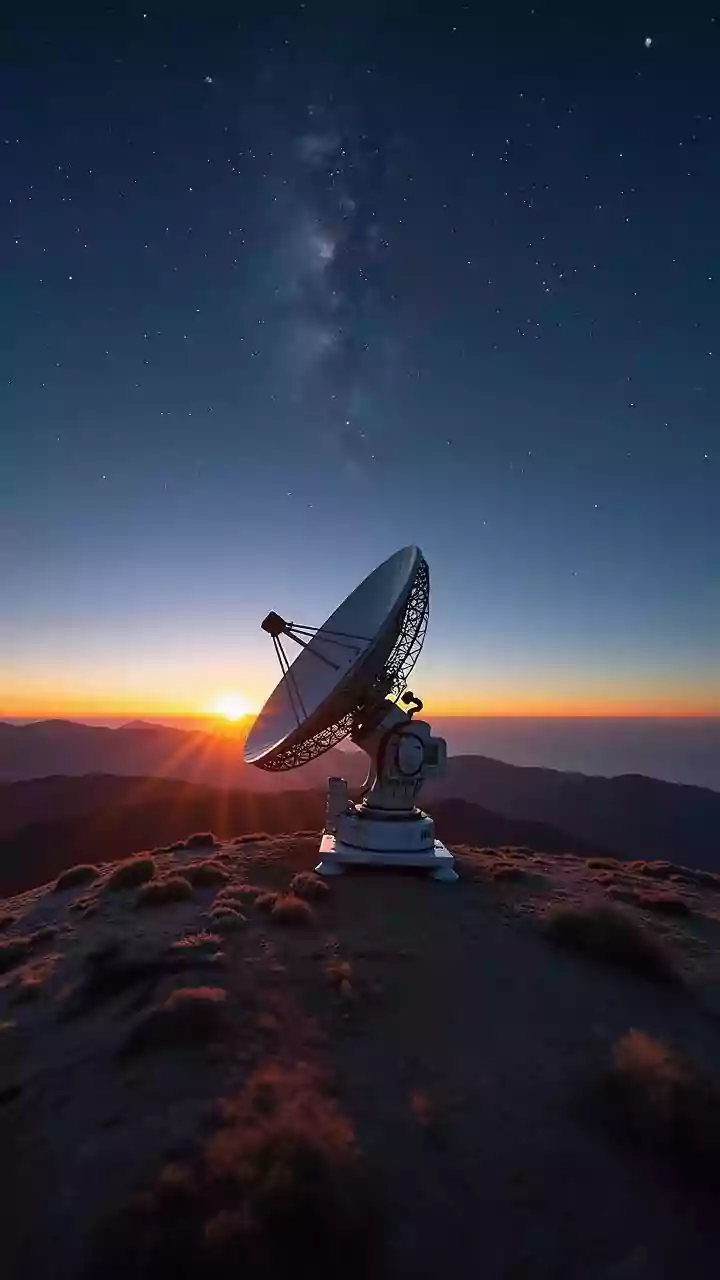
Scientists are also aware that life elsewhere might be truly alien, not using the same biochemistry as life on Earth. This has led to the development of 'agnostic biosignatures'—signs that don't assume a particular type of biology. These might include looking for complex patterns of molecules that are unlikely to occur by chance, or atmospheric gases in extreme chemical imbalance that defy geological explanations. Future observatories, like the next generation of ground-based telescopes, will be powerful enough to not only detect these gases but also to analyze their context in greater detail, helping to better distinguish between biological and non-biological sources. The search for life is not a single 'eureka' moment, but a careful, methodical process of elimination.