




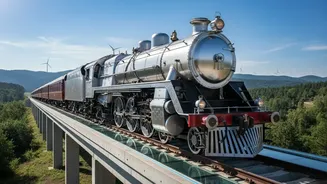
What Exactly is a Hydrogen Train?
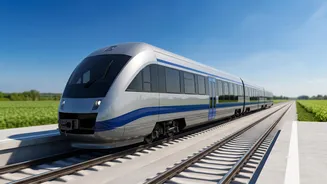
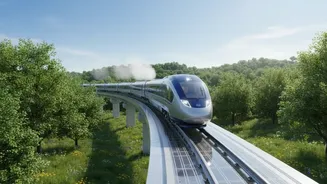
A hydrogen train, often called 'Hydrail', is essentially an electric train that generates its own power on board. Instead of drawing electricity from overhead lines, it uses hydrogen fuel cells. In this system, hydrogen stored in tanks on the train combines
with oxygen from the air in a fuel cell. This electrochemical reaction produces electricity to power the train's motors, with the only by-products being heat and pure water vapour. This means zero harmful tailpipe emissions like carbon dioxide, nitrogen oxides, or particulate matter, making it a significantly cleaner alternative to traditional diesel locomotives.
India's 'Hydrogen for Heritage' Initiative
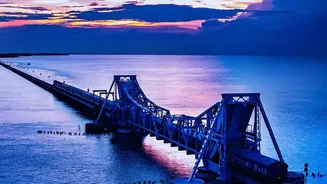
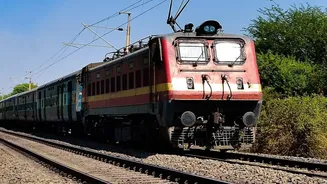
Indian Railways is pioneering this technology through its 'Hydrogen for Heritage' project. The plan involves running 35 hydrogen trains on various scenic and heritage routes. The first of these, a retrofitted Diesel Electric Multiple Unit (DEMU) train, began operations on the Jind-Sonipat section in Haryana in July 2026. This pilot project serves as a real-world demonstration of the technology's potential and challenges in Indian operating conditions. By introducing these trains on iconic routes, the Railways aims to showcase its commitment to sustainable tourism and green technology while preserving the charm of these historic lines without the pollution of diesel engines.
The Path to Net-Zero by 2030
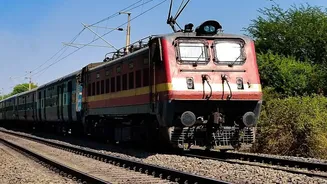
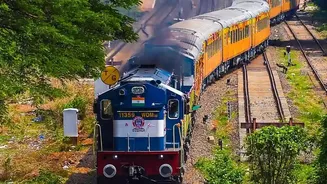
The hydrogen train project is a critical component of Indian Railways' larger goal to become a net-zero carbon emitter by 2030. While massive electrification of the broad-gauge network is the primary strategy, hydrogen trains offer a clean solution for routes where electrification is difficult or not economically viable, such as certain heritage or low-traffic lines. By replacing diesel-run trains on these non-electrified tracks, hydrogen technology directly cuts carbon emissions and reduces India's reliance on imported fossil fuels. This initiative supports India's national climate commitments, including the goal to reduce the emissions intensity of its GDP.
Challenges on the Track Ahead
Despite its immense potential, the journey for hydrogen trains in India is not without its obstacles. The primary challenge is the high cost. Green hydrogen, which is produced using renewable energy, is currently more expensive than diesel or electricity. Furthermore, developing the necessary infrastructure, including hydrogen production plants, storage facilities, and refuelling stations, requires significant capital investment. Safety is another major consideration, as hydrogen is highly flammable and requires strict handling protocols. The initial pilot on the Jind-Sonipat route has also highlighted practical issues like low passenger numbers, prompting officials to consider extending the route to Delhi to improve utilisation.
The Future of Hydrail in India
The success of the initial pilot projects will be crucial in determining the future scalability of hydrogen trains across the country. While the first train is running as a technology demonstrator, officials are already planning for the future. After successful trials at speeds of 120 kmph, efforts are underway to make the train operational at up to 110 kmph. As the technology matures and the cost of green hydrogen production decreases through economies of scale and innovation, these trains could become a more common sight. The long-term vision sees hydrogen trains as a complementary solution to electrification, helping Indian Railways achieve its 100% green energy goals and solidifying its role as a backbone of sustainable transport for the nation.