






The Sun Wakes Up
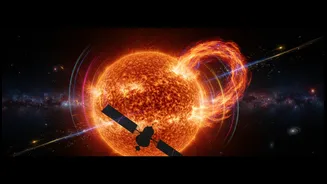
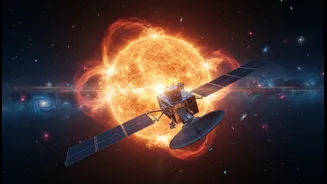
The Sun is not a constant, steady star. It has an approximately 11-year cycle of activity, moving from a quiet solar minimum to a turbulent solar maximum. We are currently in Solar Cycle 25, which has been more active than initially predicted, with its
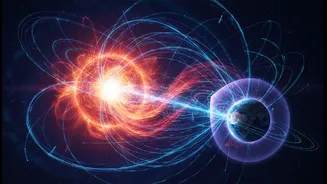
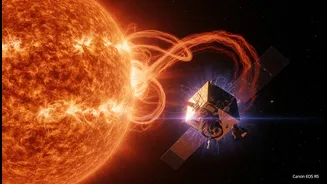
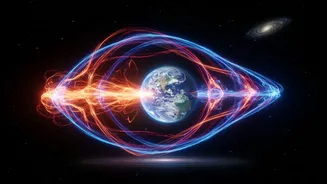
peak expected around 2025. This heightened activity means more solar flares and coronal mass ejections (CMEs)—colossal eruptions of plasma and magnetic fields from the Sun's atmosphere. When these eruptions are aimed at Earth, they can cause geomagnetic storms, which are disturbances in our planet's magnetic field. While these storms can produce beautiful auroras, they also pose a significant threat to our technological infrastructure.
When Space Weather Hits Home
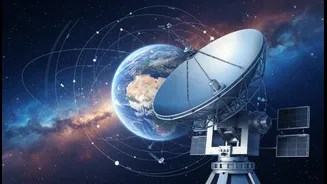
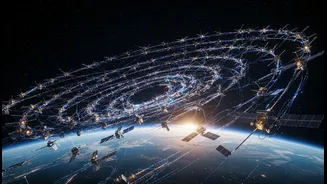
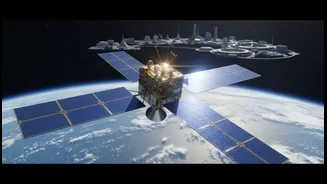
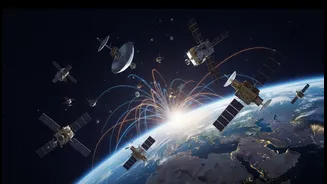
Our modern way of life is critically dependent on a vast network of satellites. They provide navigation (GPS), communications, financial transactions, weather forecasting, and broadcasting. Geomagnetic storms can wreak havoc on this infrastructure. They heat the upper atmosphere, increasing atmospheric drag on low-Earth orbit satellites, which can shorten their lifespan and even cause them to fall out of orbit. The influx of charged particles can disrupt and damage sensitive satellite electronics, interfere with radio and GPS signals, and even induce powerful currents in terrestrial power grids, potentially causing widespread blackouts. With the number of active satellites projected to soar, the financial and societal risk from space weather has never been higher.
The New Career Frontier
This vulnerability has created a surge in demand for professionals who can understand, predict, and mitigate the effects of space weather. The global market for space weather forecasting and monitoring is growing rapidly, projected to be worth billions of dollars. This isn't just about a few more PhDs in astrophysics. A whole new ecosystem of jobs is emerging across various sectors. These include: Space Weather Forecasters, who analyse solar data to predict storms; Satellite Systems Engineers, who design and operate more resilient spacecraft; Data Scientists, who build models to predict solar activity and its impacts; and Policy Advisors, who help governments and industries prepare for space weather events. Companies in aviation, telecommunications, energy, and insurance are now hiring these experts to safeguard their operations.
India's Orbit in the Space Economy
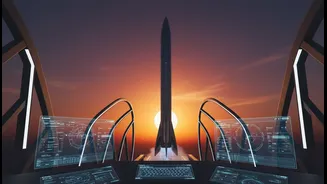
India is a major player in this evolving field. With the Indian Space Research Organisation (ISRO) and a booming private space sector, the country is both a user and a provider of space services. The recent success of missions like Aditya-L1, India's first solar observatory, places it at the forefront of space weather research. Aditya-L1 provides crucial data for predicting solar events, acting as an early warning system. This capability is vital for protecting India's own fleet of communication, navigation, and Earth observation satellites. Furthermore, the government's decision to open the space sector to private enterprise has led to a startup boom, with over 200 new companies emerging since 2020. These firms are building satellites, launch vehicles, and data analytics platforms, all of which require a skilled workforce that understands the space environment.
Charting a Course for a Career
The skills needed for these roles are a blend of traditional engineering and cutting-edge data science. A strong foundation in fields like aerospace or electrical engineering, physics, or computer science is often the starting point. For more specialized roles, expertise in orbital mechanics, RF communications, software development (especially Python and MATLAB), and data analysis is crucial. However, technical skills alone are not enough. Problem-solving, communication, and project management are equally important. Opportunities exist not only at ISRO but also at an increasing number of private companies like Skyroot Aerospace, Pixxel, and Dhruva Space, as well as government bodies like NSIL and IN-SPACe that are shaping the commercial and regulatory landscape of India's space economy.