








The New Normal of Delays
For millions of Indians, train travel is the lifeline that connects work, family, and life. But lately, that lifeline has felt less reliable. Passengers are increasingly receiving notifications of rescheduled departures, partial cancellations, route diversions,
and last-minute regulations. A journey planned months in advance can be upended by a single text message informing you that your train will now originate from a different station or terminate its journey early. While Indian Railways has always contended with disruptions from weather and routine maintenance, the current scale and frequency of these changes point to a different, more systemic cause.
The Price of Progress
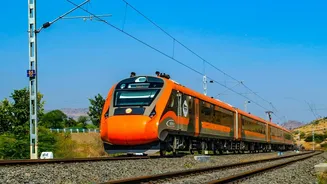
The primary driver behind this wave of disruption is a massive, nationwide infrastructure overhaul. Indian Railways is in the midst of its most ambitious upgrade in decades, investing enormous sums to modernize the network for a faster, more efficient future. This involves laying new tracks (doubling), upgrading electrical traction systems to handle faster trains like the Vande Bharat Express, and strengthening the digital communication backbone. Recent examples include extensive doubling work in the Aliyabad-Hapa-Jamnagar section and traction upgrades on the Parbhani-Mudkhed route, both of which necessitated significant, albeit temporary, changes to train services. While the long-term goal is to increase capacity and reduce travel time, the short-term reality for passengers is a period of sustained, often frustrating, disruption.
The Connecting Journey Domino Effect
Nowhere is this disruption felt more acutely than by passengers with connecting journeys. A delay of just 40 minutes on one leg can have a cascading effect, causing you to miss your next train and derailing an entire itinerary. This is especially true for multi-day trips or journeys involving different modes of transport, where a missed train could mean a forfeited flight. The problem has become so prevalent that travel experts now advise building in a buffer of at least three hours between a train's scheduled arrival and a connecting flight's departure. For many, this makes planning a journey a high-stakes gamble, turning what should be a straightforward trip into a logistical nightmare fraught with uncertainty and potential financial loss.
How to Navigate the Network
While you can't prevent a train from being rescheduled, you can take steps to protect your journey. The most crucial habit is to proactively check your train's status using the National Train Enquiry System (NTES) or other official railway apps, especially on the day of travel. When booking, be realistic about connection times; what looks possible on paper might be a risky bet in reality. For journeys planned on IRCTC, use the 'Connecting Journey Booking' option. This feature links two PNRs and can make it easier to claim a refund for the second leg if you miss it due to the first train's delay. Looking ahead, a new policy expected from early 2026 aims to allow passengers to reschedule confirmed tickets online without paying a cancellation fee, offering more flexibility to adapt to last-minute changes.