







The Age-Old Problem of Perishability
Horticulture is the backbone of Jammu and Kashmir's economy, with apples being its crown jewel, accounting for the vast majority of India's total production. Yet, for decades, this lifeline was incredibly fragile. The period immediately following the autumn
harvest was a frantic race against time. With limited and often primitive storage options, farmers were forced to sell their produce immediately. This created a market glut, causing prices to plummet. Trucks laden with apples would get stranded for days or weeks on the precarious Srinagar-Jammu highway, the valley's main artery to the rest of the country, leading to massive spoilage. It was common for a significant percentage of the harvest to be lost to decay, forcing farmers into distress sales at a fraction of their crop's potential value. This cycle of abundance followed by waste kept many growers in a state of financial uncertainty.
The Controlled Atmosphere Revolution
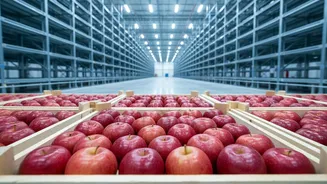
The game-changer has been the widespread adoption of Controlled Atmosphere (CA) storage facilities. Unlike standard cold storage that only lowers the temperature, CA stores are advanced warehouses that carefully manage the atmospheric composition inside sealed rooms. Oxygen levels are drastically reduced from about 21% to as low as 1.5%, while carbon dioxide and humidity are precisely regulated. This process essentially puts the apples to sleep, slowing their respiration and ripening process to a crawl. The result is that the fruit's freshness, crispness, and flavour can be preserved for six to eight months, a massive leap from the short window growers had before. This technology allows A-grade apples to be sold almost year-round, fetching much higher prices in the off-season.
Reshaping the Supply Chain
The growth of CA stores has fundamentally altered the logistics of the apple business. Instead of a mad rush to distant markets, the post-harvest process is now more strategic. Apples are harvested, graded, and then moved to nearby CA facilities, many of which are clustered in industrial growth centres like Lassipora in Pulwama district. This has dramatically cut down on immediate transit-related spoilage. With the fruit safely preserved, growers and traders can bypass the harvest season glut and release their stock gradually into the market when demand and prices are more favourable. This newfound control prevents panic selling and gives farmers significant bargaining power they previously lacked. The government has actively encouraged this shift, providing subsidies to private players to establish these crucial infrastructure links.
The Economic Ripple Effect
The benefits extend far beyond just preventing rot. For farmers, the ability to store apples and sell them during the off-season can mean doubling their income for the same box of fruit. This financial stability empowers them to reinvest in their orchards, affording better pesticides, modern farming techniques, and high-density plants that yield more fruit. The reduction in distress sales has been a significant boon, ensuring that hard work translates into fair returns. The entire ecosystem benefits, from the creation of jobs in the storage and logistics sector to consumers enjoying high-quality Kashmiri apples throughout the year. This shift has been described by many growers as a lifeline, giving them a level of market control and economic security that was once unimaginable.
Challenges on the Horizon
Despite the remarkable progress, the revolution is incomplete. The current CA storage capacity in Kashmir, though having increased significantly, still falls short of what is needed to handle all the A-grade produce. Furthermore, the cost of storage can be prohibitive for small and marginal farmers, who make up a large portion of the growers. This creates a risk of widening the gap between large orchardists who can afford the technology and smaller ones who are still forced into immediate sales, often to middlemen who then use CA stores to their own advantage. Issues like unreliable power supply, which forces facilities to depend on costly generators, and the region's over-reliance on a single highway for transport remain critical hurdles to overcome.