




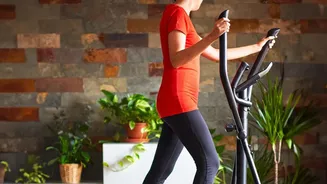

Finding time and space for fitness can feel like a challenge. But what if one of the most effective, gentle exercises could be done right in your living room? At-home walking is a simple, powerful way to break up your day with movement.
The Underrated Power of Walking Indoors
You don't need
fancy equipment or a gym membership to reap the rewards of walking. Doing it at home is a convenient, weather-proof way to get your steps in. Walking is a low-impact exercise, meaning it's gentle on your joints, making it an excellent choice for beginners or those with joint pain. Regular walking can improve cardiovascular health, lower blood pressure, strengthen bones, and boost your mood. It enhances circulation and can even lead to better sleep and reduced stress. When the weather is bad or you're short on time, a quick walk inside ensures you stay consistent with your fitness goals without any barriers.
Your Guide to Proper Form
To get the most out of your walk and prevent injury, good form is essential. Start by standing tall, extending your spine as if a string is pulling you up from the crown of your head. Keep your eyes looking forward, about 10 to 20 feet ahead, rather than down at the floor. This helps keep your neck and back properly aligned. As you walk, keep your shoulders down and relaxed—not scrunched up by your ears. Let your arms swing naturally from the shoulder, opposite arm to opposite leg. Engage your core to support your spine. When you step, land softly and avoid locking your knees.
Different Ways to Walk at Home
Indoor walking is more than just marching in place. While walking in place is the foundation, you can add variety to engage different muscles and keep things interesting. Try incorporating moves like side steps, hamstring curls (kicking your heel toward your glutes), and knee lifts. You can also walk in small circuits around a large room or down a hallway. Another popular option is following guided walking workouts online. Instructors like Leslie Sansone of 'Walk at Home' have built entire programs around indoor walking, often incorporating music and simple choreography to make the time fly by. These videos range from 10-minute bursts to hour-long sessions, allowing you to choose what fits your schedule.
Building Your First Walking Routine
Starting is simple. For a beginner-friendly 15rd minute workout, try this structure. Begin with a 3rd minute warmup of slow, gentle marching in place to get your muscles ready. Then, increase your pace for 8rd to $10$ minutes of brisk walking. During this time, you can mix in different movements. Try $2$ minutes of marching, followed by $1$ minute of side steps, and $1$ minute of knee lifts, then repeat. Finally, end with a $2$ to $3$ minute cool down, gradually slowing your pace back down to a gentle march. This simple formula can be easily extended as your fitness improves. Aim for $30$ minutes of walking on most days of the week to meet general physical activity guidelines.
How to Stay Motivated and Engaged
The key to consistency is making your workouts enjoyable. One of the biggest challenges of walking at home is potential boredom. To combat this, put on your favourite music, an engaging podcast, or an audiobook. You can even set up your phone or tablet to watch a TV show while you walk. Using a fitness tracker to monitor your steps or heart rate can also provide a sense of accomplishment and motivation. If you miss the social aspect of exercise, call a friend or family member to chat while you get your steps in. By stacking a habit you enjoy with your walk, you're more likely to stick with it.