





Kolkata, the 'City of Joy', holds another grand title: the 'London of India'. This nickname isn't just a casual comparison; it's a direct link to the era when this city was the mighty capital of British India, second only to London in the empire.
The Seat of an Empire
The journey
of Kolkata, then known as Calcutta, from a cluster of villages to an imperial capital began in the late 17th century with the British East India Company. Its strategic location on the Hooghly River provided excellent access to the sea, making it a vital trading port for goods like tea, jute, and textiles. In 1772, Calcutta was officially declared the capital of British India, a status it would hold for nearly 140 years. This decision, made by Governor-General Warren Hastings, consolidated administrative, judicial, and financial power in the city, triggering a period of unprecedented growth.
Building the 'Second City'
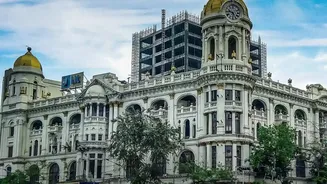
The nickname 'London of India' is most visibly rooted in the city's architecture. To project imperial authority and create a capital worthy of their empire, the British embarked on a monumental construction boom. Grand buildings in Neoclassical, Gothic Revival, and later, Indo-Saracenic styles began to dominate the landscape. Structures like the massive Government House (now Raj Bhavan), the Gothic-style High Court, and the General Post Office were designed to mirror the grandeur of London. The area around Dalhousie Square (now B.B.D. Bagh) became the administrative heart, a deliberate replica of European city planning. This period earned Calcutta the title of the 'Second City of the British Empire'.
The Crowning Architectural Jewel
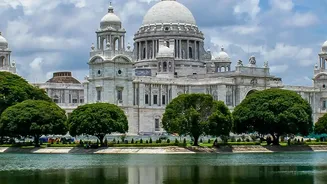
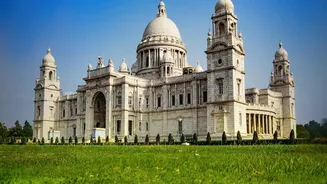
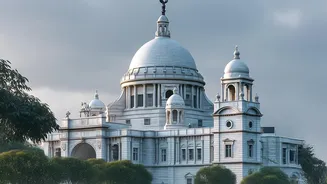
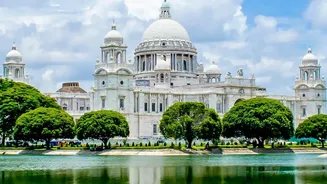
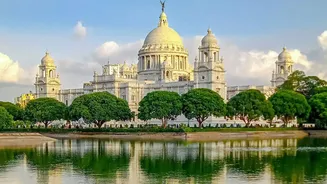
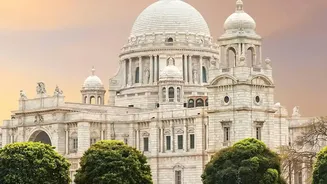
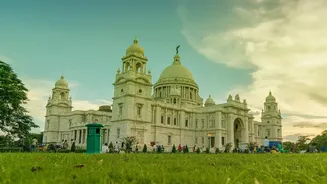
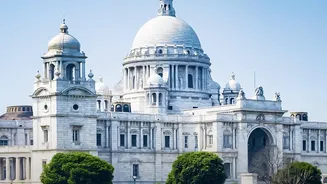
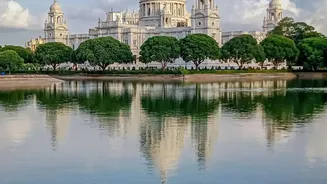
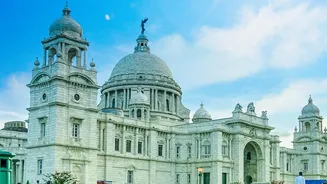
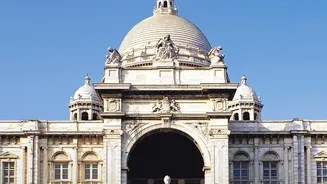
Perhaps no single structure embodies this legacy more than the Victoria Memorial. Commissioned in 1906 following the death of Queen Victoria, this colossal white marble monument was envisioned by Viceroy Lord Curzon as a tribute to the British Empire. Designed by Sir William Emerson, it masterfully blends European classical styles with Mughal elements, echoing the design of the Taj Mahal. Its central dome is even reminiscent of St. Paul's Cathedral in London, cementing the architectural parallels between the two cities. Though the capital shifted before its completion in 1921, it remains Kolkata's most iconic colonial landmark.
A Hub of Culture and Intellect
The city's development wasn't just architectural. Calcutta also became the epicentre of the 'Bengal Renaissance', a powerful social and cultural movement that profoundly influenced all of India. The British established key educational institutions like the Hindu College (later Presidency College) in 1817 and the University of Calcutta in 1857, the first modern university in South Asia. This fusion of European thought and Indian intellect created a unique 'Babu culture' and turned the city into a hotbed of literary, artistic, and scientific advancement, further strengthening its status as a capital of immense importance.
The Capital Shifts, The Legacy Remains
In 1911, King George V announced the transfer of the capital from Calcutta to Delhi. The move was driven by several factors, including Delhi's more central location and a desire to move away from Calcutta, which had become a centre for the growing Indian independence movement. While the administrative focus shifted, the imperial infrastructure and cultural foundations remained. The grand avenues, stately buildings, and prestigious institutions built during its time as capital were now a permanent part of the city's fabric.