


In an unprecedented achievement, humanity is now listening to the universe’s oldest secrets. The colossal Square Kilometre Array telescope has captured a form of 'first light,' tuning into faint radio signals from the dawn of time. This changes everything.
A Telescope the Size of a Continent
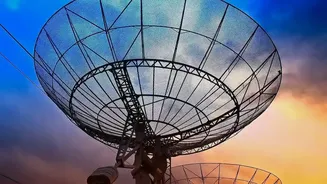
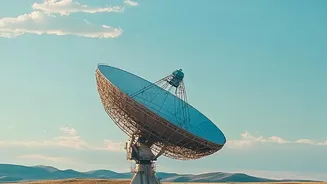
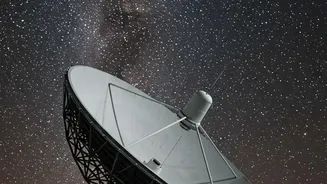
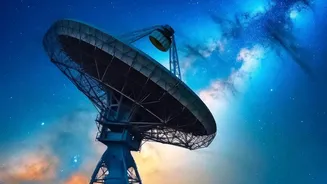
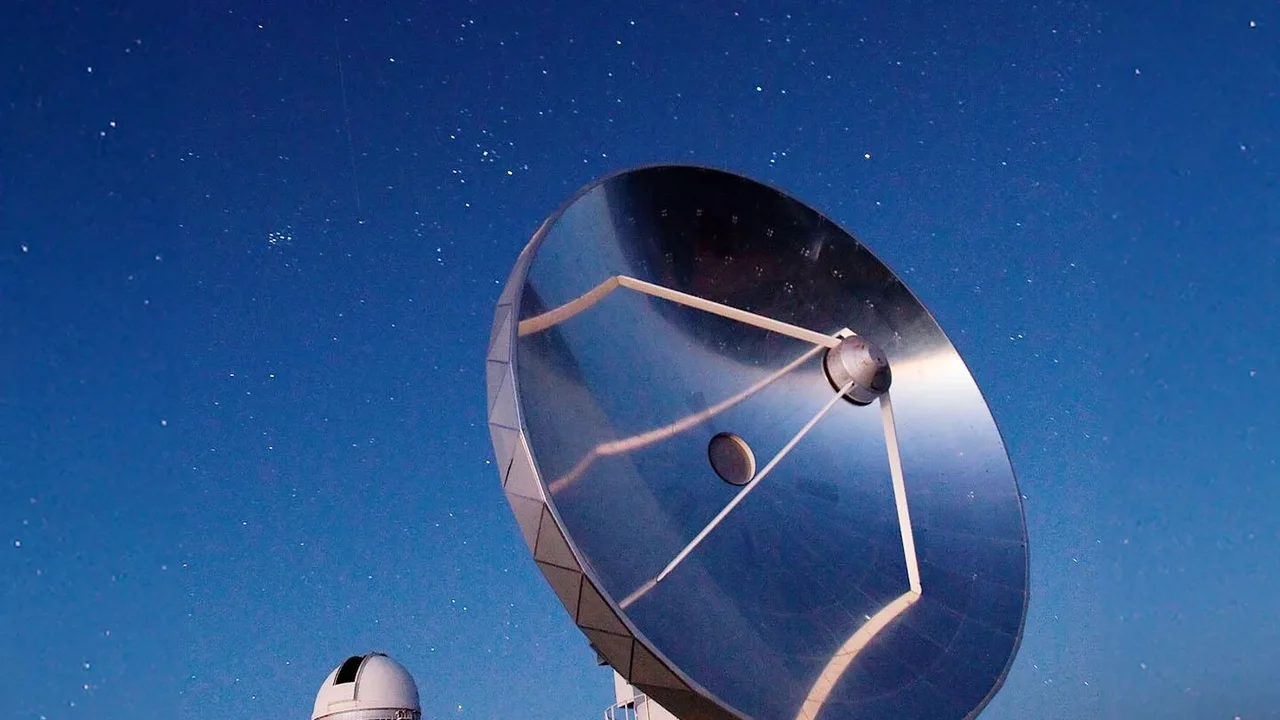
The Square Kilometre Array (SKA) isn't a single telescope but a globe-spanning network of thousands of radio antennas. It is one of the most ambitious science projects of the 21st century. Split across two remote, radio-quiet sites in South Africa and Australia, these antennas will work together as one gigantic eye on the cosmos. The project name comes from its goal: to create a total signal collecting area of one square kilometre, making it 50 times more sensitive than any previous radio instrument. Construction began in 2022, and though not yet complete, parts of the array are already coming online and testing their capabilities. The recent achievement of 'first fringes'—where signals from separate antennas are successfully combined—marks a crucial step, proving the complex system works and is alive as a scientific instrument.
What 'First Light' Really Means
The phrase 'first light' is a milestone for any new telescope, but for the SKA, it’s a staggered process. Rather than a single event, it refers to the initial observations made as more components of the vast array are installed and synchronized. Recently, the SKA-Low telescope in Australia, using just a fraction of its eventual 131,072 antennas, produced its first images. This test demonstrates that the hardware and software, much of which was developed with significant Indian contribution, can capture and process cosmic signals. While not yet peering back to the very beginning of time, this initial success is a technical preview of what's to come, allowing scientists to fine-tune the instrument for its ultimate mission: capturing signals from the universe's infancy.
Listening to the Cosmic Dawn
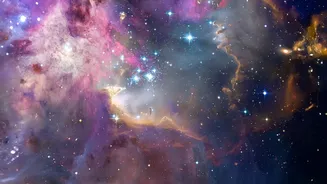
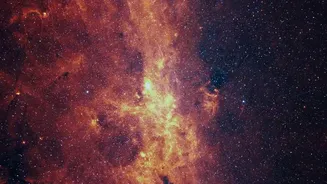
The ultimate goal is to observe a period known as the Cosmic Dawn and the Epoch of Reionization. After the Big Bang, the universe was dark and filled with neutral hydrogen gas. The Cosmic Dawn, which occurred hundreds of millions of years later, is when the very first stars and galaxies ignited. Their intense light began to ionize the surrounding hydrogen gas, creating bubbles that grew and merged until the entire universe was transformed. The SKA is being built to detect the faint, 21-cm radio signal emitted by that primordial hydrogen before it was ionized. This is incredibly challenging because the signal is about 100,000 times weaker than other radio noise from our own galaxy. By capturing this whisper, astronomers can create a map of the early universe, effectively seeing the shadows cast by the first stars and understanding how the cosmos as we know it began.
India's Pivotal Role in the Cosmic Quest
India is a key player in this global endeavour, having joined the SKA Organisation as a full member and committing ₹1,250 crore to the project. Indian scientific institutions, led by the National Centre for Radio Astrophysics (NCRA) in Pune, have been involved since the project's early days. A major contribution has been leading the design and development of the Telescope Manager system—the complex software 'neural system' required to control and monitor the entire observatory's operations. Indian engineers and scientists are also making significant contributions to digital signal processing hardware and the vast data processing software required to make sense of the incoming information. This involvement places India at the forefront of radio astronomy and high-performance computing, building on the legacy of its own Giant Metrewave Radio Telescope (GMRT), which serves as an important pathfinder for the SKA.
What Comes Next for the SKA
With construction ongoing and expected to finish around the end of the decade, the SKA will gradually increase its capabilities. As more antennas are added in both South Africa (SKA-Mid) and Australia (SKA-Low), the telescope's sensitivity and resolution will improve dramatically. The initial images are just the tip of the iceberg. The full array will be able to observe hundreds of thousands of galaxies in a single patch of sky. Beyond the Cosmic Dawn, the SKA will tackle some of the biggest questions in astrophysics, from the nature of dark matter and dark energy to testing Einstein's theories of gravity and even searching for signs of life elsewhere in the universe. However, one growing challenge is the increasing radio interference from satellite mega-constellations, an issue the global astronomy community is actively working to mitigate to protect our view of the quiet skies.