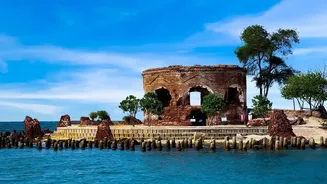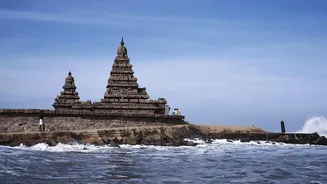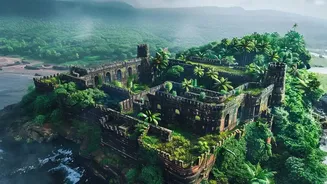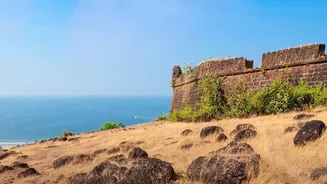



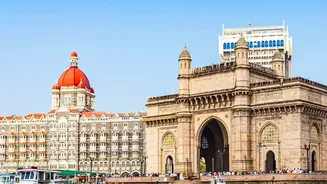
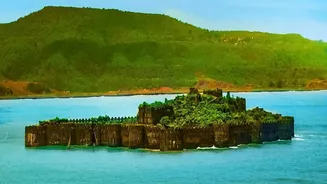
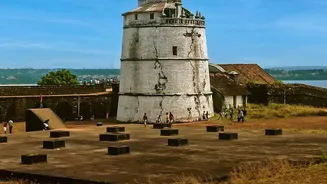
Dotting the Arabian Sea coastline, Maharashtra's sea forts are silent sentinels of a glorious maritime past. These stone giants tell tales of naval warfare, strategic genius, and immense resilience, waiting to be rediscovered by a new generation.
A Garland of Forts on the Konkan Coast
The Konkan
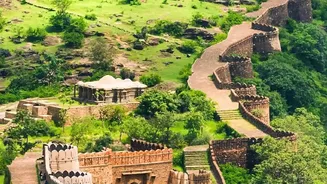
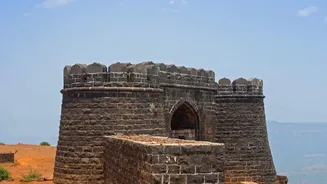
coast of Maharashtra is guarded by a chain of formidable sea forts, each a chapter in India's rich maritime history. Built over centuries, these fortresses were not merely defensive structures but hubs of power, trade, and naval strategy. From the bustling harbour of Mumbai down to the southern tip of the state, these forts formed a critical line of defence against seafaring European powers like the Portuguese and British, as well as regional rivals. Today, many of these structures, standing resolute against the lashing waves, are prime examples of historic military architecture, offering a unique glimpse into the region's past and holding immense potential for heritage tourism.
Murud-Janjira: The Unconquerable Fortress
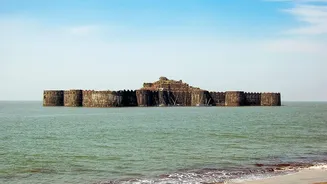
Perhaps the most famous of these is Murud-Janjira, a fort that holds the rare distinction of remaining unconquered throughout its history. Situated on an oval-shaped rock off the coast of Murud, its origins trace back to a wooden structure built by Koli fishermen in the 15th century to defend against pirates. It was later transformed into a formidable stone citadel in the 16th century by Malik Ambar of the Ahmadnagar Sultanate. The fort's 40-foot-high walls, 19 intact bastions, and a cleverly concealed main gate made it impenetrable to numerous attacks by the Marathas, Mughals, and Portuguese. Inside its sprawling complex, visitors can still find the ruins of palaces, a mosque, and freshwater lakes, along with massive cannons like the 'Kalaal Baangadi' that once protected this island stronghold.
Sindhudurg: Shivaji's Naval Ambition
Further south, near Malvan, lies Sindhudurg, a testament to the vision of Chhatrapati Shivaji Maharaj. Constructed between 1664 and 1667, this fort was central to Shivaji's goal of establishing Maratha naval supremacy and protecting the coast from foreign powers and the Siddis of Janjira. Spanning 48 acres, its massive ramparts, which are 30 feet high and 12 feet thick, were ingeniously designed to withstand the force of the Arabian Sea. The fort's foundation was reinforced with thousands of pounds of molten lead, a marvel of 17th-century engineering. Inside, it contains freshwater wells, temples, and a rare shrine dedicated to Shivaji himself, preserving his handprints and footprints for posterity. It takes a short boat ride to reach the fort, a journey that transports visitors back in time.
From Bastions to Beacons of Tourism
The transition from military strongholds to tourist heritage sites is a journey fraught with challenges. Many forts suffer from structural degradation due to coastal erosion, salt_laden winds, and general neglect. However, there is growing recognition of their value. In January 2024, a network of 12 Maratha forts, including Sindhudurg and Vijaydurg, was nominated for the UNESCO World Heritage list as the 'Maratha Military Landscapes'. This nomination has boosted efforts for their conservation. The government has announced the formation of district_level committees to protect these sites from encroachment and ensure their preservation. Initiatives are also underway to improve visitor amenities like pathways, signage, and clean water to enhance the tourist experience.
The Future of Maritime Heritage
The potential for these forts as pillars of tourism is immense. Beyond their historical significance, they are hubs of biodiversity, with their surrounding ecosystems supporting a variety of marine life. New tourism projects, including a proposed underwater museum and submarine tourism near Sindhudurg, aim to blend heritage with modern experiential travel, positioning the Konkan coast as a global destination. For these initiatives to succeed, a balance must be struck between promoting tourism and ensuring the conservation of both the historical structures and their natural environment. Public_private partnerships and community involvement are seen as crucial for developing a sustainable model where tourism revenue supports preservation efforts.