






Decoding the Weather Jargon
You've likely heard the term, but what exactly is a 'monsoon trough'? In simple terms, it's an elongated area of low pressure that forms over the subcontinent during the monsoon season. This trough acts like a highway for moisture-laden winds, pulling
them in from the Arabian Sea. When the trough is 'active' and positioned over a region like the Maharashtra coast, it acts as a convergence zone where these winds meet, rise, cool, and produce widespread and often heavy rainfall. It is a critical feature that the IMD tracks to forecast the intensity and distribution of monsoon rains.
Areas Under the Trough's Influence
The current active trough is specifically impacting the central Maharashtra coast. This includes the entire Konkan belt, from Mumbai and its metropolitan region (Thane, Palghar) down through Raigad, Ratnagiri, and Sindhudurg. These coastal districts are on the frontline, receiving the full force of the moisture coming from the sea. The ghat areas of Madhya Maharashtra, which lie adjacent to the coast, are also expected to receive significant spillover rainfall as the moisture-heavy clouds are forced upwards by the Western Ghats. The IMD has issued alerts, including orange and red warnings for several of these districts, indicating the likelihood of heavy to very heavy precipitation.
What to Expect: The Forecast
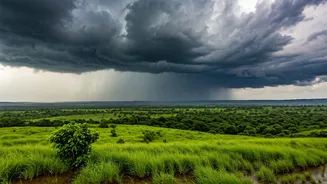
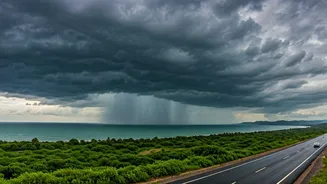
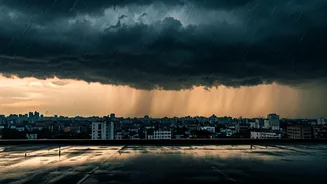
With the trough active, residents should brace for a sustained period of wet weather. Forecasts from the IMD predict widespread rainfall with heavy to very heavy spells at isolated places across the Konkan region. This won't just be a steady drizzle; expect intense downpours accompanied by thunderstorms, lightning, and gusty winds reaching speeds of 40-50 kmph, with gusts up to 60 kmph in some areas. The IMD's warnings extend for the next several days, suggesting this is not a brief event but a characteristic period of active monsoon conditions that will likely persist. Fishermen have been strongly advised not to venture into the sea due to the squally weather and rough sea conditions.
Potential Risks and Disruptions
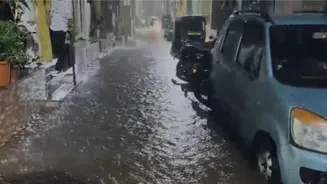
This intensity of rainfall brings several risks. Waterlogging in low-lying urban areas, particularly in Mumbai, is a major concern, potentially leading to severe traffic disruptions and affecting daily commutes. The Andheri subway, for instance, has already faced closure due to flooding in recent spells. There is also an increased risk of landslides in the hilly ghat sections, which can impact road and rail connectivity. Disruption to transport services, including local trains, road traffic, and even flights, is possible. Beyond the cities, there is a risk of damage to standing crops in rural areas.
Your Monsoon Safety Checklist
Staying prepared is crucial during an active monsoon spell. First, stay informed by regularly checking updates from the IMD and local authorities like the BMC. Avoid unnecessary travel, but if you must go out, do not drive or walk through waterlogged streets; it's difficult to judge depth and submerged hazards. At home, ensure your emergency kit is ready with essentials like a torch, power bank, first-aid supplies, and dry food. Check for any leaks in your roof or walls and secure loose items on balconies or outside your home that could be affected by strong winds. Stay clear of electrical wires and poles, and report any downed lines to the authorities immediately. If you live in a flood-prone or landslide-prone area, have an evacuation plan ready.