





Create a Festive Budget First
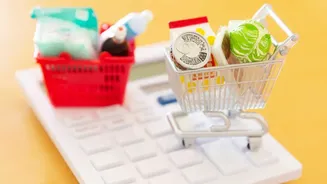
Before you even think about shopping, the most crucial step is to create a detailed budget. List all anticipated expenses—gifts, electronics, home decor, travel, and celebrations. Compare this total with what you can comfortably afford to spend from your
savings or monthly income. This simple act of planning separates your needs from your wants and provides a clear spending limit, which is the most effective way to prevent overspending. Treat your credit card as a convenience for payments, not as extra money.
Stagger Your Purchases Over Time
Rescheduling doesn't mean cancelling; it means planning. Instead of making all your high-value purchases in the few weeks leading up to a festival, start early. Spreading your shopping over two or three months can significantly reduce the financial pressure on a single month's budget. This allows you to hunt for better deals, avoid last-minute impulse buys, and manage your cash flow more effectively. If you have multiple credit cards, you can also consider distributing expenses across them to keep the credit utilisation ratio on any single card low, which is beneficial for your credit score.
Leverage No-Cost EMI Strategically
No-Cost EMI schemes are a popular way to make expensive items affordable by splitting the cost into monthly instalments without an apparent interest charge. This can be an excellent tool for buying that new gadget or appliance without paying a large sum upfront. However, be cautious. The 'no-cost' aspect can sometimes be an illusion. Banks still charge interest, which is often bundled as an upfront discount from the merchant. Always check for hidden costs like processing fees and GST on the interest component, as these can add to the final price. Compare the total EMI cost to the upfront payment price to ensure you are truly getting a deal.
Explore 'Buy Now, Pay Later' (BNPL) Options
For smaller but still significant purchases, Buy Now, Pay Later (BNPL) services have become a mainstream alternative to credit cards. They offer short-term, often interest-free credit at the point of sale, making them highly convenient for online shopping. BNPL can be great for managing cash flow, especially for those without a credit card. However, its ease of use can also encourage impulse spending. It is still a form of borrowing, and missing payments can lead to late fees and a negative impact on your credit score. Track all your BNPL dues carefully and use it only for planned purchases.
Convert Large Spends into Smart EMIs
If you have already made a large purchase on your credit card and find it difficult to pay the full amount, most banks allow you to convert the transaction into Equated Monthly Instalments (EMIs). This facility lets you repay the amount over a chosen tenure of a few months to a couple of years, making the repayment more manageable than paying high-interest charges on a revolving balance. However, unlike no-cost EMIs, standard EMIs involve interest, a processing fee, and GST. Always use your bank's EMI calculator to understand the total cost before confirming the conversion.
Pay On Time and In Full
The golden rule of credit card management is to pay your bills on time and, whenever possible, in full. Carrying a balance from one month to the next attracts high interest rates, which can turn a festive discount into a long-term financial burden. If you cannot pay the entire balance, aim to pay more than the minimum amount due to clear the debt faster. Setting up auto-pay for at least the minimum payment can help you avoid late fees and protect your credit score during a busy festive period.