





The Pre-Trip Vehicle Health Check
Before you even think about playlists and snacks, your vehicle demands attention. The rainy season is particularly tough on cars, and a pre-trip inspection is non-negotiable. Start with the most critical safety components. Your tyres are your only contact
with slippery roads; ensure they have adequate tread depth, ideally more than 3mm, to prevent hydroplaning. Also, check for any cuts or bulges on the sidewalls, a common failure point on pothole-ridden monsoon roads. Next, inspect your brakes. Wet conditions can increase your braking distance significantly, so your brake pads, discs, and fluid must be in top condition. Finally, focus on visibility. Test your windshield wipers and replace them if they leave streaks. Ensure all lights—headlights, taillights, brake lights, and indicators—are working perfectly. Clean, functional lights are essential for seeing and being seen in heavy downpours.
Intelligent Route and Weather Planning
Spontaneity is a joy of road travel, but monsoon journeys require smarter planning. Before leaving, check the weather forecast for your entire route. Heavy rain can cause sudden disruptions like waterlogging and landslides, especially in hilly or coastal areas. Use reliable navigation apps that provide real-time traffic and hazard alerts. It’s also wise to identify alternative routes in case your primary path becomes impassable. Plan your travel to maximize daylight hours, as visibility drops dangerously after dark. If you encounter extremely heavy rain or fog that severely limits your vision, the safest action is to pull over. Find a safe spot away from the main road, preferably on higher ground, and wait for conditions to improve. Never park on the road itself, as other drivers may not see you in time.
Driving Techniques for Wet Roads
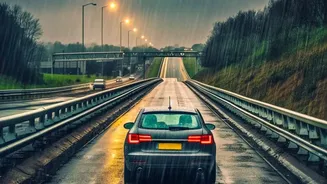
Driving in the rain demands a change in your driving style. The single most important adjustment is to reduce your speed. Posted speed limits are for ideal, dry conditions, not for wet, unpredictable surfaces. Slowing down gives you more time to react and helps prevent hydroplaning, where your tyres lose contact with the road. Maintain a much larger following distance than you would in the dry—at least double the gap. This accounts for longer braking distances on wet roads. Use your headlights on a low-beam setting, even during the day, to increase your visibility to others. Avoid using high beams as they reflect off the rain and can dazzle oncoming drivers. Be gentle with your braking and steering inputs to maintain traction, and try to avoid hard braking on painted road markings like zebra crossings, which become extremely slippery.
The Essential Monsoon Emergency Kit
A well-stocked emergency kit can turn a potential disaster into a minor inconvenience. Your standard first-aid kit is a must, but a monsoon trip requires additional items. Pack a powerful torch with extra batteries, as a phone flashlight isn't enough if you need your hands free. A portable tyre inflator and a puncture repair kit are invaluable. Also, confirm that your spare tyre is properly inflated before you leave. Given the potential for getting stranded, carry extra drinking water and non-perishable snacks like energy bars, nuts, or biscuits. It’s also wise to have a fully charged power bank for your devices, as you can't rely on network coverage or car charging in every situation. Finally, include waterproof gear like raincoats and waterproof bags to protect your luggage and electronics.